
How to Become a Daraz Seller in Bangladesh: Registration, Fees & Growth
Learn how to become a Daraz seller in Bangladesh, register an account, list products, understand fees, manage orders, and grow…
 by Sheikh Ornob

Workplace rights should not feel like guesswork. Labour law in Bangladesh sets the basic rules for hiring, wages, leave, safety, discipline, termination, and worker representation. It matters to employees who...
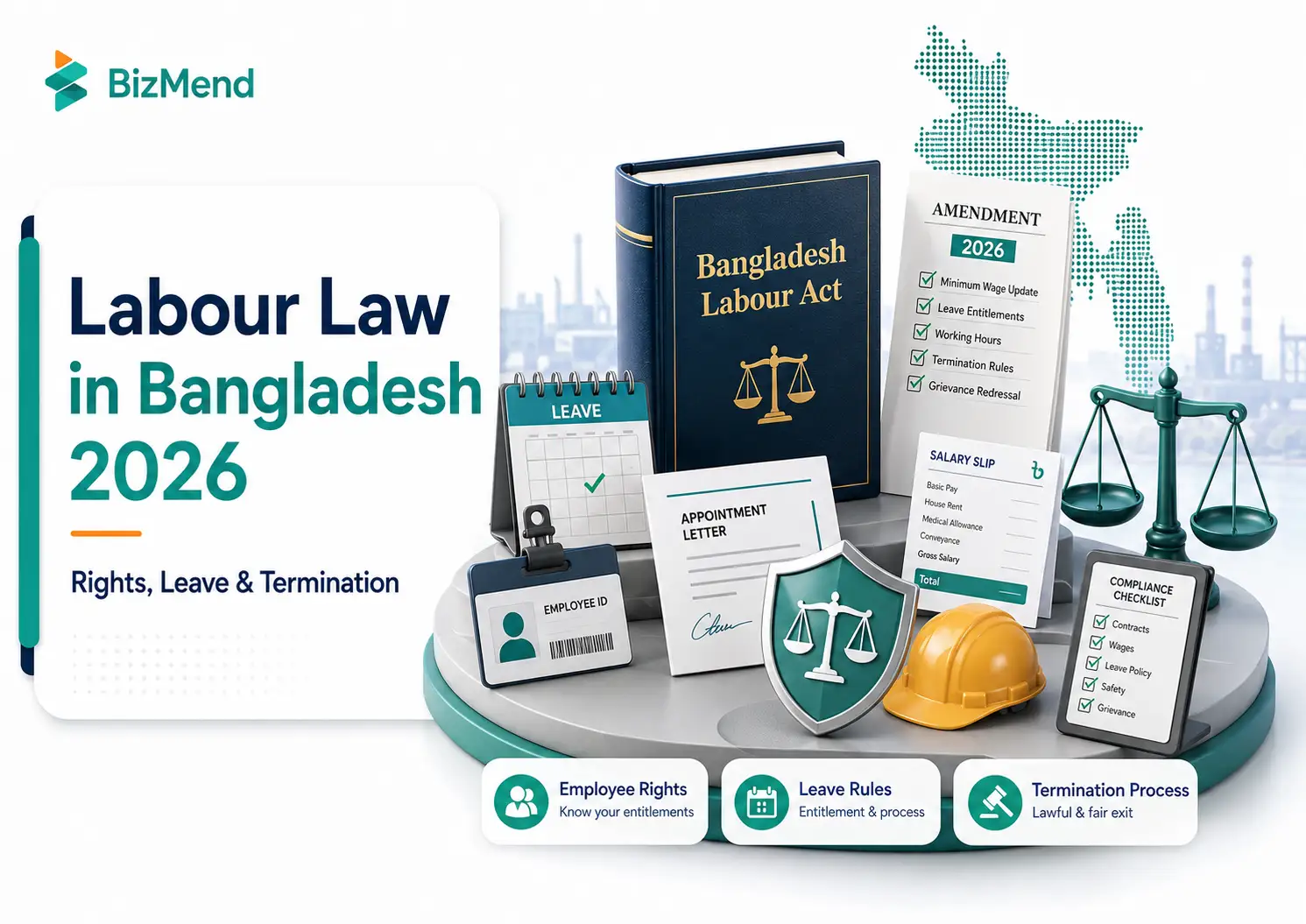
Workplace rights should not feel like guesswork.
Labour law in Bangladesh sets the basic rules for hiring, wages, leave, safety, discipline, termination, and worker representation. It matters to employees who want fair treatment and to employers who want fewer disputes.
The main framework is the Bangladesh Labour Act, 2006, now read with later amendments, including the Bangladesh Labour (Amendment) Act, 2026. As of July 13, 2026, anyone using an older checklist should recheck maternity benefit, leave and holiday rules, trade union provisions, workplace discrimination protections, and related Labour Rules updates.
Quick Answer: Labour law in Bangladesh is mainly governed by the Bangladesh Labour Act, 2006, together with the Labour Rules and later amendments. It covers appointment letters, worker categories, wages, working hours, overtime, leave, maternity benefit, workplace safety, termination, retrenchment, gratuity-related payments, and trade union rights.
The 2026 amendment is now important for current guidance. It changed several protections, including maternity-related wording referring to up to 120 days, workplace discrimination and forced-labor protections, worker representation provisions, and related compliance duties. Exact outcomes can depend on worker category, sector, and facts, so serious disputes should be checked against the current law text.
Bangladesh labour law is not one single workplace rule. It is a framework that regulates the relationship between employers and workers in covered establishments. The law deals with how a worker is hired, how employment records are kept, how wages are paid, when leave is available, and how employment can lawfully end.
For most readers, the practical question is simple: what must be written down, what must be paid, and what process must be followed before a workplace decision becomes legally safe? That is where the Bangladesh Labour Act, 2006 becomes the starting point.
The law is especially important for factories, industrial establishments, shops, commercial establishments, transport operations, and similar workplaces. Some categories, sectors, or special zones can have separate rules, so do not assume one answer applies to every worker in every organization.
The official law text should be the first source for any serious decision. The Laws of Bangladesh site publishes the Bangladesh Labour Act, 2006, and the Bangladesh Labour (Amendment) Act, 2026. The Department of Printing and Publications also lists gazette materials, including the February 2026 amendment to the Bangladesh Labour Rules, 2015.
| Source | Why it matters |
| Bangladesh Labour Act, 2006 | The main employment law framework for covered workplaces. |
| Bangladesh Labour Rules, 2015, as amended | Bangladesh Labour Rules, 2015, as amended |
| Bangladesh Labour (Amendment) Act, 2026 | Current amendment that changes selected provisions of the 2006 Act. |
| Sector-specific laws | EPZs, government employment, and some special sectors may follow different or additional rules. |
A business that is still at the setup stage should also connect labour compliance with registration, tax, and licensing basics. Bizmend has a separate guide on legal requirements for starting a business in Bangladesh, which is useful for founders mapping the wider compliance picture.
For covered workers, an appointment letter and identity card are core employment documents under labor law in Bangladesh. It helps show the worker’s role, wage terms, joining date, workplace, probation or employment category, and other service conditions. An identity card also helps prove the worker relationship.
For employees, the appointment letter is proof that the job exists on stated terms. For employers and HR teams, it is a basic risk-control document. Many disputes become harder because the workplace never documented the essentials at the beginning.
Good employment records usually include appointment documents, attendance, leave, wage payments, overtime records, warnings, notices, resignation letters, settlement sheets, and service-related correspondence. If a dispute reaches inspection, negotiation, or court, paperwork often carries more weight than memory.
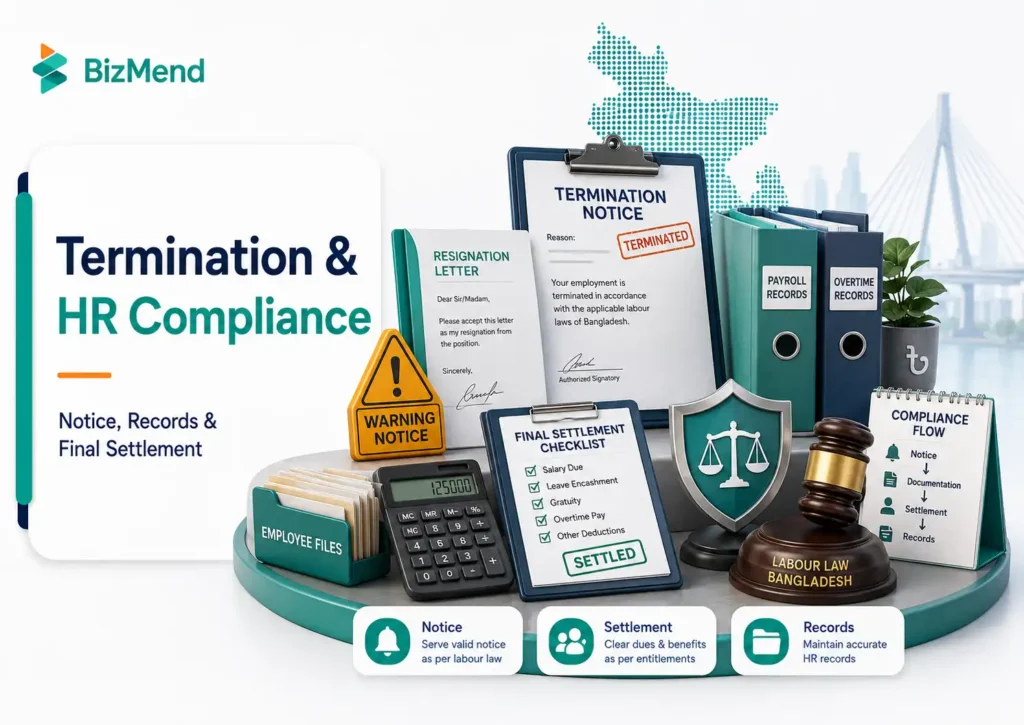
Worker rights under the Bangladesh Labour Act include the right to lawful employment terms, wages for work done, leave where eligible, safe working conditions, maternity benefit where applicable, protection from certain unfair labour practices, and a proper process for termination or discipline.
The law also recognizes that workers should not be treated only as replaceable labour. It sets rules around welfare, health, safety, working hours, compensation for workplace injury in covered cases, and collective representation. These rights are not always automatic in the same way for every worker, but they create the baseline employers must respect.
Employers have a duty to run the workplace with records, wages, safety, and process in order. This does not mean every small mistake becomes a major legal claim. It does mean the employer should be able to show that employment decisions were documented, lawful, and consistent.
For HR professionals and startup founders, the most useful habit is to build compliance into the employee lifecycle. Hiring, attendance, payroll, leave, performance management, disciplinary action, resignation, and termination should each have a standard document trail.
Payroll and worker compliance also connect with tax. Salary, source tax, and individual return issues and the tax free income limit in bangladesh can affect employees and employers, so Bizmend readers may also want the guide to income tax in Bangladesh 2026 when dealing with salary documentation and employee tax records.
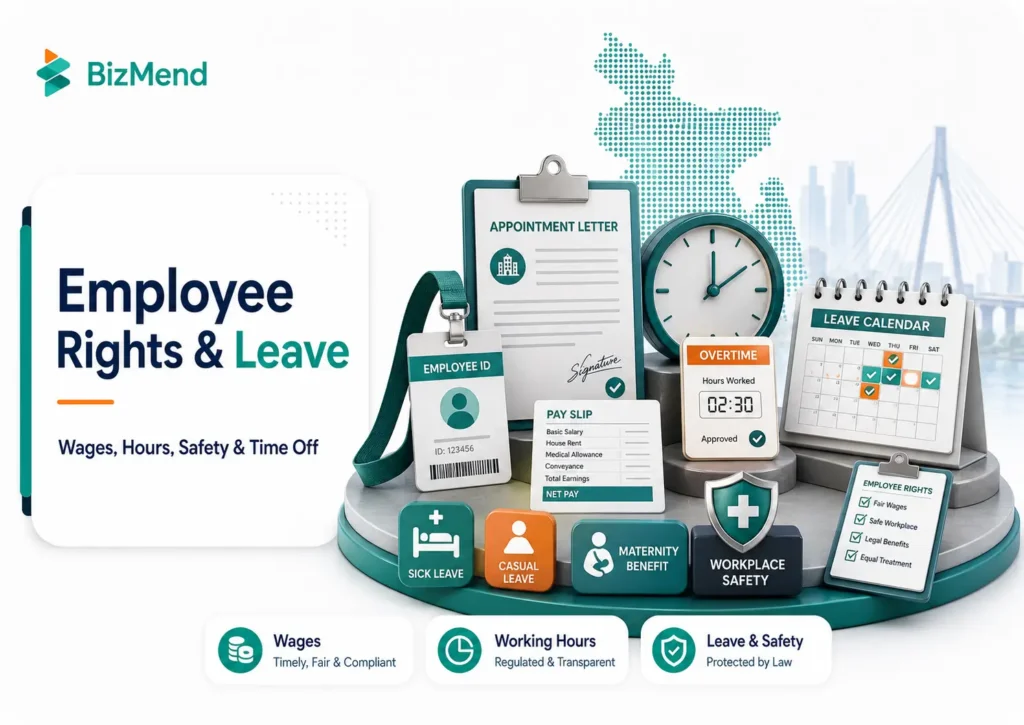
Wage rules are central to employment law BD because wages are the most common source of conflict. The law regulates payment of wages, deductions, timing, and related wage records. Employers should avoid informal payroll practices that leave workers unable to verify what was paid and why deductions were made.
Working time must also be managed carefully. The Act sets rules on daily and weekly working hours, rest intervals, weekly holidays, and overtime. Overtime should be recorded and paid according to the applicable legal formula instead of being folded vaguely into a monthly salary.
Minimum wage rules may depend on sector or industry wage boards. That means an employer should check the applicable wage notification for the specific industry, not only the general Labour Act. A garment factory, shop, transport business, or other sector may face different practical wage benchmarks.
Leave entitlements usually include casual leave, sick leave, annual leave, festival holidays, and maternity benefit where the worker is eligible. The exact amount and calculation can depend on the worker category and type of establishment, so employers should keep a written leave policy aligned with the law.
One current update deserves attention. The 2026 amendment changed maternity-related wording in the Labour Act, including a 60-day reference in one amended section and a separate provision referring to maternity leave of up to 120 days, so employers should check eligibility and payment rules before applying the number to a specific worker. Older holiday policies should be reviewed against the current amended Act, the Labour Rules, and any applicable workplace or sector-specific holiday rules before stating an exact festival-holiday number.
| Area | Practical point |
| Casual leave | Short personal leave, usually tracked within the calendar year. |
| Sick leave | Often requires medical support where the law or policy requires it. |
| Annual leave | Earned leave depends on service and workplace type. |
| Festival holidays | Employers should set holidays clearly and handle work on holidays lawfully. |
| Maternity benefit | Current guidance must reflect the 2026 amendment and eligibility rules. |
Ending employment is where many workplace disputes become expensive. Labour law in Bangladesh separates different concepts: termination by employer, resignation by worker, retrenchment, discharge, dismissal for misconduct, retirement, and other forms of separation. The label matters because the notice, compensation, inquiry, and final dues can change.
For ordinary termination, employers should check worker category, length of service, notice requirements, wages in lieu of notice, compensation, gratuity-related entitlement where applicable, and unpaid dues. For dismissal based on misconduct, the employer must pay attention to disciplinary process, evidence, and opportunity to respond.
Employees should avoid resigning verbally or signing settlement papers without understanding what is being paid. Employers should avoid forcing resignation to bypass termination rules. A clean final settlement should list unpaid wages, overtime, leave encashment if applicable, notice pay, compensation or gratuity-related payments if due, and any lawful deductions.
Workplace safety is not just a factory issue. The Labour Act includes health, hygiene, safety, welfare, and accident-related duties for covered establishments. Practical compliance can involve ventilation, cleanliness, drinking water, first aid, machinery safety, fire safety, safe exits, protective equipment, and training.
The 2026 amendment adds stronger workplace protection language, including provisions on discrimination, harassment as part of discrimination, and forced or compulsory labour. Employers should treat workplace conduct as a compliance issue, not only an HR culture issue. Complaints should be recorded, investigated fairly, and handled without retaliation.
For workers, safety complaints should be specific. Record dates, locations, witnesses, photos where lawful and safe, and any written complaint. For employers, the best defense is not silence. It is documented inspection, training, corrective action, and follow-up.
Worker representation is part of the labor act framework. Trade union rules can be technical, but the core idea is that workers may organize and bargain within the legal structure. The 2026 amendment changed trade-union and worker-representation provisions, so employers and workers should check the current amended text before deciding on registration, membership, or anti-union conduct issues.
Employers should not respond to organizing activity with threats, blacklisting, dismissal, or artificial employer-controlled unions. Workers should also follow the formal registration and membership rules. In practice, both sides benefit from knowing the current amended text before taking a hard position.
The Bangladesh Labour (Amendment) Act, 2026 was enacted on April 10, 2026 and took effect immediately according to the official Laws of Bangladesh entry. It also repealed the Bangladesh Labour (Amendment) Ordinance, 2025, while preserving actions taken under it as treated under the 2026 Act.
For a practical workplace guide, the most important message is this: do not rely on a pre-2026 template without review. Policies on maternity benefits, leave and holidays, provident fund or social-security arrangements where applicable, worker representation, workplace conduct, resignation or termination paperwork, and related HR forms may need updates.
The best way to use labour law is before a conflict starts. Employees should keep their documents organized. Employers should create repeatable systems that work even when the HR manager changes.
This guide explains the basic framework, but it is not a substitute for legal advice. Bangladesh labour law can turn on worker classification, length of service, sector, establishment type, wage notification, evidence, and the exact reason for separation.
Government employees, EPZ workers, independent contractors, consultants, platform workers, and senior management roles may raise different issues. If a large payment, dismissal, workplace injury, harassment complaint, or union matter is involved, get the current law text reviewed before acting.
The main law is the Bangladesh Labour Act, 2006, read with the Bangladesh Labour Rules, 2015 and later amendments. As of July 2026, the Bangladesh Labour (Amendment) Act, 2026 is important for current guidance.
Yes, appointment documentation is a core requirement for covered workers. It helps prove the terms of employment, worker category, wage arrangement, and joining date. Employers should also keep proper personnel files.
The 2026 amendment includes maternity-related wording referring to up to 120 days and also changes an older eight-week reference to 60 days in a related section. Eligibility, timing, and payment should be checked against the current Act and Rules before applying it to a specific case.
It depends on the reason and worker category. Ordinary termination, retrenchment, discharge, and dismissal for misconduct follow different rules. Employers should check notice, wages in lieu, inquiry requirements, compensation, and unpaid dues before issuing any termination decision.
Not always in the same way. Freelancers and independent contractors may fall outside normal worker protections if the relationship is genuinely independent. But labels are not everything. If the work looks like employment in practice, the facts should be reviewed carefully.
Workers should keep salary records, attendance proof, messages, payslips, bank statements, and any written demands. The next step depends on the workplace and dispute type, but documented facts make any complaint or negotiation stronger.
Labour law in Bangladesh is practical before it is theoretical. It tells employers what to document, what to pay, how to manage leave and safety, and how to end employment without turning every exit into a dispute.
For employees, the law gives a language for basic workplace rights. For employers, it gives a structure for cleaner HR decisions. The 2026 amendment makes one point especially clear: old templates are risky. Use the Bangladesh Labour Act, the current amendments, and the Labour Rules together before making decisions that affect wages, leave, termination, or worker representation.

Learn how to become a Daraz seller in Bangladesh, register an account, list products, understand fees, manage orders, and grow…
by Sheikh Ornob

Compare the cost of living in Bangladesh in 2026, including Dhaka and Chittagong rent, food, transport, utilities, inflation, and monthly…
by Sheikh Ornob

Learn MoA and AoA requirements in Bangladesh, key clauses, drafting basics, RJSC filing steps, amendments, and common company-registration mistakes. Suggested…
by Sheikh Ornob