How to Become a Daraz Seller in Bangladesh: Registration, Fees & Growth
Learn how to become a Daraz seller in Bangladesh, register an account, list products, understand fees, manage orders, and grow…
 by Sheikh Ornob

Bangladesh has more tourism demand than its global image suggests. The tourism industry in Bangladesh is still underdeveloped. That gap is exactly where the business story starts. Quick Answer:Bangladesh's tourism...
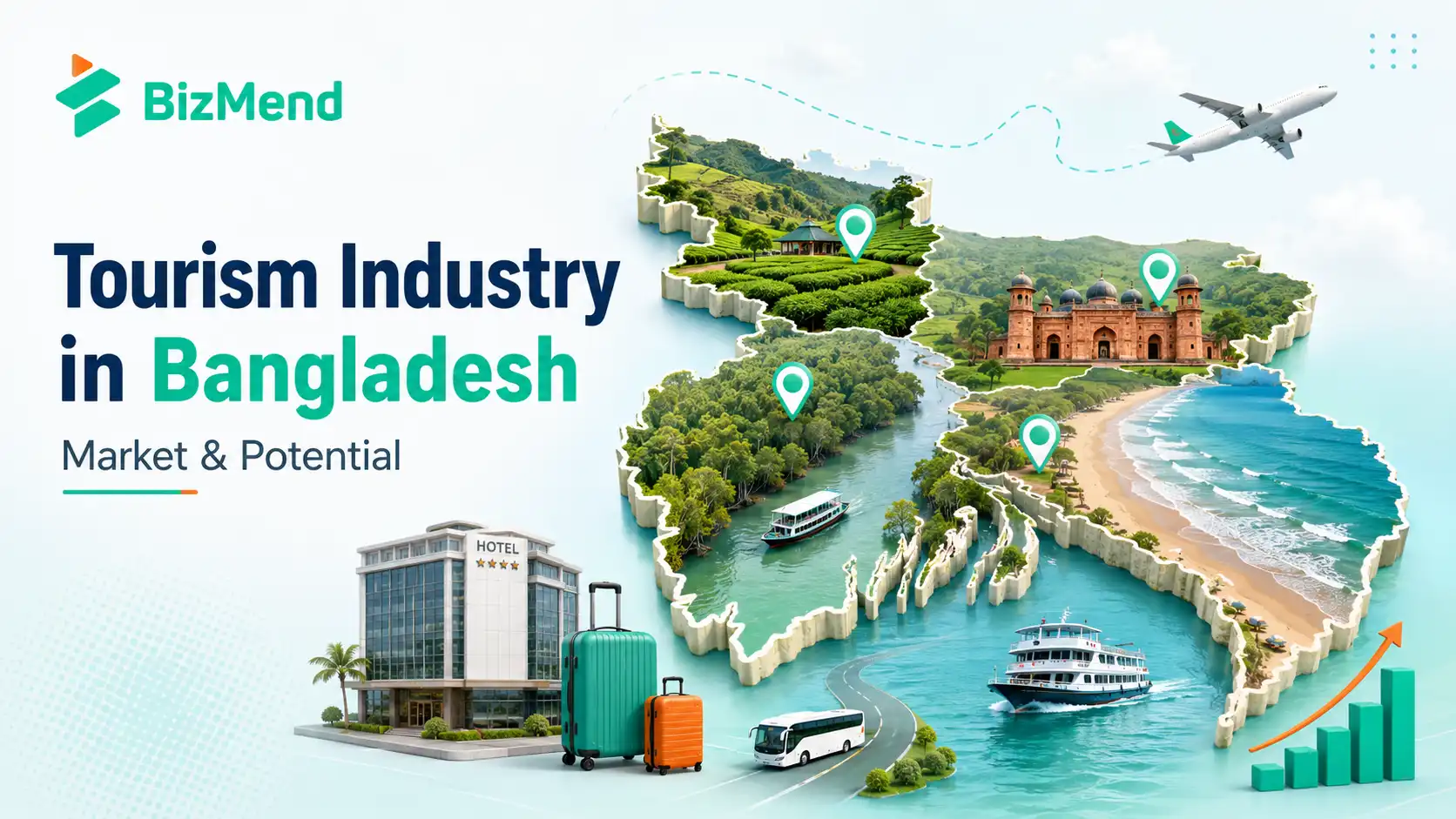
Bangladesh has more tourism demand than its global image suggests. The tourism industry in Bangladesh is still underdeveloped. That gap is exactly where the business story starts.
Quick Answer:Bangladesh’s tourism market is strongest in domestic travel, hospitality, transport, food, and destination services. BBS estimated tourism at 3.02 percent of GDP using FY2018 to FY2019 data, while the 2026 to 2027 budget targets 6 to 7 percent, so the upside is real but hard to execute.
Bangladesh is not yet a polished mass tourism destination like Thailand, Malaysia, or Sri Lanka. That’s the first honest point. Its market is more local, more seasonal, and more dependent on family trips, business travel, diaspora visits, education travel, religious movement, and weekend breaks.
Still, the base is meaningful. BBS’s Tourism Satellite Account 2020 estimated tourism at 3.02 percent of GDP and 8.07 percent of total employment, using FY2018 to FY2019 data. In June 2026, the national budget set a target of lifting the sector’s GDP share to 6 to 7 percent.
The best tourism businesses in Bangladesh will sell reliability first, then scenery.
That gap between current share and policy ambition is the market story. It says there’s room for growth, but not a guarantee. Better airports, cleaner hotels, trained guides, digital booking, safe transport, and stronger destination care must all work together.
The catch is timing. Peak weekends, Eid holidays, school breaks, and winter travel can make demand look huge, then softer months expose weak cash flow. A smart tourism business needs packages and pricing that can survive both crowded Fridays and quiet Tuesdays.
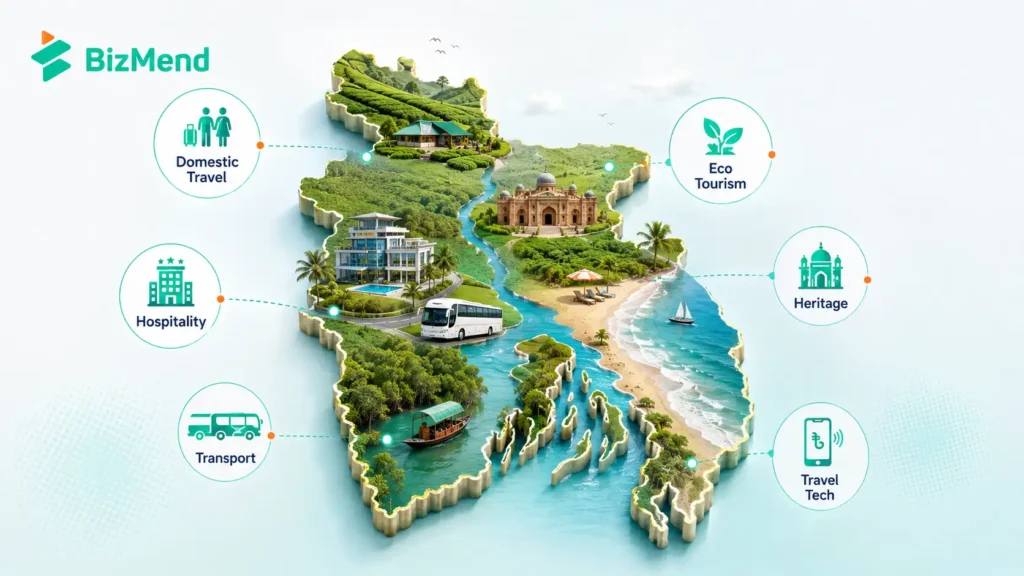
Tourism is not one industry sitting neatly in one box. It’s a stack of businesses that turn movement into spending. That is why a tourism boom can spill into hotels, food, transport, retail, events, digital tools, and training.
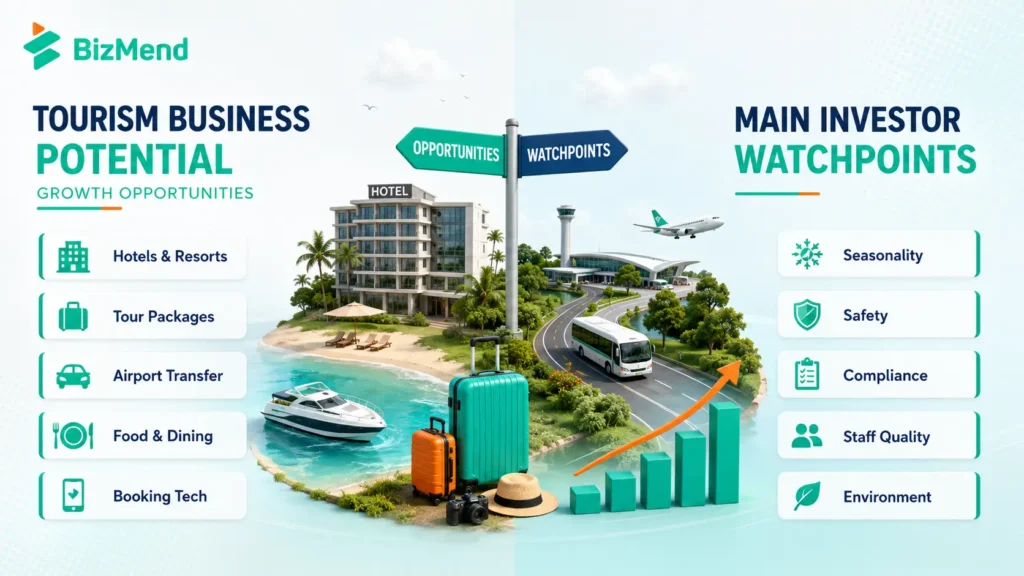
| Industry | Business potential | What to watch |
| Hotels and resorts | Midmarket rooms, family stays, branded guesthouses, serviced apartments, resort management | Seasonality, staff training, hygiene, online reviews |
| Food and restaurants | Destination dining, highway food stops, local cuisine brands, catering for tours | Food safety, pricing, supply consistency |
| Transport and aviation | Airport transfers, intercity buses, river tours, vehicle rental, tourist shuttles | Safety, route reliability, fuel costs, permits |
| Tour operators and guides | Curated tours, eco trips, heritage walks, student groups, diaspora packages | Registration, guide quality, refund terms, visitor protection |
| Travel tech | Booking tools, itinerary apps, review systems, payment support, inventory management. | Trust, local language support, supplier onboarding |
| Creative and retail | Crafts, festivals, cultural events, souvenirs, photography, local experiences | Authenticity, fair community pay, quality control |
For foreign investment in Bangladesh, this matters because the best entry point may not be a hotel. It may be a booking layer, staff training company, destination transport brand, clean roadside restaurant, or specialist travel business Bangladesh travelers already need.
The hotel industry bd opportunity has two faces. Dhaka, Chattogram, and Sylhet need business-friendly rooms, airport access, event support, and serviced stays. Cox’s Bazar, Kuakata, Sajek, Sreemangal, and Sundarbans routes need leisure properties that feel clean, safe, and easy to book.
Aviation matters here. Hazrat Shahjalal International Airport reported 37,000 to 38,000 daily passengers in early 2024, based on 2023 traffic. The 2026 to 2027 budget also pointed to terminal expansions, runway work, and airport upgrades in Cox’s Bazar, Sylhet, Chattogram, Jashore, Saidpur, and Rajshahi.
That doesn’t mean every hotel project is safe. It means location, service level, and demand mix matter more than glossy brochures. A 40-room clean midmarket hotel with tight operations can beat a fancy but poorly managed property. Guests remember broken air conditioning faster than marble floors.
Travel business in Bangladesh operators now face a more formal market. The Bangladesh Tourism Board registration portal describes tour operators as companies that organize tours, packages, transport, accommodation, and activities. It also provides registration resources for tour operators and guides.
The 2024 tour operator and guide rules made registration a central issue for the sector. That can raise trust for tourists, especially foreign visitors, families, schools, and corporate groups. It can also create pressure for smaller operators, so anyone entering the market should check the latest registration conditions and start a business in Bangladesh before launch.
The best tourism business opportunity in Bangladesh is usually practical, not glamorous. Travelers want less uncertainty. Parents want safer trips. Office teams want reliable transport. Foreign visitors want guides who can explain context without turning a trip into a lecture.
The bigger play is packaging. Bangladesh already has beaches, mangroves, tea gardens, heritage, rivers, food, music, craft, and village life. The missing piece is often the paid experience that makes those assets easy, safe, and worth recommending.
Bangladesh’s tourism upside is real, but the weak spots are not small. The World Economic Forum ranked Bangladesh 109th out of 119 economies in its 2024 Travel and Tourism Development Index. That score reflects the work still needed on policy conditions, infrastructure, services, openness, sustainability, and demand pressure.
This is where patient operators have an edge. If you build for compliance, safety, service, and repeat visits, you’re not just chasing tourists. You’re helping make the market more investable.
The tourism industry in Bangladesh has strong raw material: people, places, culture, food, rivers, beaches, forests, and a large domestic traveler base. The business potential sits in turning that raw material into reliable paid experiences. If Bangladesh gets service quality, destination care, data, and transport right, tourism can become a much larger part of the economy.
Yes, but growth is uneven. Domestic tourism is much stronger than inbound tourism, and the government has set a 2026 to 2027 budget target to lift tourism’s GDP contribution to 6 to 7 percent. The market still needs better data, safer services, and stronger destination management.
Practical businesses have the best chance. Hotels, domestic tour packages, airport transfers, guide services, food brands, eco tourism, travel tech, booking support, and hospitality training can all work when they solve real problems for travelers.
It can be attractive in the right location and price band. Dhaka needs business and airport-related stays, while Cox’s Bazar and other leisure destinations need clean, reliable, family-friendly rooms. Weak operations can ruin even a good site.
Tour operators and guides moved into a formal registration framework under the 2024 rules. Anyone planning to operate should check the current Bangladesh Tourism Board registration portal and confirm the latest required documents, timing, and conditions before launching.
The main challenges are service quality, transport reliability, destination safety, waste management, staff training, policy clarity, and limited international branding. These gaps are exactly where disciplined businesses can create value.

Learn how to become a Daraz seller in Bangladesh, register an account, list products, understand fees, manage orders, and grow…
by Sheikh Ornob
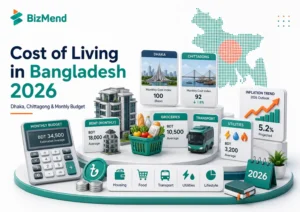
Compare the cost of living in Bangladesh in 2026, including Dhaka and Chittagong rent, food, transport, utilities, inflation, and monthly…
by Sheikh Ornob
Learn MoA and AoA requirements in Bangladesh, key clauses, drafting basics, RJSC filing steps, amendments, and common company-registration mistakes. Suggested…
by Sheikh Ornob