
 by Sheikh Ornob
A good card should pay you back, not pull you into expensive debt. Credit cards in Bangladesh can be useful if you pick carefully. The hard part is knowing which benefits are real.
In 2026, the market is bigger, more regulated, and more crowded. Banks now sell cashback, lounge access, EMI, dual currency use, reward points, and fee waivers in the same breath. This guide cuts through that noise so you can compare options, read the charges, check eligibility, and apply with fewer surprises. It also shows where fees can hide, because that is where many cardholders get caught quickly.
Quick answer: The best card depends on your spending. City Bank American Express is strong for dining and lifestyle offers, EBL and UCB are strong for travel perks, BRAC Bank and Prime Bank offer broad Visa and Mastercard choices, and DBBL or secured cards can suit fee-sensitive first-time users.
Key Takeaways
- Bangladesh Bank raised the individual credit card ceiling in March 2026, with up to Tk 20 lakh unsecured and up to Tk 40 lakh against liquid security.
- The maximum credit card interest rate is 25 percent, but interest should apply to the outstanding balance rather than the full bill amount.
- A card with strong restaurant offers may beat a premium travel card if most of your spending happens inside Dhaka.
- Annual fees can range from low entry-level fees to high premium fees, so compare waiver rules before comparing rewards.
- Most applicants should expect to provide NID, e-TIN or tax return proof, CIB consent, income or bank documents, and a signed application.
- Secured cards can help applicants with thin income proof, but the credit limit depends on the bank’s hold over deposits or other liquid security.
- Cash advance is usually expensive because fees and interest can start faster than normal purchase billing.
- The smartest card is the one you can pay in full every month while using benefits you would have used anyway.
How Credit Cards Work in Bangladesh in 2026
A credit card gives you a bank-approved spending limit. You spend first, receive a monthly statement, and then pay the full bill or at least the minimum due before the payment date. If you pay the full statement on time, purchases usually stay within the interest-free period.
The biggest 2026 change is regulatory. Bangladesh Bank’s updated policy, reported in March 2026, raised the maximum credit card ceiling to Tk 20 lakh for unsecured cards and Tk 40 lakh for secured cards backed by deposits or similar liquid security.
The same policy keeps the maximum annual interest rate at 25 percent on unpaid outstanding balances. That does not make cards cheap to borrow. It simply means banks cannot go above that cap, and readers should still check the actual rate on the bank’s latest schedule of charges.
A higher limit is useful only when your repayment habit is stronger than your spending impulse.
Best Credit Cards in Bangladesh by Use Case
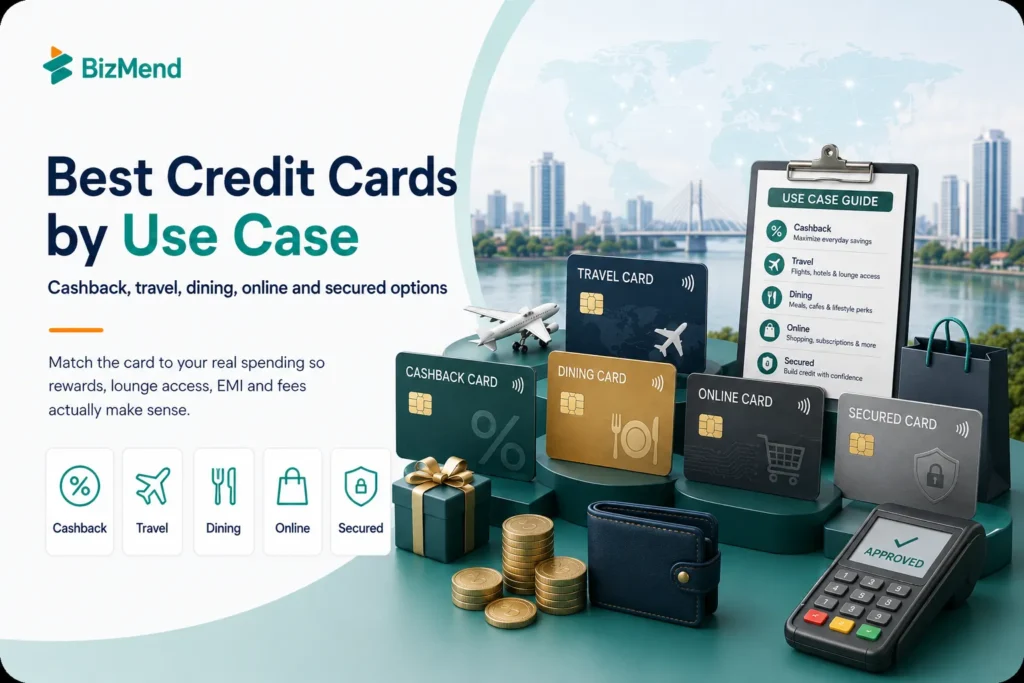
There is no honest single winner for every person. A salaried first-time user, a frequent flyer, a freelancer paying online, and a family grocery shopper all need different cards. So the better question is, which card type fits your use?
| Use Case | Good Card Direction | Examples to Compare | Why It May Fit |
| New card user | Classic or entry-level card | DBBL Classic, City Bank basic Amex, entry Visa cards | Lower fees, simpler limits, easier card habits. |
| Cashback shopper | Cashback or retail rewards card | BRAC Bank Visa Cashback, Standard Chartered Simply Cash | Useful if caps and categories match your spending. |
| Travel user | Platinum, Signature, World, or dual-currency card | EBL Platinum or Signature, Dhaka Bank Platinum, SC Signature | Lounge access, travel perks, foreign use, higher limits. |
| Online shopping | E-commerce or co-branded card | EBL Daraz card, bank Visa or Mastercard options | Better if rewards apply to your real online merchants. |
| Premium lifestyle | Amex, Signature, World, or Reserve card | City Bank American Express, EBL Mastercard World | Dining, lounge, partner offers, concierge-style benefits. |
| Limited income history | Secured credit card | Cards backed by FDR or deposit lien | Useful if income documents are weak but savings exist. |
For many readers, a low-fee card with reliable app control beats a premium card with benefits they rarely use. A Tk 5,000 annual fee only makes sense if you recover that value through real usage, not imagined usage.
Benefits That Actually Matter
Credit card ads often lead with shiny privileges. Some are genuinely useful. Others sound expensive. The real test is whether the benefit saves money, improves payment control, or gives access to things you would otherwise pay for.
- Rewards points matter when the redemption path is clear and the points do not expire before you use them.
- Cashback is better for people who want simple value without studying reward catalogs.
- Dining offers are valuable in Dhaka, Chattogram, and large shopping areas.
- Zero percent EMI can help with planned purchases, but only if processing fees and merchant conditions are clear.
- Lounge access is useful if you fly often, not once a year.
- Dual currency use helps with travel, foreign subscriptions, and online tools.
- Fraud controls, SMS alerts, app controls, and quick card blocking matter more than most one-time offers.
A simple rule is to give higher weight to benefits that match monthly spending. Give lower weight to one-off discounts, seasonal campaigns, and perks that require you to spend more than planned.
Fees and Charges to Compare Before You Apply
The annual fee is only the visible part. Credit cards in Bangladesh can also carry other fees, including late payment fees, cash advance fees, SMS alert fees, certificate fees, CIB fees, EMI processing charges, and many more. While tolerable alone, together, they can eat the reward value fast.
| Fee or charge | What to check | Why it matters |
|---|---|---|
| Annual or renewal fee | Primary card fee, supplementary card fee, and waiver rule. | A card is not free if the waiver requires spending you would not normally make. |
| Interest rate | Purchase interest and cash advance interest. | Bangladesh Bank’s current cap is 25 percent, but paying in full avoids purchase interest. |
| Late payment fee | Amount, billing-cycle rule, and minimum payment condition. | One missed due date can wipe out months of rewards. |
| Cash advance fee | ATM fee, cash limit, and whether interest starts immediately. | Cash advance is usually one of the worst ways to use a card. |
| Foreign markup | Visa, Mastercard, Amex, or bank markup on non-BDT spending. | Useful for travel and software payments, but the exchange cost can be real. |
| Insurance or protection fee | Whether it is optional and how to cancel. | Some users pay for add-ons they never intended to keep. |
| EMI costs | Processing fee, interest rate, merchant rules, and early settlement terms. | Zero percent EMI can still have conditions worth reading. |
BRAC Bank’s 2025 charge schedule lists annual fees from Tk 1,500 on Gold Flexi to Tk 20,000 on Infinite, with annual interest shown at 25 percent for several mainstream cards and 22 percent for some TARA cards. CityMaxx American Express shows a BDT 600 plus VAT annual fee. UCB’s public schedule page links credit and prepaid card charges, while Prime Bank publishes a 2026 credit card schedule. These examples show why the latest schedule matters before you apply.
Rewards feel generous until fees arrive on a statement you did not read closely.
Eligibility and Documents Needed
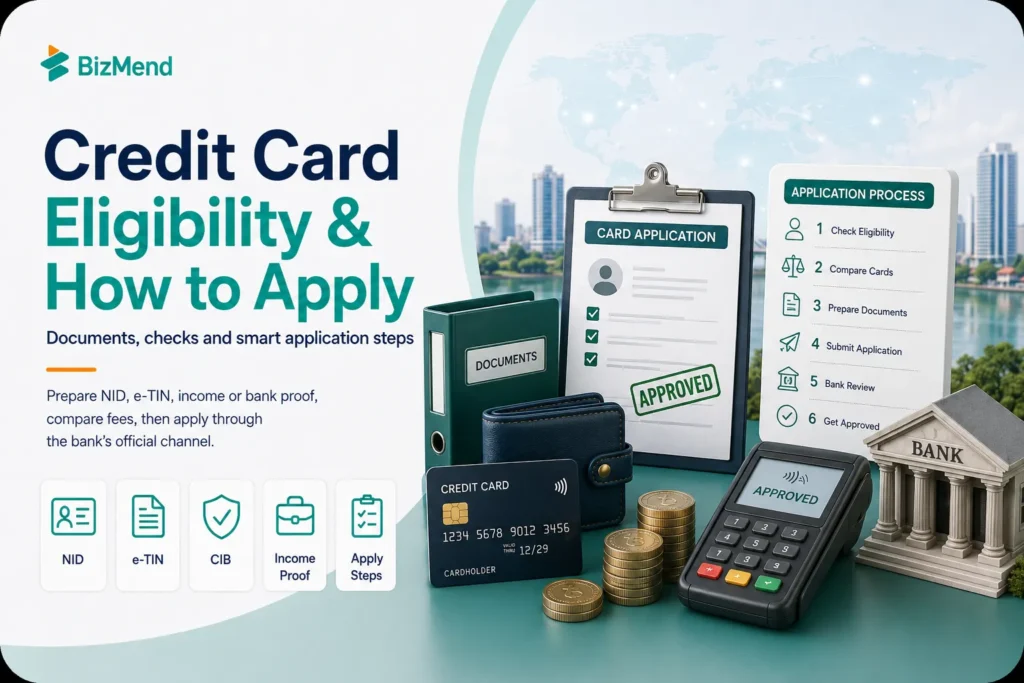
Bangladesh Bank’s 2026 policy framework requires primary credit card applicants to be at least 18 years old, hold an e-TIN certificate, and maintain a clean CIB record. Students aged 16 can typically access credit cards only as supplementary users under a primary cardholder.
Document requirements vary by bank, but most unsecured applicants need a signed application form, NID copy, tax return certificate or acknowledgement, passport-size photo, CIB form or undertaking, bank statement, and office ID or visiting card where applicable. Secured-card applicants may submit fund-holding or lien documents instead of the full income package.
Salaried applicants usually need payslips or salary certificates. Business owners typically provide a trade license, bank statements, and tax documents. Freelancers generally need remittance records, proof of platform income, tax documents, and an established banking relationship.
How to Apply for a Credit Card in Bangladesh
The application process is usually simple, but approval depends on risk review. Many banks let you start online, at a branch, through a relationship manager, or through a campaign booth. Do not rush the form. A mismatch between income, tax, address, phone number, or employment details can slow the file.
- Shortlist three cards based on your real use case: daily spending, travel, online payments, low fees, or secured credit history.
- Open each bank’s latest schedule of charges and check annual fee, interest, late fee, cash advance, markup, and waiver rules.
- Confirm eligibility before applying, especially minimum income, employment type, CIB status, e-TIN, and whether secured cards are allowed.
- Prepare documents in clear copies, including NID, tax proof, bank statement, income proof, photo, and CIB consent, where needed.
- Submit the application through the bank’s official channel and keep a record of the card name, campaign, fee waiver promise, and date.
- Answer verification calls carefully because banks may confirm address, workplace, income, and existing loan or card details.
- Read the approval letter and card carrier before activation, then check the limit, billing date, due date, annual fee, and optional add-ons.
- Set up app access, SMS alerts, auto-debit or reminders, and a personal rule to pay the full statement amount whenever possible.
If a salesperson promises lifetime free use, first-year fee waiver, cashback, or free lounge access, ask where that appears in writing. Campaign terms change. Your strongest protection is a screenshot, email, brochure, or bank page that matches the offer you accepted.
How to Choose the Right Card
Start with spending, not status. A premium card can look impressive and still be wrong for you. A basic card can look plain and still save money. Your monthly habits should decide the card category before the brand does.
| Your profile | Better card direction | What to avoid |
|---|---|---|
| New salaried worker | Low annual fee card from Salary Bank or a secured card. | Premium card with lounge benefits you will not use. |
| Family grocery and dining spender | Cashback, supermarket, restaurant, and partner offer card. | Reward points with poor redemption options. |
| Frequent domestic or international traveler | Dual currency, lounge, travel insurance, and strong fraud controls. | Low-fee card with weak travel support. |
| Freelancer or remote worker | Dual currency card with clear foreign markup and online acceptance. | Card with unclear foreign spending rules. |
| High spender | Reward-heavy or premium card with fee waiver potential. | Entry card with low reward rate and tight limit. |
| Credit-history builder | Secured card or conservative unsecured card. | Multiple applications in a short period. |
Also compare network acceptance. Visa and Mastercard are widely understood across Bangladesh. American Express has strong City Bank-backed offers and premium value, especially in dining and lifestyle categories, but acceptance can vary by merchant. UnionPay, Diners Club, and other options can be useful in specific cases, yet they should match where you actually spend.
Common Mistakes to Avoid
The first mistake is treating the credit limit as extra income. It is borrowed money with a due date. The second mistake is paying only the minimum due. That keeps the account active, but it can leave the unpaid balance carrying interest. The third mistake is withdrawing cash unless there is no safer option.
- Do not apply for several cards at once just because campaigns look attractive.
- Do not ignore optional insurance, protection, or add-on fees after activation.
- Do not miss the first due date while waiting for paper statements.
- Do not assume all EMI plans are free without reading processing charges and merchant terms.
- Do not use a personal credit card for business cash rotation or someone else’s spending.
- Do not chase annual fee waivers by buying things you did not need.
A credit card works best when it acts like a payment tool, not a rescue loan. If your income is irregular, keep the limit modest. If you carry a balance often, rewards should not be your first concern. Your first concern should be lowering interest costs and building repayment discipline.
Final Thoughts
The best credit cards in Bangladesh are not always the most expensive ones. In 2026, stronger rules give users more clarity, but the decision still comes down to fit. Compare the latest fee schedule, match benefits to real spending, and apply only when repayment is comfortably within reach.
Frequently Asked Questions
What is the best credit card in Bangladesh in 2026?
There is no single best credit card for everyone. City Bank American Express cards are strong for lifestyle and dining offers, EBL and UCB are worth comparing for travel perks, BRAC Bank and Prime Bank offer broad card ranges, and DBBL or secured cards may suit fee-sensitive beginners. Choose by spending pattern rather than brand alone.
What is the maximum credit card limit in Bangladesh?
Bangladesh Bank raised the maximum individual credit card ceiling in March 2026. Reporting from major Bangladeshi news outlets says banks may offer up to Tk 20 lakh unsecured and up to Tk 40 lakh against liquid security. Your actual approved limit depends on income, repayment capacity, current debts, and bank risk review.
What documents are needed to apply for a credit card?
Most applicants should prepare a completed application form, NID copy, e-TIN or tax return proof, passport-sized photo, CIB consent or undertaking, bank statement (if applicable), and office ID or visiting card where relevant. Business owners, freelancers, and secured-card applicants may need extra documents.
Can students get credit cards in Bangladesh?
Primary card applicants generally need to be adults with acceptable tax and credit records. Under the 2026 policy reporting, dependent students aged 16 may use supplementary cards under a primary cardholder. Banks may set their own conditions for supplementary card use, limits, and responsibility.
Is a secured credit card a good option?
A secured credit card can be useful if you have weak income proof, no card history, or want a lower-risk approval path. The bank holds a deposit or other liquid security, then assigns a limit based on its policy. It still needs disciplined repayment because missed payments can damage your credit record.
Should I choose Visa, MasterCard, or American Express?
Visa and Mastercard usually offer broad local and international acceptance. American Express, issued through City Bank in Bangladesh, can be strong for dining, lifestyle, and premium benefits, though merchant acceptance may differ. The better choice depends on where you spend, which offers you use, and what fees you can justify.