
 by Sheikh Ornob
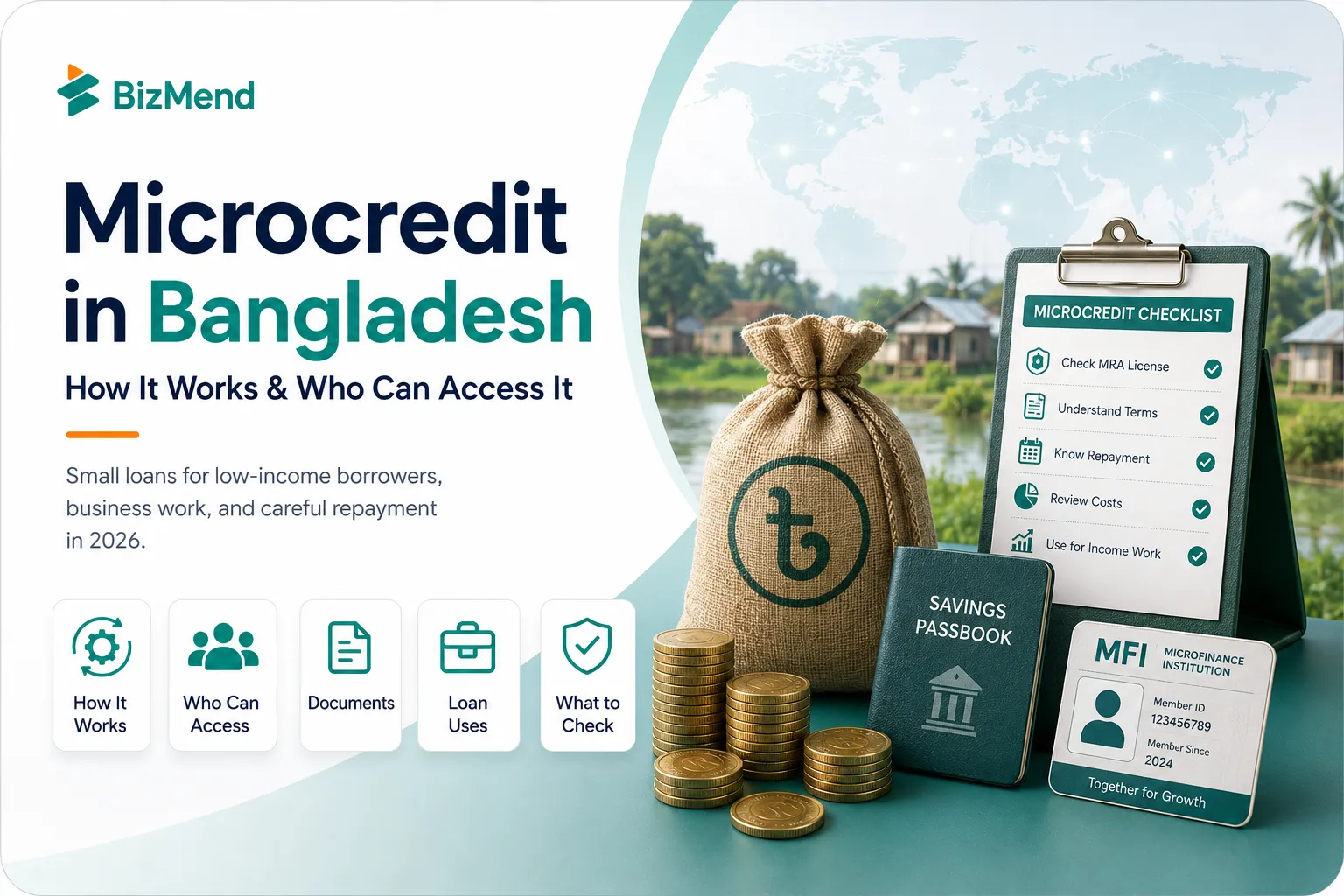
Microcredit in Bangladesh is small money with big consequences. It can stock a tea stall, buy a sewing machine, or bridge one hard season. It can also become painful when repayment math is fuzzy.
That is why this guide keeps the idea practical. You will see how microloans usually work, who offers them, who can apply, and what to check before joining a group or signing papers. The goal is not to sell microcredit as magic. It is to help you read the offer with clear eyes and a calculator nearby before the first meeting and first installment.
Quick answer: Microcredit in Bangladesh usually means small, collateral-light loans offered through NGO MFIs, Grameen Bank, PKSF partner organizations, and similar channels. NGO MFIs are regulated by the Microcredit Regulatory Authority under the 2006 Act, and the commonly reported service-charge ceiling is 24 percent on a reducing-balance basis.
Key Takeaways
- Microcredit is designed for small borrowers who may not qualify for ordinary bank loans or collateral-based business finance.
- Bangladesh has a large microfinance market, with NGO MFIs, Grameen Bank, PKSF partner organizations, and new microfinance bank rules all shaping access.
- Most microloans are tied to income-generating work, such as petty trade, farming, livestock, tailoring, food sales, or small services.
- Women are central to the sector, with PKSF reporting that women made up 93.67 percent of its partner organizations’ borrowers as of June 2025.
- Eligibility is practical, not fancy. Lenders usually care about identity, residence, group participation, repayment ability, and a believable use of funds.
- The real cost is not only the service charge. Borrowers should check installment timing, fees, savings rules, insurance charges, penalties, and pressure from multiple loans.
- Microcredit can help when cash flow is steady. It can hurt when the borrower uses one loan to pay another or borrows for expenses that do not produce income.
What Microcredit Means in Bangladesh
Microcredit is a small loan built for people who need working money, not a large bank facility. In Bangladesh, that often means a microloan for a shopkeeper, rickshaw-related business, poultry keeper, farmer, tailor, home cook, mobile seller, or village trader.
The idea became globally known through Bangladesh, especially through Grameen Bank and NGO-led rural finance. But today the market is bigger than one model. It includes village credit bd programs, urban small traders, microenterprise finance, agriculture loans, savings-linked accounts, and group-based repayment systems.
- Small loan sizes, usually matched to a modest business or household enterprise.
- Little or no traditional collateral, though group discipline may still matter.
- Frequent repayments, often weekly or monthly depending on the provider.
- A strong focus on women borrowers and low-income households.
That last point matters. Microcredit is not free money, poverty relief, or a grant. It is debt. The best version helps a borrower earn more than the repayment cost. The worst version becomes another fixed bill in a household that already has too many.
Who Provides Microcredit and Who Watches the Sector
The main regulator for NGO microfinance is the Microcredit Regulatory Authority, usually called MRA. It was created under the Microcredit Regulatory Authority Act, 2006, to regulate microcredit organizations and their activities. So, if you are checking an NGO MFI, the first serious question is simple: is it licensed by MRA?
The sector also has large institutional channels. PKSF works through partner organizations across Bangladesh. As of June 2025, PKSF said those partner organizations had 20.70 million members and 15.80 million borrowers. Grameen Bank separately reported cumulative loan disbursement of US$42.12 billion to 10.88 million borrower members up to April 2026.
| Provider type | What it usually means | Borrower check |
|---|---|---|
| NGO MFI | A licensed microfinance institution offering small credit Bangladesh programs. | Check the MRA license and local office reputation. |
| PKSF partner organization | An organization funded or supported through PKSF programs. | Ask which PKSF product applies and how repayment is scheduled. |
| Grameen Bank | A specialized microfinance bank with a long group-based lending history. | Ask about membership, center rules, savings, and installment terms. |
| Microfinance bank | A newer legal route under the Microfinance Bank Ordinance, 2026. | Check Bangladesh Bank licensing and current operating status. |
The 2026 microfinance-bank ordinance is worth watching, but do not treat it as a shortcut. New rules can change licensing, deposit-taking, ownership, and oversight. If a lender claims to be a microfinance bank, verify its Bangladesh Bank status before handing over money or documents.
How a Micro Loan Usually Works
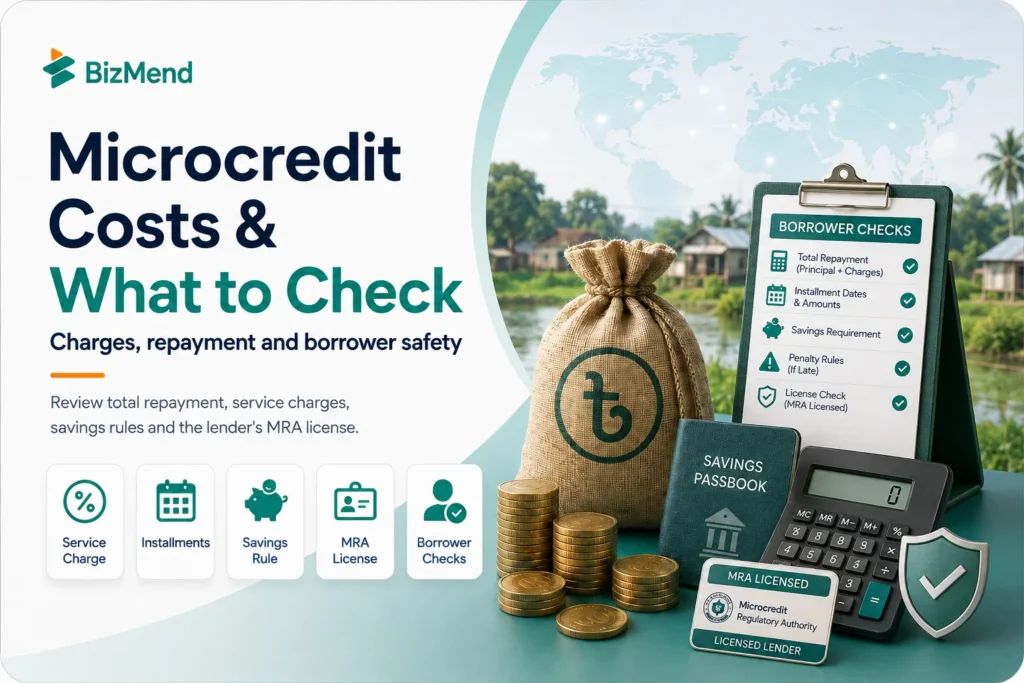
A typical process starts locally. A field officer or branch worker explains the loan product, checks your household and business, reviews your documents, and may ask you to join a borrower group or center. The lender then decides the amount, repayment period, service charge, savings rule, and installment schedule.
The loan amount matters less than the rhythm of repayment.
That rhythm is where many people get surprised. A loan can look affordable in total, then feel heavy when weekly installments start before the business has turned stock into cash. If you buy poultry, crops, or seasonal goods, ask whether the repayment schedule matches the earning cycle.
- You discuss the loan purpose, such as trade, livestock, agriculture, or a home-based service.
- The lender checks identity, address, group fit, and repayment capacity.
- You receive the approved amount after signing the required papers.
- You repay in fixed installments and may also keep required savings.
- After good repayment history, some lenders may offer a larger follow-up loan.
The common reported ceiling for NGO microcredit service charges is 24 percent, after a 2019 cut from 27 percent. In July 2025, The Financial Express reported that the government was reviewing that charge. So borrowers should ask for the latest written rate and the full repayment amount before accepting any offer.
Who Can Access Microcredit
There is no single national borrower profile for every microcredit program. Each MFI or bank sets its own rules. Still, the usual target is clear: low-income people with a small earning activity, a workable plan, and a way to repay in regular installments.
You may be a good fit if you run a tiny shop, sell food, raise livestock, farm a small plot, sew clothes, repair phones, drive an income asset, or want to grow a home-based service. Students and researchers should note the difference: microcredit is usually for borrower income, not general education finance.
- A national ID card or other accepted identity proof.
- A current address in the lender service area.
- A small business, trade, farm activity, or income plan.
- Group membership or center attendance if the product uses group lending.
- A repayment plan that survives a bad week, not just a good week.
Women often receive priority because the sector has long used women-centered groups. PKSF reported that women were 93.67 percent of its borrowers as of June 2025, while Grameen Bank reported that 97 percent of its 10.88 million borrower members up to April 2026 were female. Men can still access many products, but local rules vary.
What to Check Before You Apply
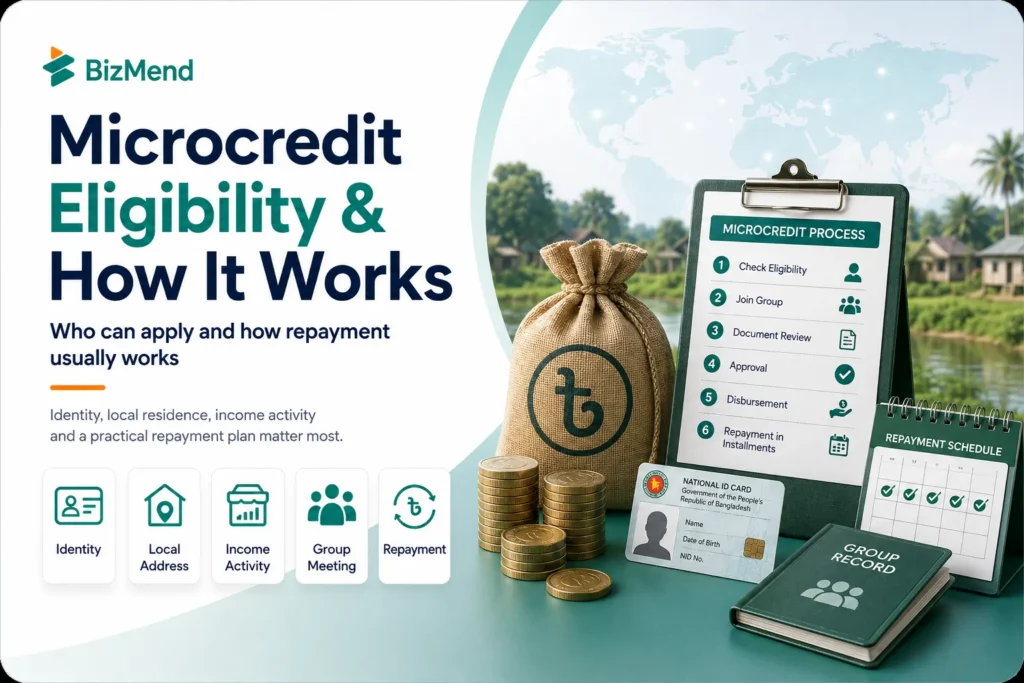
The most dangerous mistake is comparing only the loan amount. A BDT 50,000 loan is not automatically better than BDT 30,000 if the first one creates pressure every week. You need the repayment table, total charge, installment date, savings rule, and any insurance or processing cost.
A small loan is only small if the repayment fits your real week.
- Ask for the total amount you will repay, not only the rate.
- Check whether the rate is a reducing balance or a flat calculation.
- Ask what happens if you miss one installment and what counts as overdue.
- Do not borrow from a second lender to keep the first lender happy.
- Keep your own notebook of payments, even if the lender gives receipts.
- Avoid signing blank papers or handing over original documents without a clear reason.
Also check whether the lender is licensed or formally recognized. MRA lists annual sector statistics and regulatory materials, while local branches should be able to show license information. If a field officer dodges basic questions about rate, term, or total repayment, slow down.
Microcredit Compared With Other Small-Finance Options
Microcredit is one tool. It is not always the cheapest or safest one. Bangladesh also has bank SME loans, agricultural finance, cooperative lending, mobile financial services, informal family borrowing, supplier credit, and savings-based self-financing. Each option has tradeoffs.
| Option | Best for | Main caution |
|---|---|---|
| Microcredit | Small, regular earning activities with frequent cash flow. | Installments can feel tight if income is seasonal. |
| Bank SME loan | Registered or more established businesses. | May require documents, bank history, or collateral. |
| Agriculture loan | Crop, livestock, fisheries, or farm inputs. | Timing must match harvest or sale cycles. |
| Supplier credit | Traders buying stock from wholesalers. | Prices may be higher than cash purchase prices. |
| Family loan | Emergency support or very small needs. | Can strain relationships if repayment is unclear. |
Choose based on cash flow, not pride. If your business earns daily, weekly repayment may work. If your income comes after harvest, a weekly schedule can create stress. If you need money for medical care, school fees, or rent, think carefully before using an income loan for consumption.
Final Thoughts
Microcredit in Bangladesh works best when the loan is tied to real earning activity, clear records, and a repayment plan you can survive. It is not magic. It is a financial tool. Before applying, check the lender, the total repayment, the schedule, and your own cash flow. That pause can save you from a loan that looks helpful today but feels heavy next month.
Frequently Asked Questions
What is microcredit in Bangladesh?
Microcredit in Bangladesh usually means a small loan for low-income borrowers, often for income-generating work. It may be offered by NGO MFIs, Grameen Bank, PKSF partner organizations, or other regulated channels. Many products use group meetings, frequent installments, and limited traditional collateral.
Do I need collateral for a microloan in Bangladesh?
Many microloans do not require land, buildings, or large assets as collateral. That does not mean there are no obligations. A lender may require group membership, savings, guarantor-style social checks, regular attendance, and strict repayment discipline.
Who regulates NGO microfinance institutions in Bangladesh?
The Microcredit Regulatory Authority regulates NGO microfinance institutions under the Microcredit Regulatory Authority Act, 2006. If you are dealing with an NGO MFI, ask for its MRA license details and check whether the branch is operating under that licensed organization.
Is microcredit only for women?
No, but women are a major borrower group. PKSF and Grameen Bank both report very high female participation. Some products focus mainly on women because group-based microfinance in Bangladesh has historically worked through women borrowers, especially in rural and low-income communities.
What should I ask before taking out a microloan?
Ask the lender for the approved amount, total repayment, service charge calculation, installment size, repayment dates, savings requirement, insurance or processing costs, and penalty rules. Also ask what happens if your business has one bad week.