
 by Sheikh Ornob
Small loans can change the math fast. For many Bangladeshi households, one loan shapes stock, seed, school fees, or migration plans. That is why BRAC microfinance deserves a clear look.
BRAC is best known as a development organization, but its microfinance program is also one of the country’s largest financial access channels. For borrowers, the important question is which loan fits your income pattern, what will BRAC check, and how do you start without confusing it with BRAC Bank loans? This guide keeps the answer practical, local, and careful, so you can compare options in Bangladesh today without any issues. Here’s what actually matters.
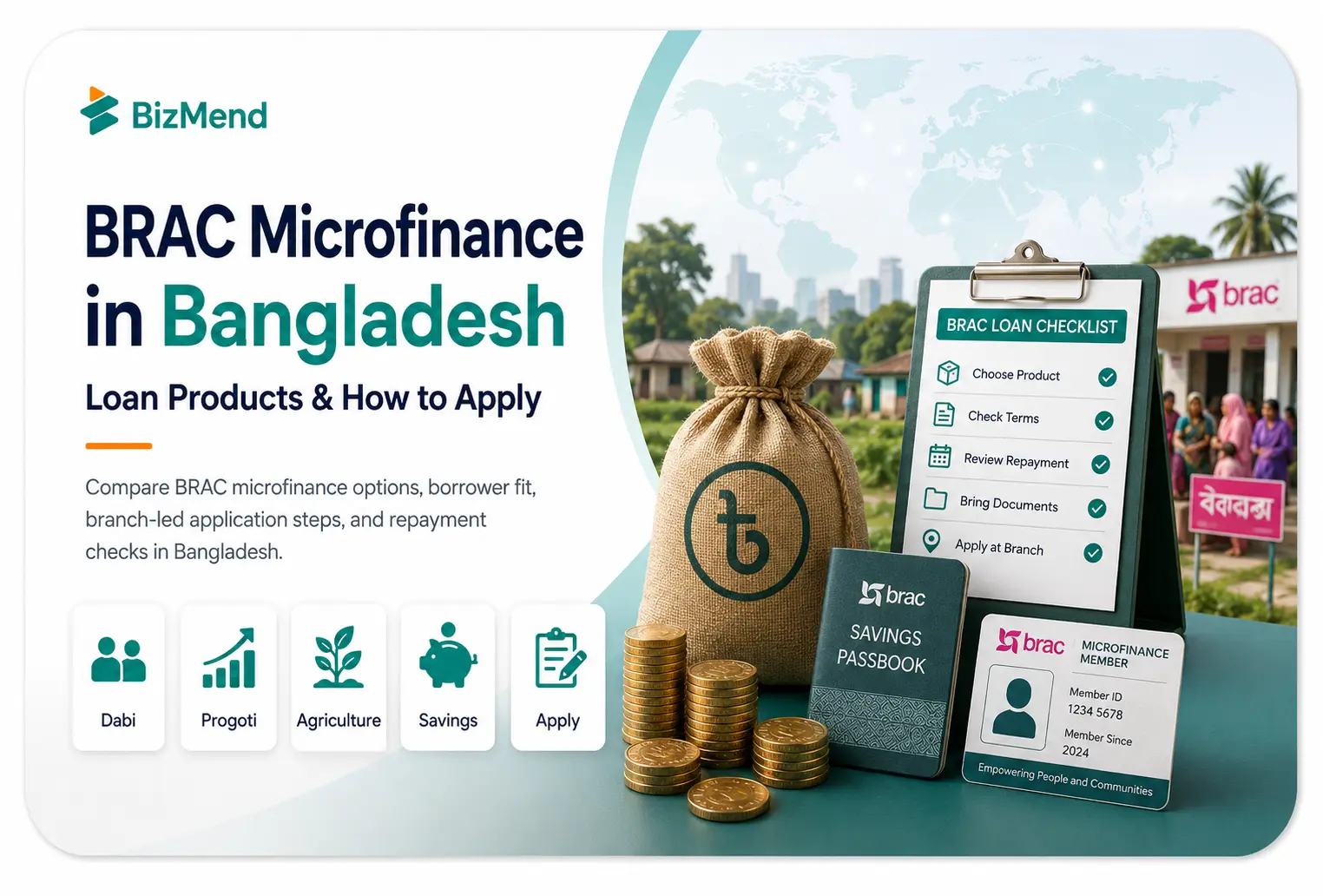
Quick answer: BRAC microfinance offers several borrower-focused services in Bangladesh, including Dabi microloans for women, Progoti small enterprise loans, migrant household loans, agriculture loans, savings, and microinsurance. BRAC reports 2900 plus branches, so most applicants should start by checking product fit and current terms at their nearest branch.
Key Takeaways
- BRAC microfinance is separate from BRAC Bank loans, although both sit within the wider BRAC ecosystem.
- Dabi is BRAC’s classic women-focused microloan model, usually linked to village organization support.
- Progoti is aimed at small entrepreneurs who need more capital than a basic microloan can provide.
- BRAC also lists migrant household loans, agriculture loans, jobholder loans, SafeSave, savings, microinsurance, and digital repayment options.
- Application details are branch-led, so borrowers should confirm eligibility, costs, repayment schedule, and required papers locally.
- A microfinance loan should match cash flow, not hope. Repayment timing matters as much as loan size.
- Anyone comparing BRAC with bank credit should remember that microfinance and BRAC bank loans serve different borrower profiles.
What BRAC Microfinance Is
BRAC is one of Bangladesh’s best-known development organizations, and microfinance is one of its oldest financial inclusion tools. Its model is built for people who may not fit cleanly into formal bank lending: small shopkeepers, low-income households, rural women, migrant families, and people earning through informal or very small enterprises.
BRAC says its programme now reaches 11.4 million-plus people through microfinance services, with 8 million people accessing USD 6.6 billion in microloans in 2025. It also reports USD 2.6 billion in collective savings and more than 2900 branches. Those are big numbers, but the local branch still matters most to an applicant.
Microfinance is local by design. The branch conversation matters more than the headline number.
One point often confuses readers: BRAC microfinance is not the same thing as BRAC Bank loans. BRAC Bank is a regulated commercial bank. BRAC NGO microfinance is designed for financial access, small enterprise credit, savings, and related support for borrowers who may be underserved by mainstream banks.
BRAC Loan Products at a Glance
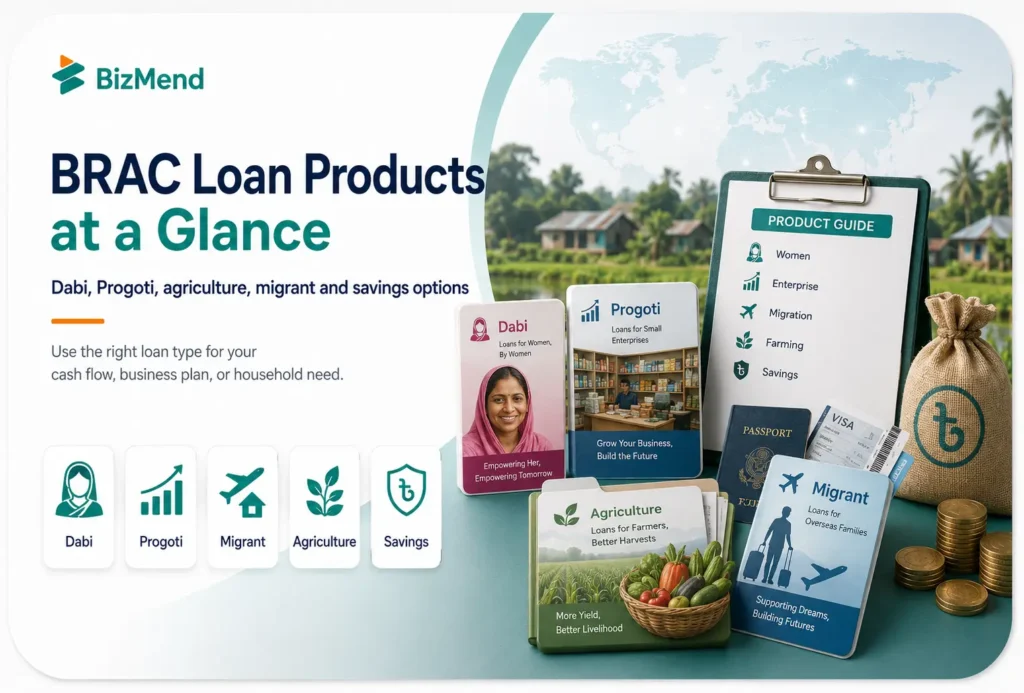
BRAC does not publish one simple public tariff sheet that covers every current product, branch, and borrower type. So treat this table as a product map, then verify the live amount, service charge, savings rule, insurance option, and repayment schedule at the branch.
| Product area | Who it is generally for | What to ask before applying |
|---|---|---|
| Dabi microloans | Women borrowers are often served through village organization groups. | Loan size, meeting rules, repayment cycle, savings requirement, and any insurance option. |
| Progoti small enterprise loans | Small entrepreneurs whose shops or businesses are too small for mainstream bank credit. | Required business proof, guarantor rules, repayment period, and whether security is needed. |
| Migrant household loans | Households financing regular overseas work migration through valid documents. | Visa and employment document checks, disbursement timing, and migration-related costs covered. |
| Agriculture loans | Farmers and agriculture workers investing in crops, livestock, inputs, or seasonal production. | Seasonal repayment fit, grace period, crop risk, and input support. |
| Savings and microinsurance | Existing or new microfinance clients building reserves or protection against shocks. | Withdrawal rules, premium cost, covered events, claim steps, and whether coverage is voluntary. |
Older BRAC factsheets describe Dabi as microloans for women and Progoti as microenterprise loans for entrepreneurs. More recent BRAC pages list broader product categories, including women’s loans, small enterprise loans, migrant household loans, agriculture loans, jobholder loans, SafeSave, savings, microinsurance, and digital financial services.
Who BRAC Microfinance Usually Fits
BRAC microfinance usually makes sense when a borrower needs practical, smaller-scale credit tied to income activity. Think of a grocery stall, tailoring work, poultry, livestock, crop production, a small workshop, or a household preparing for documented overseas work. It is not meant to work like a corporate term loan.
The borrower fit often depends on three things: where you live, whether BRAC serves your area, and whether your income can support the repayment calendar. For Dabi, group participation may matter. For Progoti, the branch may look closely at the business, cash flow, trade activity, and guarantor comfort.
A smaller loan can still become too large if the repayment date arrives before the income does.
Researchers and borrowers should also remember the regulatory context. Bangladesh’s Microcredit Regulatory Authority oversees NGO microfinance activity, while BRAC’s own page highlights a 2025 Client Protection Certification Gold recognition from MicroFinanza Rating. That does not replace personal due diligence, but it’s useful context.
How to Apply for a BRAC Microfinance Loan
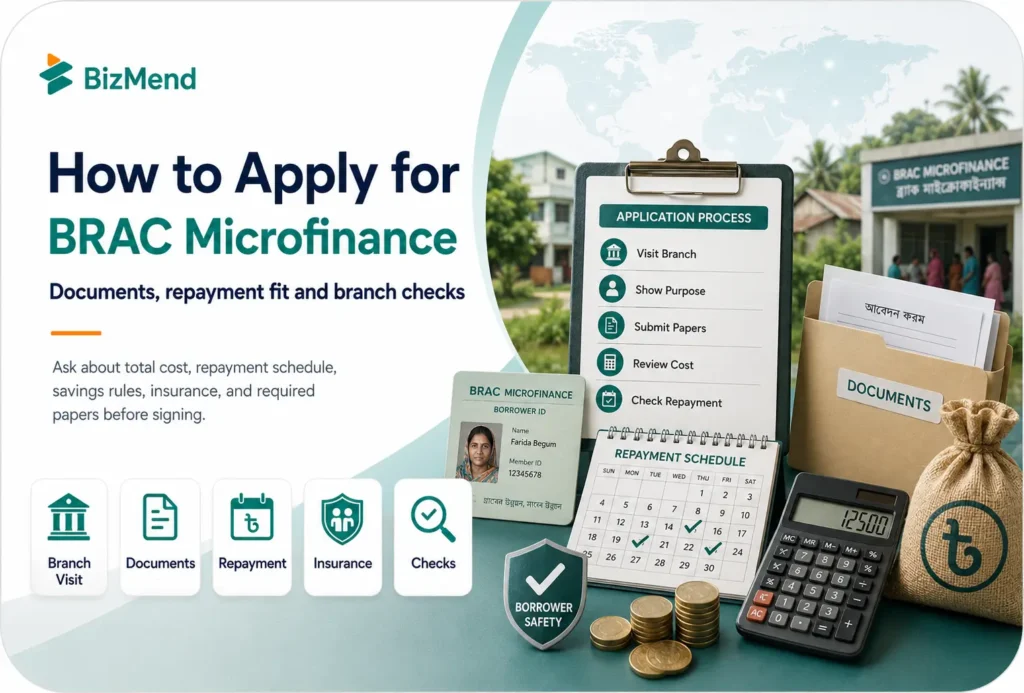
The safest starting point is simple: visit or call the nearest BRAC microfinance branch. BRAC lists branch locations publicly, and its headquarters is at BRAC Centre, 75 Mohakhali, Dhaka. A field officer or branch team can tell you which product fits your area and borrower profile.
- Explain your purpose clearly, such as shop stock, livestock, crop inputs, migration costs, or household income support.
- Ask which BRAC product fits your case, since Dabi, Progoti, agriculture, migrant, and jobholder loans are not the same.
- Prepare basic documents, usually identity proof, address details, income or business proof, and any product-specific papers the branch requests.
- Review the loan amount, repayment schedule, total cost, savings rule, guarantor need, insurance option, and late payment policy before signing.
- Borrow only after matching the repayment date to your actual income cycle, especially if your earnings are seasonal or irregular.
For migrant household loans, ask about document verification before approval. BRAC Probashbandhu says the Migration Welfare Loan was introduced in 2011 and that verification is done to check valid visa and employment papers before approval. That is exactly the kind of detail borrowers should confirm early.
What to Check Before You Sign
A loan is useful only when the terms fit your income. Before signing, ask the branch to explain the total repayable amount in taka, not just the loan size. Ask what happens if illness, crop loss, delayed salary, or migration delay affects payment.
- What is the approved loan amount and total amount repayable?
- Is repayment weekly, monthly, seasonal, or tied to another schedule?
- Is savings required, optional, or linked to membership?
- Is there insurance, and what exactly does it cover?
- Are guarantors, group meetings, trade documents, or migration papers required?
- Can early repayment, top-up borrowing, or repeat borrowing change the terms?
Compare BRAC financial products with bank credit only after you know what you need. If you need a formal SME bank loan, BRAC Bank or another commercial lender may be the right comparison. If you need community-based credit with smaller access barriers, BRAC microfinance may be closer to the problem you’re solving.
Final Thoughts
BRAC microfinance is best understood as local, borrower-facing finance, not a shortcut to free money. The product name matters, but the fit matters more. Start with the branch, ask direct questions, and check every cost before you sign. A good loan should support income, not quietly stretch a household beyond its limit.
Frequently Asked Questions
Is BRAC microfinance the same as BRAC Bank?
No. BRAC Bank is a commercial bank, while BRAC microfinance is BRAC’s financial inclusion programme for borrowers often underserved by mainstream banks. People searching for BRAC Bank loans should compare products carefully because the eligibility, documentation, and repayment model can be very different.
What are Dabi and Progoti loans?
Dabi is BRAC’s women-focused microloan model, traditionally linked to village organization groups. Progoti is a small enterprise loan for entrepreneurs who need business capital but may not qualify for mainstream bank credit. Exact current terms should be checked at a BRAC branch.
How do I apply for a BRAC microfinance loan in Bangladesh?
Start by contacting the nearest BRAC microfinance branch. Explain your borrowing purpose, ask which product fits, and prepare identity and income or business documents; then review the repayment schedule and total cost before agreeing to the loan.
Does BRAC offer loans for migrant workers?
BRAC-linked sources describe migration welfare loans for people seeking overseas work through regular channels. Applicants should expect document checks, including visa and employment papers, and should ask the branch what costs are covered before applying.
Can men apply for BRAC microfinance?
Some BRAC products are women-focused, especially Dabi. Other categories, such as Progoti small enterprise loans, may serve entrepreneurs of both genders. Product availability can vary by branch and borrower profile, so confirm locally before planning around it.