
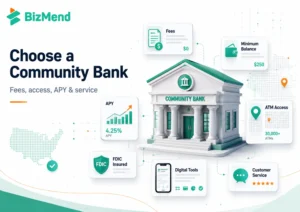
How to Choose a Community Bank in the US: 2026 Guide
To choose a community bank, compare monthly fees, minimum balance rules, interest rates, ATM access, FDIC insurance, digital features, and…

Check the community bank requirements at a glance, follow the exact steps to apply, and see why applications get rejected before you start.
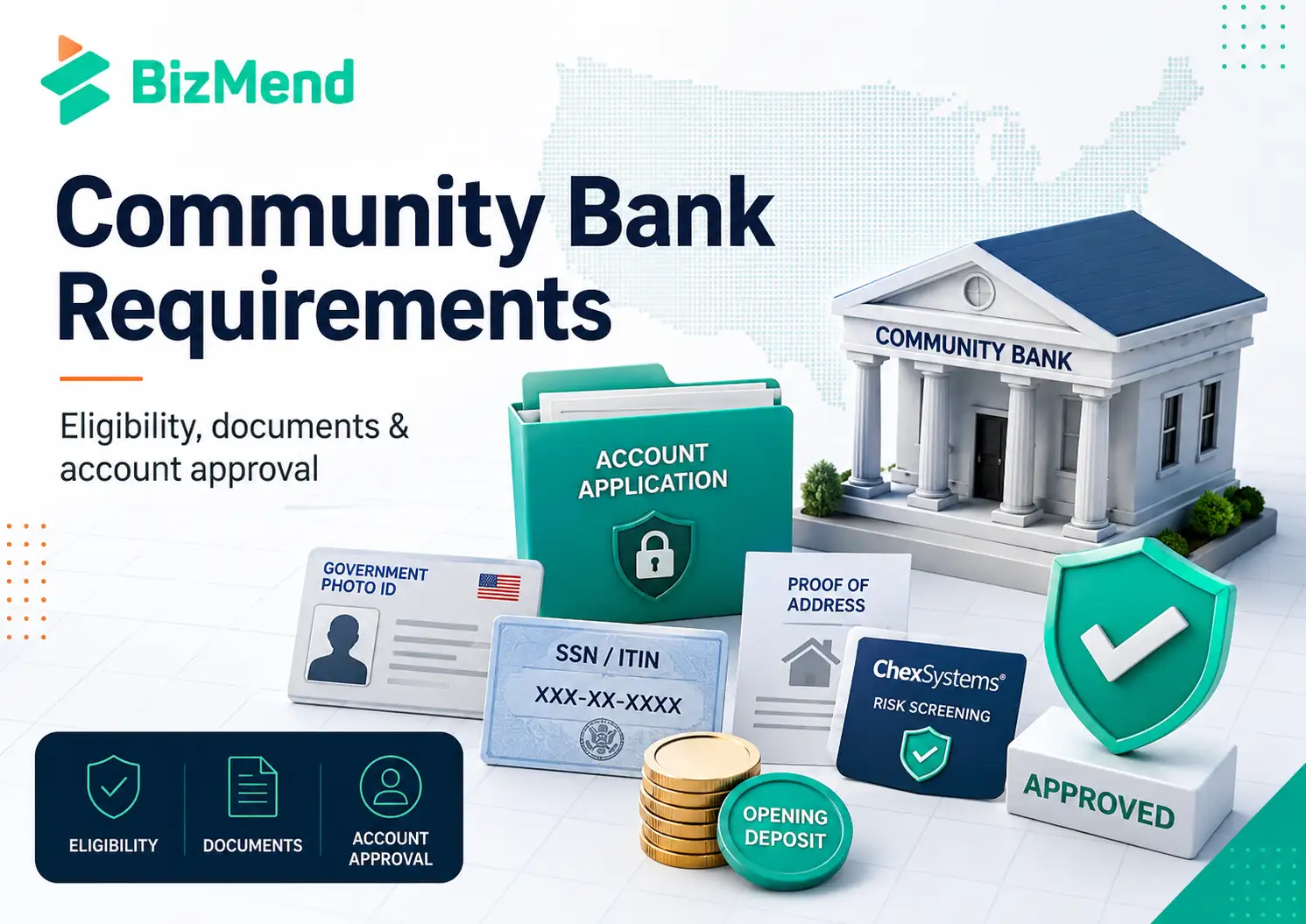
Before you drive to a branch or start an online application, five community bank requirements decide whether you walk away with an account or a rejection: your age, your ID, your taxpayer number, your banking history, and your opening deposit. Most people already meet everyone without realizing it, since these rules are more routine than most applicants expect.
The sections below let you check eligibility first, then walk through the application itself step by step, including the document each step actually needs, why a bank asks for it, and the red flags that most often cause a denial.
Quick Answer: Community bank requirements typically include being 18, or having a joint adult owner, a government-issued photo ID, a Social Security number or ITIN, a US address, a passable ChexSystems record, and a small opening deposit, usually $25 to $100 depending on the specific bank and account type.
Run through this list before you apply anywhere, ideally the night before. Meeting all five means the application itself should move quickly and rarely needs a second visit.
| Requirement | What Counts | Why It Matters |
| Age | 18, or a joint adult owner for a minor’s account | State contract law, not a single federal rule, sets this line |
| Identification | Driver’s license, state ID, passport, or military ID | Confirms you are who you say you are |
| Taxpayer number | Social Security number or ITIN | Federal rule requires every bank to collect one before opening an account |
| Banking history | A passable ChexSystems record | Flags unpaid overdrafts or suspected fraud from past accounts |
| Opening deposit | Commonly $25 to $100, sometimes $0 | Activates the account once approved |
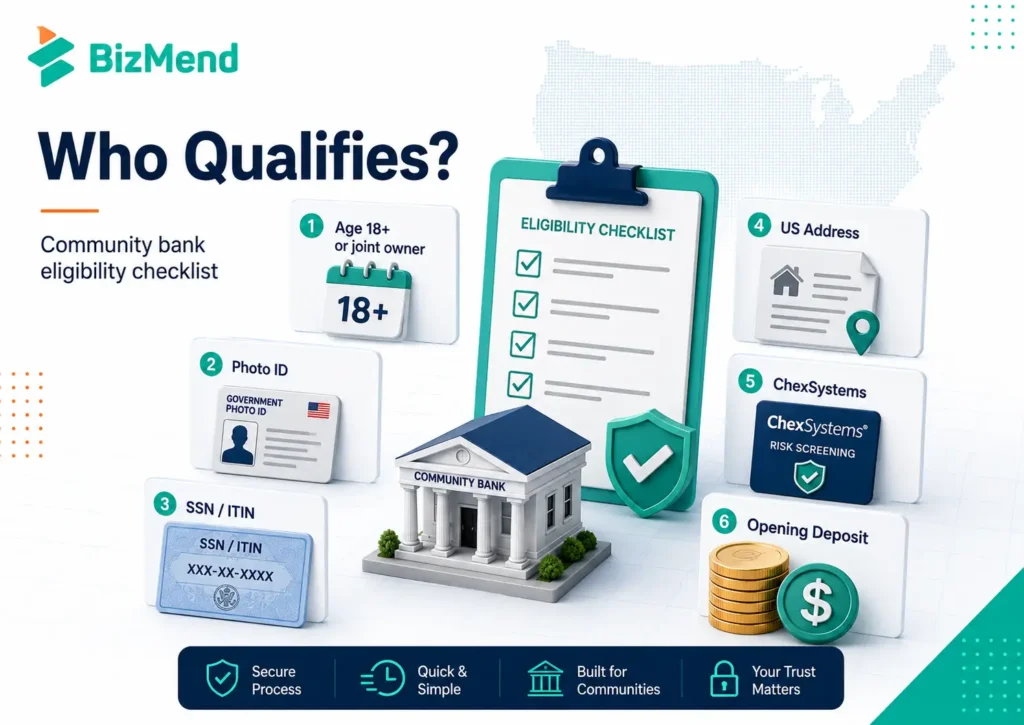
The age line surprises the most people. Interagency guidance from the federal banking regulators confirms no federal statute sets 18 as a minimum; a deposit account is a contract, and minors generally cannot enter one alone under state law, so every community bank asks for a parent or guardian to serve as a joint owner or custodian instead.
The taxpayer number line matters just as much. Federal customer identification rules require every bank to collect a Social Security number or equivalent number before opening an account, regardless of whether you apply in person, by phone, or online, and skipping this step is not an option the bank can offer. For more background on what actually makes a bank a community bank in the first place, this community bank guide covers the classification this checklist assumes.
Business applicants meet a sixth requirement on top of this personal list: formation documents and an Employer Identification Number for the entity itself, in addition to identification for whoever signs as the account owner or authorized signer, plus any state-specific license the business needs to operate legally. Every deposit at a community bank, personal or business, carries the same FDIC deposit insurance protection once the account is open, so eligibility affects whether you get approved, not how safe the money is afterward.
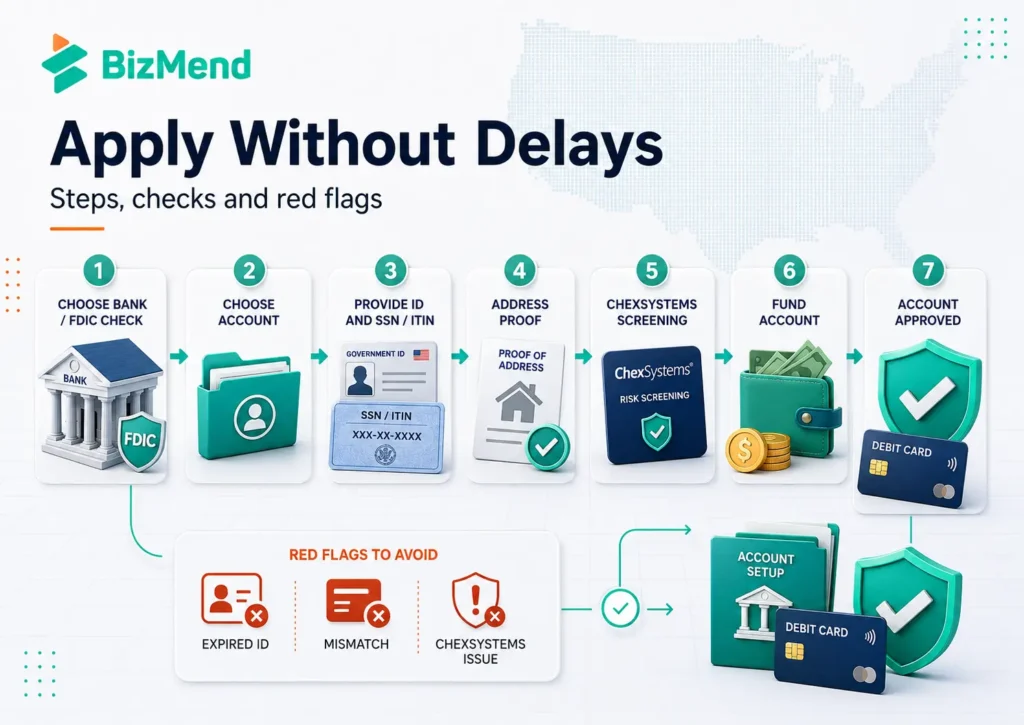
Each step below folds in the document you need at that point, so there is no separate list to cross-reference while you gather paperwork.
1. Pick the bank and confirm it is FDIC-insured and open to new accounts. Search the FDIC’s BankFind tool or call ahead, since a merger or acquisition can change a bank’s status without much public notice.
2. Choose checking, savings, or both. A checking account usually asks for slightly more identity verification than a plain savings account, so decide which product actually fits your needs before you start filling out the form.
3. Bring a primary photo ID. A driver’s license, state ID card, passport, or military ID satisfies the bank’s identity-verification obligation; an ID that expired last month is the single fastest way to stall this step at the counter, so check the expiration date the night before your appointment.
4. Provide your Social Security number or ITIN. US citizens and most residents use a Social Security number; a non-citizen without one can generally use an Individual Taxpayer Identification Number instead, and someone researching a non-resident bank account usually finds the same number requested either way.
5. Show proof of your current address if your ID does not already display it. A signed lease, a recent utility bill, or a piece of official mail covers this for most applicants, and a second photo ID can substitute if none of those are available yet.
6. Consent to the ChexSystems screening. The bank pulls this report automatically once you submit the application, checking for unpaid overdrafts, a forced account closure, or suspected fraud tied to your name at another bank, a step that takes only a moment on the bank’s end.
7. Fund the account and set up access. Meet the minimum opening deposit if one applies, then activate online banking, order a debit card, and confirm how to reach the bank for support before you leave the branch or log off, since finishing this setup on the spot saves a follow-up call later.
Business owners add formation paperwork and an Employer Identification Number on top of this personal checklist. Comparing this walkthrough against the national bank requirements checklist is useful for founders weighing a community bank against a larger federally chartered alternative before committing.
A negative ChexSystems record causes most denials, whether the institution is state-chartered or holds a national bank charter. Unpaid overdrafts, a bank-forced closure, or suspected fraud on a past account can sink an application even when your credit score looks fine, since ChexSystems tracks banking behavior separately from credit history entirely, using its own scoring model built around deposit account conduct rather than borrowing.
An expired ID or mismatched details rank as the second most common cause. A license that lapsed last month, or a name that does not match your Social Security records exactly, forces a manual pause until you provide something that lines up with your other paperwork, and a recent legal name change without updated records is a frequent trigger for this exact hold.
A missing or incorrect taxpayer number stalls plenty of applications too. Typing your SSN or ITIN wrong, even by one digit, can trigger the same delay as not providing a number at all, since the bank’s system checks it against government records automatically.
Newcomers most often trip on proof of address, since a recent arrival may not have a utility bill in their own name yet. A signed lease agreement or a bank-accepted alternative document usually clears this particular red flag without much extra trouble or a second appointment.
Pulling a free copy of your ChexSystems report before you apply, if you have had any banking trouble in the past, catches most of these red flags while there is still time to fix them before an application goes on record.
Most negative items do not stay on a ChexSystems report forever. Records typically fall off after several years, similar in spirit to how older items eventually leave a standard consumer credit report, so a past account problem from long ago is less likely to be the actual cause of a current denial than something more recent. Checking the exact dates listed on your own report before assuming the worst saves a wasted trip to a second bank that would likely flag the same underlying issue.
A clean application with matching documents and a passable ChexSystems record is usually approved the same day, whether you applied in a branch or online through the bank’s website or mobile app. A paper application, or one flagged for manual identity review because a document did not scan clearly, can add a few extra business days before it clears.
Approval brings account and routing numbers right away, often with temporary online access the same day, and a debit card arriving by mail within roughly seven to ten business days. Many community banks also activate mobile check deposit and bill pay within the first day or two, though a few smaller institutions still require a branch visit to finish setting these features up. A denial triggers a federally required adverse action notice naming the reporting company involved, and you can request a free copy of that report to review it and dispute anything inaccurate rather than assuming the decision is final.
If one community bank turns you down, the underlying documents rarely change much from bank to bank once the actual issue is fixed. Working through the same process used when choosing a state bank applies here too. Comparing the state bank requirements checklist is a useful next step. Trying a national bank alternative is often faster than guessing why the first attempt failed. Reviewing this state bank overview can also help decide which option fits best for the next application.
Community bank requirements rarely surprise anyone who checks eligibility first: an age of 18 or a joint owner, a current photo ID, a Social Security number or ITIN, a US address, and a ChexSystems record clean enough to pass review. Applying with all five ready usually means walking out with an active account the same day, often within the same visit.
If a bank does turn down the application, request the adverse action notice, pull the free report it points to, and fix whatever specifically caused the denial before trying elsewhere. The underlying paperwork barely changes from one community bank to the next, so a second attempt rarely takes long once the actual issue behind the first denial is resolved.
You generally need to be 18 or have a joint adult owner, a government-issued photo ID, a Social Security number or ITIN, proof of a US address, and a ChexSystems record clean enough to pass the bank’s screening. Most banks also ask for a small opening deposit, and business accounts add formation paperwork plus an EIN.
Yes, in most cases. Non-citizens without a Social Security number can generally use an Individual Taxpayer Identification Number instead, since federal rules require a taxpayer number but not specifically an SSN, provided you still bring a valid photo ID alongside it to confirm your identity and current address.
It depends on the bank and account type, but $25 to $100 is a common range, and some checking accounts open with no minimum deposit at all. Savings accounts sometimes ask for a slightly higher opening amount, so confirm the exact current figure with the specific bank before you apply.
Most applications with a clean ChexSystems record and matching documents are approved the same day, whether submitted in person or online. A paper application, or one needing manual identity review, can take a few extra business days to fully clear, particularly near a weekend or holiday.
ChexSystems is a specialty consumer reporting agency that tracks past banking problems, such as unpaid overdrafts or suspected fraud, separately from your credit score. Most community banks check this report before approving a new account, and a negative record is the leading cause of denials nationwide, though older items eventually fall off the report.

To choose a community bank, compare monthly fees, minimum balance rules, interest rates, ATM access, FDIC insurance, digital features, and…
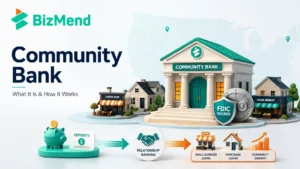
Learn what is a state bank is, how it differs from a national bank, who typically uses one, and whether…
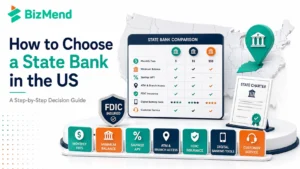
Compare fees, APY, FDIC insurance, and digital tools for how to choose a state bank in the US, plus a…