How to Become a Daraz Seller in Bangladesh: Registration, Fees & Growth
Learn how to become a Daraz seller in Bangladesh, register an account, list products, understand fees, manage orders, and grow…
 by Sheikh Ornob

E-commerce in Bangladesh is growing fast, but it is not easy money. Customers are online, delivery networks are wider, and payment options are improving, but the real challenge is earning...
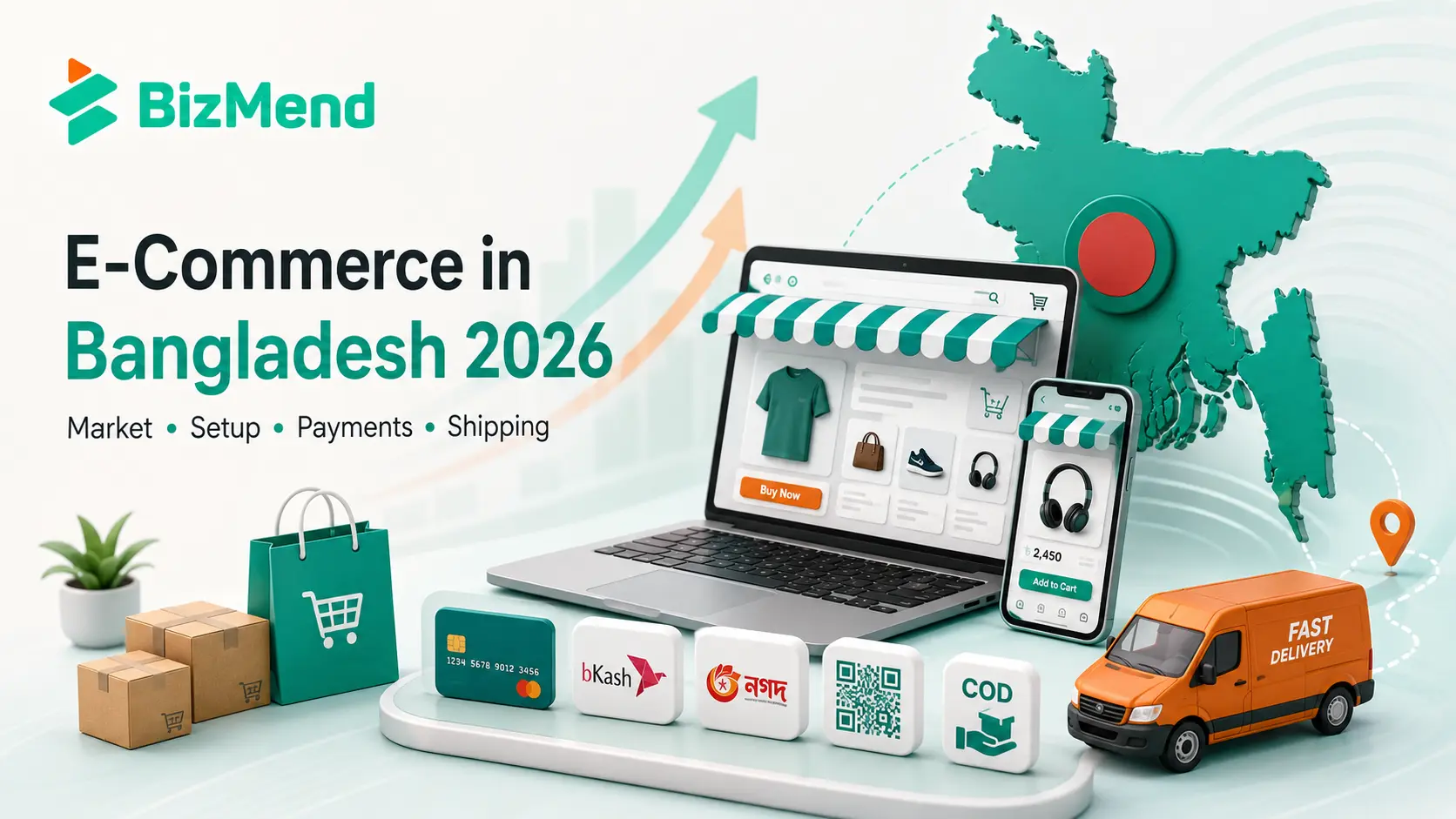
E-commerce in Bangladesh is growing fast, but it is not easy money. Customers are online, delivery networks are wider, and payment options are improving, but the real challenge is earning buyer trust.
DataReportal’s Digital 2026 report shows that Bangladesh had 82.8 million internet users at the end of 2025, 186 million mobile connections in late 2025, and 64.0 million social media user identities in October 2025. Those numbers explain why online selling feels visible, but they do not remove basics like product fit, cash-on-delivery handling, courier control, returns, tax records, and customer support. This guide covers marketplaces, websites, Facebook commerce, payments, shipping, legal setup, startup costs, mistakes, marketing, and FAQs.
Quick Answer: To start e-commerce in Bangladesh in 2026, choose a focused product category, test demand, pick a sales channel, set up basic business records, offer COD and online payments, and connect with reliable delivery. Most beginners use Facebook, Daraz, Shopify, WooCommerce, or a simple website before scaling.
The e-commerce market BD story is practical, not magical. DataReportal’s Digital 2026 report shows Bangladesh had 82.8 million internet users by the end of 2025, with internet penetration at 47.0 percent. It also estimated 64.0 million social media user identities and 186 million mobile connections, which shows why selling through mobile-first channels matters.
The International Trade Administration notes that Bangladesh’s e-commerce growth is still affected by low credit and debit card usage, cash remaining a major payment method, and restrictions or unavailability of major online transaction services such as PayPal. Private market forecasts also place the market in the multi-billion-dollar range, but sellers should treat forecasts as direction, not guaranteed income.
| Market signal | What it means for sellers |
| 82.8 million internet users | The reachable audience is large, but attention is spread across many channels. |
| 64.0 million social media user identities | Facebook, Instagram, WhatsApp, and content-led selling remain practical entry points. |
| 186 million mobile connections | Storefronts, checkout, images, and messages should work well on mobile screens. |
| COD and trust concerns | Many buyers still want proof, return clarity, and reliable delivery before paying online. |
| Private market forecasts show growth | The opportunity is real, but forecasts are not a profit guarantee for sellers. |
The market is growing, but trust is still the real checkout button.
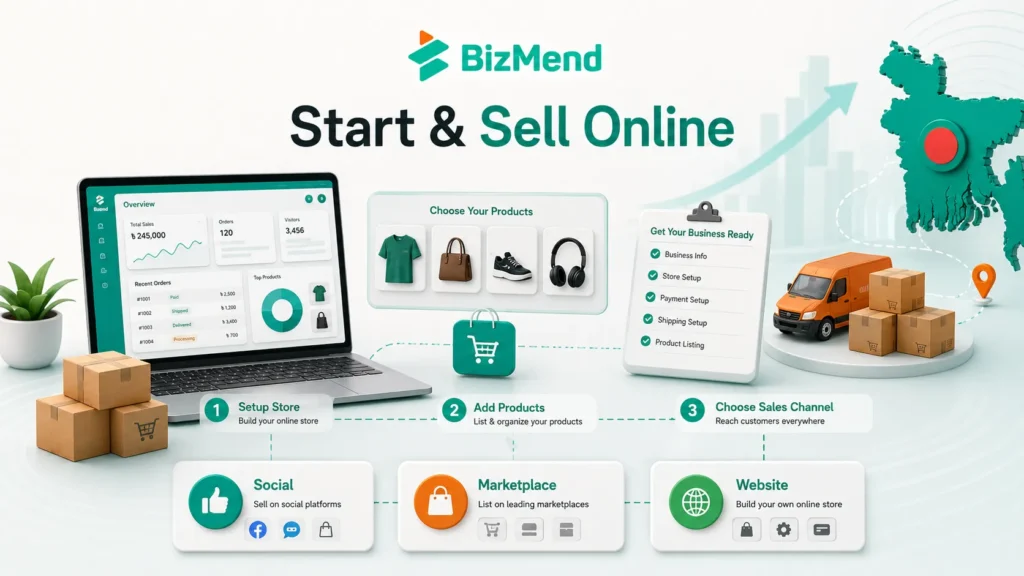
The simplest way to start is to reduce decisions. Pick one buyer group, one product category, one main sales channel, and one delivery process. A small, clean operation usually teaches more than a large, messy launch.
Beginners often ask how to start an online business in Bangladesh without a big budget. The answer is to test demand first, then formalize and scale as order flow becomes consistent.
Product choice decides most of the business before the first ad runs. A product with demand, clear photos, stable supply, simple delivery, and acceptable return risk is usually better than a trendy item with unclear quality.
| Product type | Why it can work | Main risk to check |
| Fashion and accessories | High demand and social media appeal | Size, color, quality, and return disputes. |
| Beauty and personal care | Repeat purchase potential | Authenticity, expiry dates, and product safety. |
| Gadgets and accessories | Strong search demand and gifting use | Warranty, defects, and price competition. |
| Home, kitchen, and lifestyle | Practical products can sell beyond Dhaka | Breakage, packaging, and delivery cost. |
| Baby, mother, and family items | Trust-based category with repeat needs | Product quality and safety claims. |
| Digital products or services | No courier cost and faster delivery | Payment proof, refund rules, and piracy risk. |
Look beyond purchase price. Calculate packaging, courier cost, COD risk, returns, damage, advertising, and payment charges. A product can look profitable on the supplier invoice and still lose money after failed delivery.
There is no single best model for e-commerce in Bangladesh. A student seller may start with Facebook and COD. A brand owner may need Shopify or WooCommerce. A reseller may use Daraz Seller Bangladesh tools for marketplace traffic.
| Channel | Good for | Tradeoff | Best first move |
| Facebook commerce | Testing demand, content, and chat-led sales | Less structure and more manual work | Start with a clear page, catalog, COD rules, and order sheet. |
| Daraz marketplace | Existing buyer traffic and marketplace tools | Fees, ranking, campaign rules, and competition | Check seller terms, list a focused product set, and protect ratings. |
| Shopify or WooCommerce | Brand control, catalog, analytics, and long-term customer base | Needs setup, payment, delivery, and marketing work | Launch only after product-market signals are clear. |
| Hybrid model | Sellers who want traffic and brand control | Requires better stock and order management | Use one inventory record across every channel. |
A hybrid model often works after early validation. You can use Facebook for attention, Daraz for marketplace search, your website for repeat buyers, and US e-commerce business registration if you plan to sell internationally through Amazon, Walmart, or Shopify.
Shopify is relevant for Bangladesh sellers because it gives a clean storefront, themes, product pages, order management, discount tools, and apps. The key payment caveat is that Shopify Payments is not listed for Bangladesh on Shopify’s supported countries page, so sellers need to check third-party gateways, manual methods, or external checkout options.
WooCommerce is popular because it runs on WordPress and can connect with local payment gateway plugins. It may suit sellers who want more control over hosting, checkout, content, and local integrations.
Daraz can be useful when you want marketplace visibility without building traffic from zero. The official Daraz seller page describes the process in three broad steps: register and list products, receive orders and sell, then get payments and grow.
Marketplace selling is not passive. Your listing still needs pricing discipline, stock accuracy, fast response, packaging control, and steady review management.
Facebook commerce remains one of the most practical entry points for small sellers in Bangladesh. A page, group presence, short videos, Messenger, WhatsApp, and boosted posts can help sellers test product demand before building a full online shop Bangladesh buyers can browse.
Social selling works best when it feels personal but still runs on records. Every order should have a product, buyer name, mobile number, address, payment status, courier status, and return note.
Payment planning should match buyer trust. New stores often need COD because customers want product confidence. Established stores can add MFS, cards, QR, payment links, and payment gateway in Bangladesh options as trust grows.
| Payment method | Where it fits | What to watch |
| Cash on delivery | New stores, trust-sensitive buyers, and physical goods | Fake orders, returns, cash collection, and courier reconciliation. |
| bKash, Nagad, and Rocket | Social commerce, repeat buyers, small orders, and payment links | Verify merchant terms, records, refund process, and account type. |
| Cards and internet banking | Website checkout and higher-ticket orders | Gateway support, failed payments, AMEX rates, and chargebacks. |
| Payment gateway Bangladesh providers | Websites, apps, invoices, QR, and payment links | Setup fees, transaction fees, settlement timing, refunds, and plugin fit. |
| Manual bank transfer | B2B, wholesale, and custom orders | Slower confirmation and more manual follow-up. |
Bangladesh Bank’s Payment Systems Department handles regulation, licensing, and oversight of payment systems, where a scheduled bank can also matter in settlement and payment operations. SSLCommerz currently publishes a Basic setup fee of Tk 25,500, 2.5 percent per successful transaction, and 3.5 percent for AMEX. AamarPay currently shows Call For Price plans with one-time non-refundable fees, no monthly fee, QR payment, payment links, invoice tools, and portal or app statements, so merchants should confirm the final package before signup.
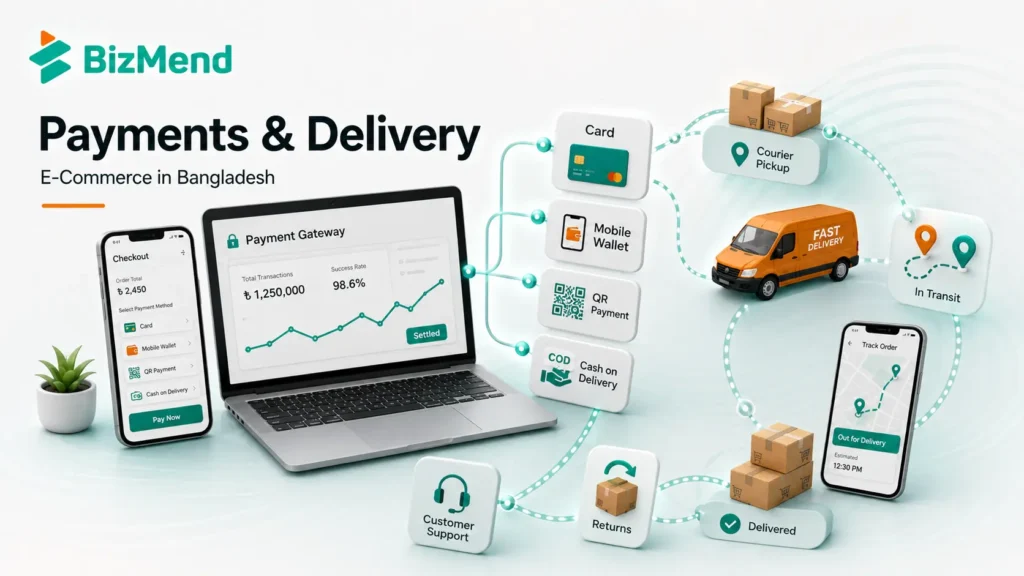
Delivery is part of the product experience. A weak courier process can turn a good product into a bad review, especially when orders are COD, and customers expect clear tracking.
Pathao Courier’s official page presents courier delivery for businesses, home delivery across 64 districts, live tracking, nationwide delivery, fulfillment service, cash on home delivery, and parcel return.
Sellers also compare options such as REDX, Steadfast, eCourier, Paperfly, Sundarban Courier, SA Paribahan, and local same-city riders depending on product and area.
| Delivery area | Seller decision |
| Inside Dhaka or same city | Offer fast delivery when possible, but keep cut-off times clear. |
| Outside Dhaka | Plan packaging, weight, delivery time, return charges, and COD timing. |
| Fragile products | Use stronger packaging and set realistic replacement rules. |
| High-value products | Confirm courier coverage, proof of delivery, and dispute process. |
| Returned products | Track condition, return reason, resellability, and refund status. |
Legal setup should be simple and current. Most sellers begin by checking trade license needs, tax identity, VAT or BIN rules, business registration needs, and clear website policies for delivery, refund, privacy, and customer complaints.
| Item | What it means | Careful note |
| Trade license | Local business permission from the relevant city corporation, municipality, or local authority. | Check your location and activity before applying. |
| TIN or e-TIN | Tax identification through the NBR eTax system. | Keep records even when the business is still small. |
| VAT or BIN | VAT registration may apply based on current rules and business type. | Do not guess thresholds; verify with NBR or a tax professional. |
| RJSC registration | Company registration if you form a limited company. | Sole proprietors may not need the same company filings. |
| Platform verification | Marketplaces, gateways, and couriers may ask for documents. | Requirements can change, so check current onboarding pages. |
Do not guess fees, thresholds, or deadlines from old posts. Rules and platform document requirements can change, so verify the latest details with official portals, a tax professional, or the platform onboarding page.
Startup costs are not one number because an online grocery page, fashion reseller, home decor brand, and gadget store have different needs. Instead of asking for a fixed amount, build a cost sheet before buying inventory.
| Cost bucket | What to include |
| Product inventory | Samples, first stock, rejected goods, and slow-moving items. |
| Packaging | Boxes, poly mailers, tape, labels, inserts, and protection for fragile goods. |
| Content | Product photos, short videos, captions, landing pages, and product descriptions. |
| Sales platform | Marketplace costs, domain, hosting, Shopify, WooCommerce, plugins, or developer work. |
| Payments | Gateway setup, transaction fees, MFS charges, COD charges, refunds, and disputes. |
| Delivery | Courier charge, return charge, exchange delivery, and packaging weight. |
| Marketing | Facebook ads, Google ads, creator content, marketplace campaigns, and retargeting. |
| Operations | Order sheet, accounting, customer support, staff, software, and bank records. |
The safest early budget is usually one you can survive if sales are slower than expected. Keep enough cash for replacements, returns, delayed COD collection, and a second product batch if demand appears.
Marketing should reduce buyer doubt, not just chase clicks. In Bangladesh, clear price, local language copy, real photos, delivery terms, reviews, and quick replies often matter as much as polished graphics.
For marketplace selling, learn listing SEO inside the platform. For your own site, focus on category pages, product descriptions, load speed, basic search visibility, and repeat purchase flows.
Trust-building is the difference between traffic and sales. Customers need to know what they will receive, when it will arrive, how they can pay, and what happens if the item is wrong, damaged, or not as described.
A clear return policy can sell before the discount does.
Most e-commerce problems are not rare surprises. They come from weak product checks, unclear pricing, poor stock records, late replies, and delivery issues that were visible from the beginning.
E-commerce in Bangladesh has real potential, but the winners are not always the loudest sellers. Start with a focused product, clear channel, fair pricing, reliable delivery, and clean records. Build trust first. Then add better payments, stronger content, repeat customer systems, and wider shipping as the business proves itself.
Start by choosing a focused product category, testing demand, picking a channel, preparing product photos and policies, arranging payments, choosing delivery, and keeping order records. Formal setup such as trade license, TIN, VAT or BIN, and company registration depends on your business type and scale.
It can be profitable, but profit is not automatic. Your margin must cover product cost, packaging, delivery, returns, payment charges, ads, damaged goods, and support. Test small before buying large stock or spending heavily on ads.
Many formal businesses need a trade license, but requirements depend on location, activity, business structure, and platform or payment gateway onboarding rules. Check the relevant local authority and keep tax records through current NBR guidance instead of relying on old blog posts.
Use Facebook if you are testing demand, Daraz if you want marketplace exposure, Shopify or WooCommerce if you want a controlled storefront, and a hybrid model if you can manage inventory across channels. The best choice depends on product, budget, team, and trust level.
Most sellers should plan for COD, MFS options such as bKash, Nagad, and Rocket and online payments through a gateway when they use a website. Payment links and QR codes can also help social sellers collect payments with better records.
Sellers commonly compare Pathao Courier, REDX, Steadfast, eCourier, Paperfly, Sundarban Courier, SA Paribahan, and local delivery partners. Choose based on coverage, COD handling, tracking, return process, weight rules, product risk, and customer location.

Learn how to become a Daraz seller in Bangladesh, register an account, list products, understand fees, manage orders, and grow…
by Sheikh Ornob
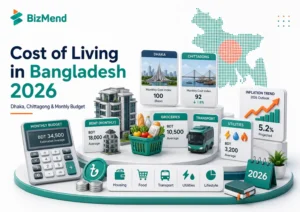
Compare the cost of living in Bangladesh in 2026, including Dhaka and Chittagong rent, food, transport, utilities, inflation, and monthly…
by Sheikh Ornob

Learn MoA and AoA requirements in Bangladesh, key clauses, drafting basics, RJSC filing steps, amendments, and common company-registration mistakes. Suggested…
by Sheikh Ornob