How to Become a Daraz Seller in Bangladesh: Registration, Fees & Growth
Learn how to become a Daraz seller in Bangladesh, register an account, list products, understand fees, manage orders, and grow…
 by Sheikh Ornob

A payment gateway in Bangladesh is the bridge between your website and a customer's payment. It lets an online store accept cards, mobile financial services, internet banking, QR payments, and...
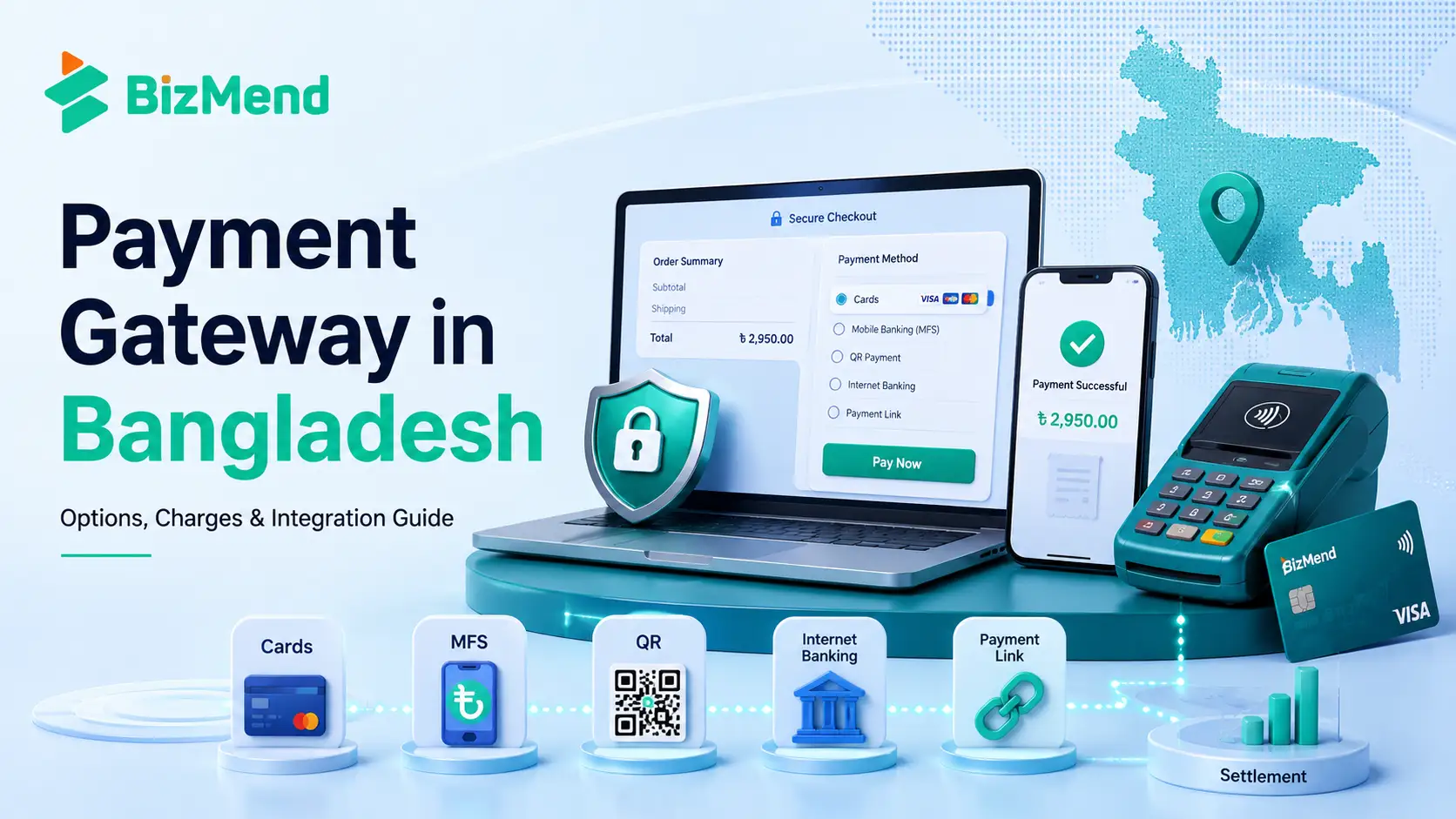
A payment gateway in Bangladesh is the bridge between your website and a customer’s payment. It lets an online store accept cards, mobile financial services, internet banking, QR payments, and payment links without relying on manual bank transfers or cash-on-delivery follow-ups.
For e-commerce owners, the hard part isn’t understanding the idea. It’s choosing the right provider, checking charges, connecting the gateway to Shopify, WooCommerce, or a custom site, and knowing when money reaches your bank account. This guide compares common options, explains fees, and keeps the regulatory side clear without pretending one provider is perfect for everyone or every budget.
Quick Answer: A payment gateway in Bangladesh helps businesses accept online payments through debit and credit cards, bKash, Nagad, Rocket, internet banking, QR payments, and payment links. Common options include SSLCommerz, AamarPay, ShurjoPay, PortWallet or PortPos, and other Bangladesh Bank-authorized PSP or PSO providers
1. There is no single best payment gateway for every Bangladesh business because pricing, platform fit, settlement, support, and payment methods vary.
2. SSLCommerz publishes a basic setup fee of Tk 25,500, a 2.5 percent successful transaction charge, and 3.5 percent for AMEX.
3. AamarPay currently shows Call For Price plans, with one-time fees, no monthly fee, all payment methods by default, QR payments, payment links, invoice tools, and portal or app statements.
4. Bangladesh Bank‘s Payment Systems Department regulates, licenses, and oversees payment systems, including PSP and PSO categories.
5. A gateway is not the same thing as bKash, Nagad, Rocket, a merchant account, or a bank account, although it may connect those tools.
6. Shopify users in Bangladesh often need a supported third-party gateway or manual payment flow, because Shopify Payments is not listed for Bangladesh.
7. Before signing, confirm setup fees, transaction fees, AMEX charges, MFS charges, settlement timing, refund rules, chargeback handling, and plugin support in writing.
The best gateway depends on your store, not a generic ranking. A fashion store on WooCommerce, a Shopify seller, a SaaS startup, and a freelancer sending payment links may all need different setups.
For most merchants, the shortlist starts with SSLCommerz, AamarPay, ShurjoPay, PortWallet or PortPos, and other providers listed by Bangladesh Bank under payment service or payment system operator categories.
Pick the gateway that fits your checkout, not the one with the loudest sales page.
A payment gateway is the technology layer that collects payment details, sends the transaction for authorization, returns a success or failure message, and helps the merchant track the order. Think of it as the cashier counter for your online store.
It is not the same as a bank account. Your bank account receives settlement after payment processing. It is also not the same as bKash, Nagad, or Rocket. Those are payment methods or wallet services that may be connected through a gateway.
8. The customer chooses a product or invoice and clicks pay.
9. Your website sends the payment request to the gateway.
10. The gateway shows payment options such as cards, MFS, internet banking, QR, or wallet routes.
11. The customer completes authentication through the card issuer, MFS provider, or bank channel.
12. The gateway returns a success, failure, cancel, or pending response to your site.
13. Your system validates the transaction before marking the order paid.
14. The gateway settles funds to your merchant bank account according to the agreement.
That validation step matters. SSLCommerz documentation, for example, includes order validation and IPN features so merchants can verify payment status server-side instead of trusting only the browser return page.
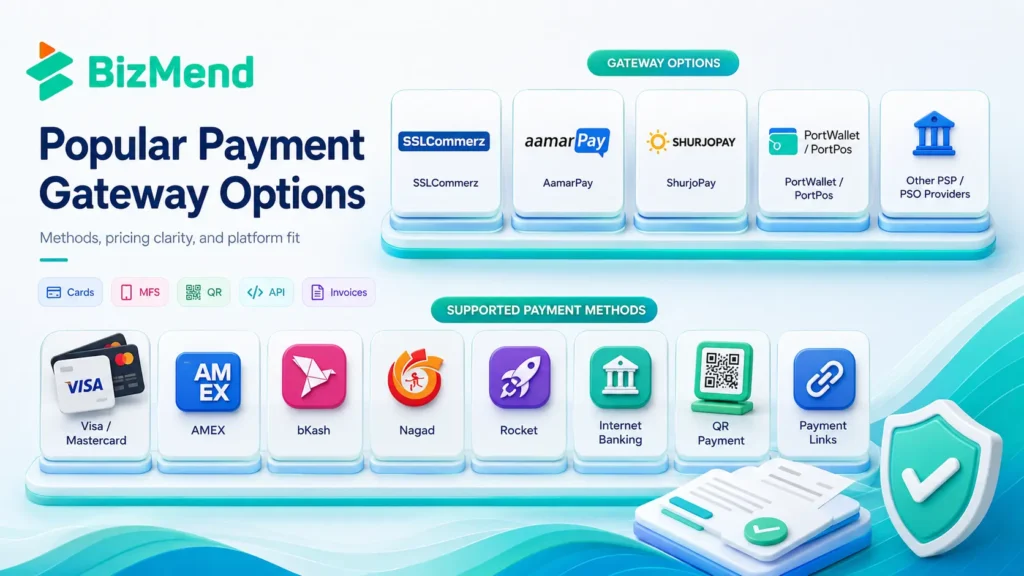
SSLCommerz is one of the most visible online payment gateway in Bangladesh options. Its official SSLCommerz pricing page currently shows a basic package with a Tk 25,500 non-refundable fee, 2.5 percent per successful transaction, and 3.5 percent for AMEX.
Its developer documentation covers hosted checkout style flows, session creation, IPN, transaction validation, refunds, and plugins.
AamarPay’s pricing page currently shows plans as Call For Price. It also shows one-time fees, no monthly fee, all payment methods by default, QR payment, payment links, invoice generator, and portal or app statements.
AamarPay is worth checking if your business sells through a website and social channels. Payment links and invoice tools can help smaller sellers.
ShurjoPay is operated by ShurjoMukhi Limited, which appears on Bangladesh Bank’s PSO list. Its official materials describe API, SDK, plugin, sandbox, IPN, and merchant tools for online payment collection.
Merchants should confirm ShurjoPay’s current fees, settlement timing, documents, refund rules, and supported methods before signup.
PortWallet is associated with Portonics Limited, which appears on Bangladesh Bank’s PSO list. The current PortPos site presents payment, wallet, account, invoice, and gateway-style tools, while older PortWallet materials show e-commerce plugins and online payment features.
Because pricing and product names can change, ask PortWallet or PortPos for a current quote and method list.
Bangladesh Bank’s public list includes PSO and PSP license categories. Not every licensed entity is a retail e-commerce gateway, but the list helps you avoid random payment operators with unclear status.
Examples on Bangladesh Bank’s current authorized PSO and PSP list include IT Consultants Ltd., Software Shop Limited, ShurjoMukhi Ltd., Portonics Limited, Soft Tech Innovation Limited, iPay Systems Ltd., D Money Bangladesh Ltd., Green & Red Technologies Ltd., Sheba Fintech Limited, Paperless Limited, Paysuite Fintech Limited, Shamadhan Services Limited, and Sslcommerz Limited; check the latest Bangladesh Bank list before choosing.
Payment gateway charges for Bangladesh merchants should fall into a few buckets. Setup and transaction fees get the most attention, but settlement rules, refund handling, chargeback cost, and plugin support can affect your real cost.
| Cost item | What to check |
| Setup fee | One-time onboarding or package fee, if charged. |
| Transaction fee | Percentage or flat fee per successful payment. |
| AMEX fee | Often priced differently from Visa and Mastercard. |
| MFS fee | Check bKash, Nagad, and Rocket separately. |
| Refund fee | Ask whether refunds cost extra. |
| Chargeback fee | Ask how card disputes are priced. |
| Settlement delay | Confirm payout timing by method. |
| Plugin or API cost | Ask whether platform support costs extra. |
Don’t publish a final pricing comparison from old screenshots. SSLCommerz publishes current Basic pricing, AamarPay shows Call For Price plus package-specific rates on some rows, PortPos publishes card, AMEX, MFS, and net banking rates, while ShurjoPay fees should be confirmed by quote or merchant agreement before you state exact charges.
Use this as a decision table, not as a final rate card. Exact terms can vary by business type, risk profile, package, and provider update.
| Gateway | Payment methods | Setup fee | Transaction fee | Settlement | Integration | Best for |
| SSLCommerz | Cards, MFS, internet banking, wallets, EMI where enabled | Basic shows Tk 25,500 | 2.5 percent, AMEX 3.5 percent | Check contract | Hosted checkout, APIs, plugins, IPN | Broad methods |
| AamarPay | Cards, MFS, QR, payment links, invoices | Call For Price / one-time non-refundable fee by plan | Some plans show Call For Price, while selected rows show package-specific rates; confirm current card and MFS charges before signup | Weekly settlement wording for payment links; confirm full merchant settlement terms | API, plugins, QR, payment links, invoices, merchant portal and app | SME sellers, f-commerce, payment links, QR, and invoice-based collection |
| ShurjoPay | Cards, MFS, internet banking, related methods | Check quote | Check quote | Check contract | API, SDKs, plugins, IPN | Licensed PSO |
| PortWallet or PortPos | Cards, MFS, net banking, wallet features, invoices, and payment links where enabled | No signup fee and no monthly fee shown on PortPos | Cards 2.50%, AMEX 3.50%, MFS & Net Bank 2.20%, plus Tk 1 per successful transaction; confirm final contract | Check contract | APIs, SendBill, invoice tools, hosted tools, and developer docs | Businesses needing published rates, invoice tools, and Portonics payment products |
| Other authorized PSP or PSO providers | Depends on license and product | Varies | Varies | Varies | Varies | Licensed options |
Your customer doesn’t care about your backend. They care whether the payment option they trust appears at checkout. That is why method coverage matters.
| Method | Why it matters |
| Visa and Mastercard | Useful for local debit and credit card users. |
| AMEX | American Express can carry a different gateway charge, so price it separately. |
| bKash | A gateway may route bKash, but a bKash merchant account and a gateway setup are still different products. |
| Nagad | Confirm whether your package supports Nagad merchant account collection or gateway routing for your business type. |
| Rocket | Rocket mobile banking may be available through selected DBBL or gateway routes, depending on the provider package. |
| Internet banking | Useful for customers who don’t want card or wallet checkout. |
| QR payment | Good for social commerce, in-store collection, and quick checkout. |
| Payment links | Useful for Facebook, WhatsApp, invoices, and service proposals. |
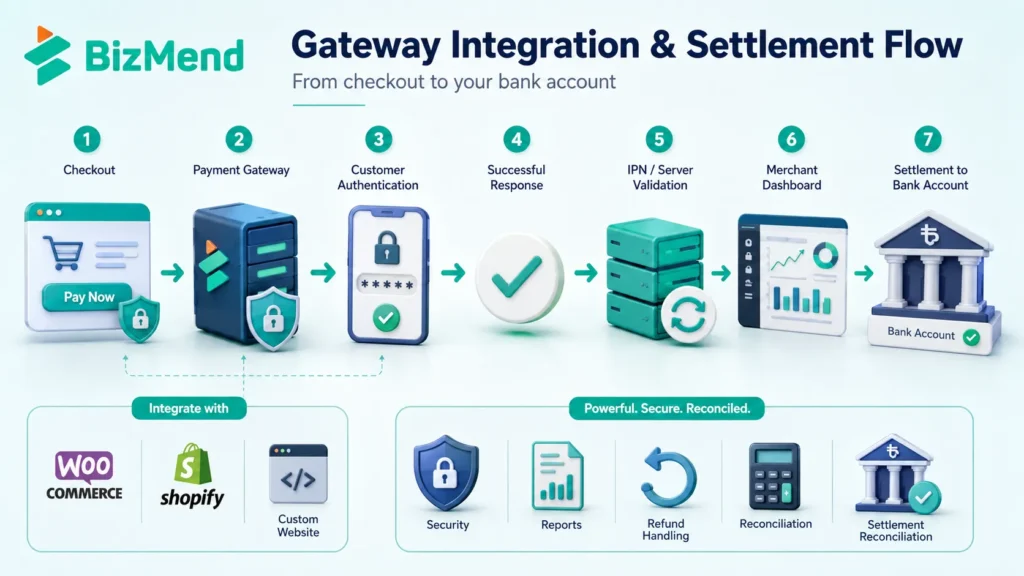
Gateway integration is the technical setup that connects your checkout to the payment provider. It can be simple with a plugin, or more technical if you use a custom website.
15. Choose the gateway and confirm the merchant package.
16. Submit merchant documents and receive sandbox or test credentials.
17. Install the plugin for WooCommerce, Shopify (where supported), Magento, OpenCart, or your chosen platform.
18. For custom sites, use the provider’s API to create the payment session and redirect the customer to checkout.
19. Set success, failure, cancel, and IPN or webhook URLs.
20. Validate every successful payment from your server before fulfilling the order.
21. Run test payments, refunds, failures, and cancelled payments before going live.
22. Reconcile orders against gateway reports and bank settlement deposits.
A successful redirect is not enough. Your server still needs to verify the payment.
WooCommerce is usually the easiest path because many Bangladesh gateways provide WordPress or WooCommerce plugins. You still need to test checkout, IPN, currency, order status mapping, and refund behavior.
Shopify needs more care. Shopify Payments is not listed for Bangladesh on Shopify’s supported countries page, so local merchants usually look for third-party gateway support, provider apps, manual payment methods, external checkout flows, or US e-commerce setup if they plan to sell internationally.
Custom websites give you more control, but your developer must handle session creation, callbacks, validation, duplicate order protection, failed states, and secure storage rules.
Settlement means the movement of collected money from the gateway or acquiring channel to your merchant bank account. Payout timing can depend on provider policy, payment method, holidays, risk checks, refund windows, and your contract.
AamarPay shows weekly settlement wording for payment links based on its disbursement schedule. Other providers may use different cycles. Do not assume same-day or next-day settlement unless the agreement says so.
23. Ask whether settlement timing differs for cards, MFS, AMEX, QR, and the merchant payment routes.
24. Confirm whether refunds or chargebacks hold back part of your balance.
25. Check whether settlement reports can be downloaded from a merchant portal or app.
26. Match gateway reports with your bank statement every week.
Document requirements vary, but gateways commonly ask for business identity, owner identity, tax identity, bank details, and proof that your website can accept orders.
27. Trade license or business registration document.
28. TIN or tax registration details.
29. VAT or BIN where applicable.
30. NID or passport of the owner, directors, or authorized signer.
31. Bank account proof, such as a check leaf or bank certificate.
32. For formal business registration, keep company documents such as RJSC certificate, memorandum, articles, or board resolution when relevant.
33. Website, product, refund, privacy, and delivery policy pages.
34. Sector license if you sell regulated goods or services.
Online payment in Bangladesh is convenient, but it still needs controls. The gateway handles much of payment security, while the merchant remains responsible for product descriptions, refund policies, records, and fraud review.
35. Use HTTPS on your website and never store raw card data.
36. Validate transactions using the gateway’s server-side validation or IPN tools.
37. Keep order, invoice, delivery, refund, and customer communication records.
38. Set a clear refund and cancellation policy before going live.
39. Watch for suspicious orders with mismatched names, mobile numbers, addresses, or repeated failed attempts.
40. Train staff to handle chargeback evidence quickly.
Bangladesh Bank describes PSPs as companies that facilitate payments or payment processes directly to customers and settle transactions through a scheduled bank or financial institution, such as e-wallet or mobile-wallet services.
It describes PSOs as companies that operate settlement systems for payment activities between or among participants, where the principal participant must be a scheduled bank or financial institution; examples include payment gateways and payment aggregators.
Don’t ask which provider is best in the abstract. Ask which provider fits your checkout, customers, risk level, and cash flow.
41. List the payment methods your customers actually use.
42. Compare setup fee, transaction fee, AMEX fee, refund rules, and chargeback handling.
43. Check whether the gateway supports your platform, especially Shopify, WooCommerce, or a custom stack.
44. Ask for written settlement timing and reporting details.
45. Review Bangladesh Bank authorization status and provider identity.
46. Test sandbox, failed payment, duplicate payment, refund, and callback behavior.
47. Pick support quality over small fee differences if payment failure can hurt your brand.
A payment gateway in Bangladesh should make checkout easier, reporting cleaner, and collection more reliable. Start with the customer’s preferred methods, then compare charges, platform support, settlement, refund rules, and Bangladesh Bank status. The right gateway is the one that fits your business model and keeps payments easy to track after the sale.
There is no single best gateway for every business. SSLCommerz may fit merchants that want broad local coverage and published pricing. AamarPay may fit sellers who need links, QR, and invoices. ShurjoPay and PortWallet or PortPos may fit other merchant needs. Compare methods, fees, platform support, settlement, and service quality.
Charges can include setup fees, transaction fees, AMEX fees, MFS charges, refund costs, chargeback fees, and platform support costs. SSLCommerz publishes a Basic setup fee of Tk 25,500, 2.5 percent per successful transaction, and 3.5 percent for AMEX. Other providers may require a quote.
SSLCommerz presents itself as supporting many local payment methods, including mobile financial services. Before launch, confirm the exact bKash, Nagad, Rocket, card, internet banking, and wallet methods enabled for your merchant package.
Yes. AamarPay offers payment gateway tools for online businesses and shows features such as all payment methods by default, QR payment, payment links, invoice generator, and merchant statements. Confirm plugin or API fit for your store platform.
Yes, but you need to confirm the provider’s Shopify support because Shopify Payments is not listed for Bangladesh. Some merchants use third-party apps, external checkout, manual payment instructions, or custom flows depending on the gateway.
Settlement timing depends on the gateway, payment method, risk checks, holidays, and your contract. AamarPay shows weekly wording for payment links, while other providers may use different cycles. Always ask for written settlement terms.
Providers commonly ask for trade license, TIN, VAT or BIN where applicable, NID or passport, bank account proof, company documents for registered companies, website policies, and sector licenses for regulated products or services.
SEO Title: Payment Gateway in Bangladesh: Options and Fees
Alternate Titles: Best Payment Gateway Options in Bangladesh; Online Payment Gateway Bangladesh Guide
Meta Description: Compare payment gateway in Bangladesh options, charges, payment methods, integration steps, documents, settlement, security, and compliance basics.
Alternate Meta Description: Practical guide to online payment gateway Bangladesh choices, fees, SSLCommerz, AamarPay, ShurjoPay, PortWallet, integration, and merchant setup.
URL Slug: payment-gateway-in-bangladesh
Focus Keyword: payment gateway in bangladesh
LSI Keywords: online payment in Bangladesh, payment gateway charges Bangladesh, SSLCommerz, AamarPay, gateway integration, cashless payment ecommerce, ecommerce payment gateway Bangladesh, online payment gateway Bangladesh, payment gateway for website Bangladesh, Shopify payment gateway Bangladesh
Schema Type Recommendation: Article and FAQPage
Social Snippet: Choosing a payment gateway in Bangladesh is about more than the lowest fee. Compare SSLCommerz, AamarPay, ShurjoPay, PortWallet or PortPos, and other authorized PSP or PSO providers by payment methods, pricing clarity, platform fit, settlement rules, refunds, chargebacks, and support.
48. Bangladesh ecommerce payment gateway comparison table for cards MFS QR and payment links
49. Online store owner reviewing SSLCommerz AamarPay ShurjoPay and PortWallet options
50. Payment gateway integration flow for WooCommerce Shopify and custom websites in Bangladesh

Learn how to become a Daraz seller in Bangladesh, register an account, list products, understand fees, manage orders, and grow…
by Sheikh Ornob
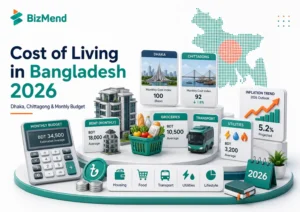
Compare the cost of living in Bangladesh in 2026, including Dhaka and Chittagong rent, food, transport, utilities, inflation, and monthly…
by Sheikh Ornob
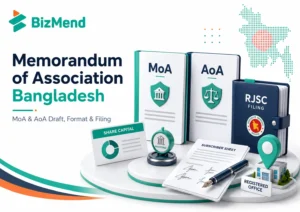
Learn MoA and AoA requirements in Bangladesh, key clauses, drafting basics, RJSC filing steps, amendments, and common company-registration mistakes. Suggested…
by Sheikh Ornob