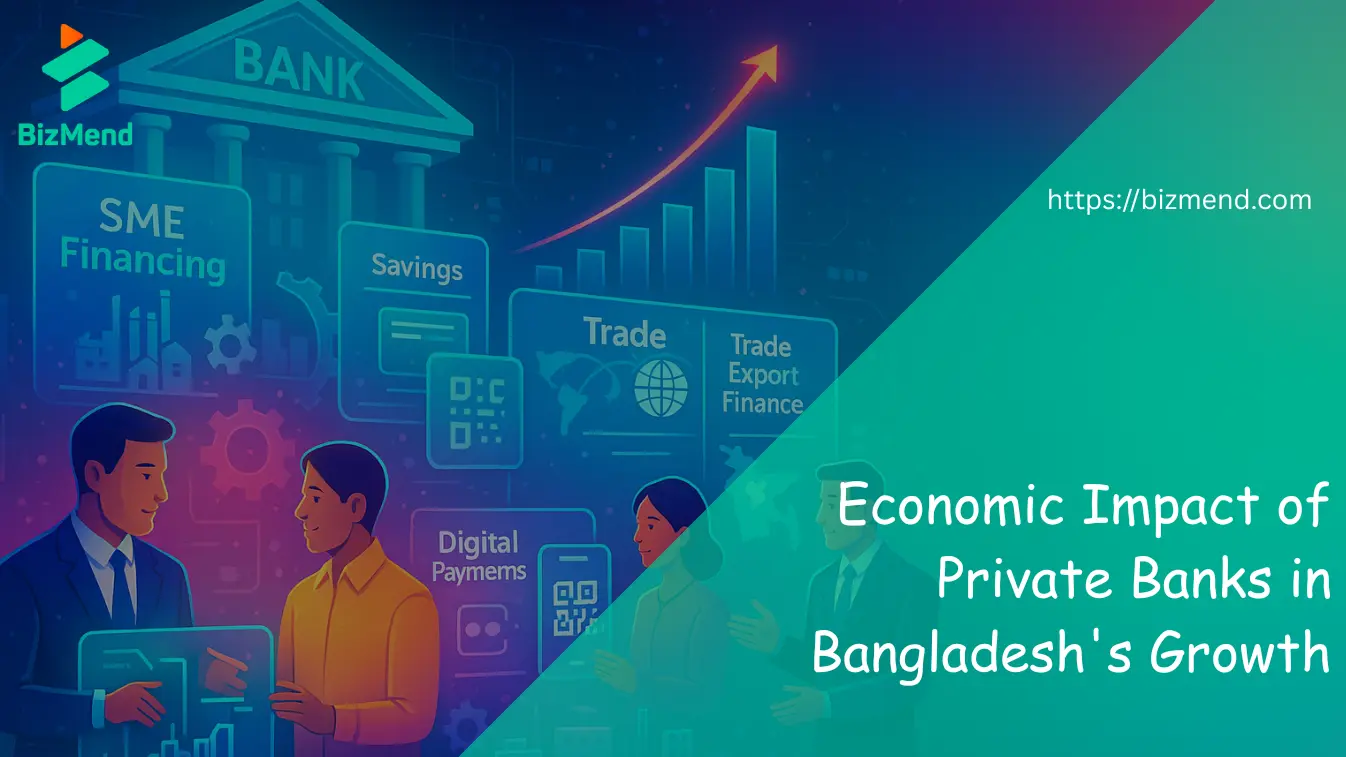
When people talk about private banks in Bangladesh, they often focus on things like service quality or digital banking features. But the real impact goes far beyond that. Private banks are a powerhouse driving the nation’s economy. They channel savings into loans for businesses and individuals, fuel exports and remittances, create jobs, and play a pivotal role in pushing Bangladesh’s financial sector into the digital age. The economic impact of private banks in Bangladesh is immense, quietly shaping the country’s growth and prosperity.
In simple words: if you want to understand why private banks are important for Bangladesh’s economy, you have to see how they help both the country and normal people at the same time. This blog breaks that down in a friendly, non-technical way.
What Are Private Banks in Bangladesh?
Private banks are commercial banks owned mainly by private shareholders, not by the government. They are fully regulated by Bangladesh Bank, follow banking laws, and operate to make a profit by serving customers well.
They sit alongside:
- State-owned commercial banks (government-owned)
- Islamic / Shariah-based banks (some are private, some state-owned)
- Foreign commercial bank branches
Well-known private banks include names like BRAC Bank, City Bank, EBL, Dutch-Bangla Bank, Bank Asia and many more. In this blog, we’re not ranking them — we’re explaining why this private banking segment matters so much for the country’s growth.
How Private Banks Support Bangladesh’s Economic Growth
1. Turning Savings Into Investment
Private banks collect deposits from families, salaried people, students, small shops, and big companies. That money doesn’t just sit there — banks lend it out as:
- business loans
- SME financing
- home and car loans
- trade finance
This process turns idle savings into productive investment. More investment means more factories, shops, services, and ultimately, more GDP growth for Bangladesh.
2. Financing Businesses, SMEs, and Entrepreneurs
Bangladesh’s private sector runs on access to finance. Private banks:
- give working capital to traders and manufacturers
- offer loans to SMEs (small and medium enterprises)
- help new businesses with startup or expansion funding
When these businesses grow, they hire more people, pay more taxes, and buy more from local suppliers. That’s how private banks become growth partners, not just “places to keep money.”
3. Helping Trade, Exports, and Remittances
Private banks also sit at the heart of:
- imports and exports through Letters of Credit (LCs)
- remittance flows from Bangladeshis working abroad
By safely moving money across borders and handling foreign currency, they support:
- export-oriented industries
- import of raw materials and machinery
- millions of families who depend on remittance income
All of this directly strengthens Bangladesh’s external sector and foreign currency position.
How Private Banks Help Everyday People
It’s not just about big companies. Private banks affect your daily life, even if you don’t notice it.
They provide:
- Savings and current accounts for salary, bill payments, and everyday use
- Debit/ATM cards so you don’t have to carry cash everywhere
- Loans for homes, education, vehicles, and emergencies
- Agent banking and mobile banking for rural and semi-urban areas
- Digital payments: app transfers, QR payments, online shopping
When more people use these formal banking channels, they build a transaction history. That makes it easier later to:
- apply for loans
- show income for visas or migration
- prove income for tax and business purposes
So private banks help people move from “cash-only” life to a more organized, opportunity-friendly financial life.
Advantages of Private Banks vs State-Owned Banks
1. Better Competition and Service
Because private banks compete with each other, they are usually more focused on:
- shorter queues and faster processing
- friendlier customer service
- extended banking hours or better agent coverage
This competition also pushes state-owned banks to improve, which is good for the entire system.
2. Innovation and Digital Banking
Private banks are often first to launch:
- modern mobile apps
- internet banking
- QR and contactless payments
- cards and e-commerce integration
This innovation helps Bangladesh move towards a more digital, less cash-dependent economy, which is faster, safer, and more transparent.
3. Flexible Products and Quicker Decisions
Private banks can design:
- SME-friendly loans
- student and young professional accounts
- co-branded cards and lifestyle products
Their decision-making is often faster and more flexible, especially for retail customers and small businesses, compared to more rigid public-sector processes.
Why Do Many People Prefer Private Banks?
You’ll often see higher-income individuals and big business owners using private banks. Some reasons:
- Personalized service: relationship managers, priority counters, special hotlines
- Better experience: smoother apps, faster responses, less red tape
- Exclusive products: premium cards, better deposit terms, sometimes access to simple wealth products
When these clients keep their money with private banks, that money becomes part of the overall loanable pool — which can then be used to support even more business, trade, and jobs across the country.
Private Banks, Jobs, and Long-Term Growth in Bangladesh
Private banks don’t just move money — they also create jobs and support the wider economy:
- Direct jobs: branch staff, back-office teams, IT professionals, call centers
- Indirect jobs: security services, cash handling, software vendors, marketing agencies, fintech partners
They also:
- pay corporate taxes, VAT, and fees, adding to government revenue
- run CSR and financial literacy programs
- support sectors like agriculture, garments, logistics, and e-commerce
All of this makes private banks a long-term pillar of Bangladesh’s economic development — not just another business sector.
Private Banks as Growth Partners for Bangladesh’s Economy
So, why are private banks important for Bangladesh’s economy?
Because they sit at the crossroads of savers, borrowers, businesses, and the government. They:
- turn savings into investment
- fund SMEs and big industries
- support exports and remittances
- push digital transformation
- create jobs and pay taxes
For normal people, private banks mean better service, more options, and easier access to modern finance. For the country, they mean stronger growth, more competition, and a more dynamic private sector.
In the next blogs of this private banks in Bangladesh series, you can go deeper into topics like:
- how to choose the right private bank,
- which private banks are better for SMEs or freelancers,
- and how private banks compare with state-owned and Islamic banks.
To understand how powerful a mature private-banking hub can become, you can also look at our breakdown of the top private banks in Singapore and their role in Asia’s wealth hub.
FAQs on Private Bank’s Impact on Bangladeshs Economy
What is the role of private banks in economic development?
Private banks mobilize savings, lend to businesses and people, support trade and remittances, and push digital services. All of this directly boosts growth, jobs, and productivity.
What are the advantages of private sector banks?
They usually offer better service, more digital tools, flexible products, and faster decisions. Competition between private banks also improves quality across the whole banking system.
Why do rich people use private banks?
Wealthier clients like private banks because of personalized service, quicker responses, exclusive products, and more comfortable banking experiences for large or complex financial needs.
What is the importance of the private sector in Bangladesh’s economy?
The private sector drives most investment, jobs, exports, and innovation. Private banks are a key part of that engine by providing the funding and financial services the private sector needs.
Are private banks safe for normal savers in Bangladesh?
Yes. Licensed private banks are regulated by Bangladesh Bank and follow strict rules. For most people, keeping money in a bank is safer than storing cash at home.
How do private banks support SMEs and startups?
They offer SME loans, overdrafts, trade finance, POS and QR payment solutions, and sometimes training or advisory programs tailored to small and growing businesses.