How to Become a Daraz Seller in Bangladesh: Registration, Fees & Growth
Learn how to become a Daraz seller in Bangladesh, register an account, list products, understand fees, manage orders, and grow…
 by Sheikh Ornob

Bangladesh export incentives include cash assistance from 0.30% to 10% of FOB value across 43 sectors. Learn rates, eligibility, claim steps, and support schemes.
Bangladesh exported $48.28 billion worth of goods in FY2024-25, a figure supported in part by the government’s export incentive framework. This framework provides cash assistance to exporters across eligible product categories, processed through the exporter’s Authorized Dealer (AD) bank in coordination with Bangladesh Bank procedures.
Most new exporters have heard about export incentives. Very few know the actual rates, how to claim them, or what the eligibility conditions are. This guide covers all of it: current rates, specific sectors, the claim process, and the other support schemes that go beyond cash assistance.
Last checked: May 2026. Export incentive rates and Bangladesh Bank circulars change frequently. Always verify the current active circular at bb.org.bd before making business decisions based on specific rates.
Export incentives are financial support mechanisms provided by the Government of Bangladesh to encourage exports and improve the competitiveness of Bangladeshi products in global markets.
The most direct form is the cash incentive scheme (also called cash assistance or export subsidy), introduced in 1994 under the name “Cash Compensatory Scheme (CCS).” It started as a targeted tool for RMG exporters who didn’t use the bonded warehouse facility. Since then, it has expanded to 43 product categories.
The scheme works on a straightforward principle: once you export eligible goods and receive payment, you can claim a percentage of the FOB (Free on Board) value of those exports as cash assistance. The percentage depends on your product category and the rate set in the current Bangladesh Bank circular. The process runs through your AD bank, external audit by approved firms, and Bangladesh Bank disbursement.
Cash incentives are just one part of the support picture. Bonded warehousing, duty drawback, the Export Retention Quota, and the Export Credit Guarantee Scheme all contribute to the broader framework, each serving different types of exporters.
Every fiscal year (and sometimes mid-year), the Foreign Exchange Policy Department (FEPD) of Bangladesh Bank issues an FE Circular setting the cash incentive rates for specific product categories. These rates apply to goods shipped within the stated period.
FE Circular No. 28, dated July 10, 2025, set the rates for shipments from July 1 to December 31, 2025. The same rate structure then continued for shipments from January 1 to June 30, 2026, under Bangladesh Bank’s circular dated January 12, 2026.
The basic math: If you export leather goods worth USD 100,000 at FOB and the applicable incentive rate is 10%, you can claim USD 10,000 (or its taka equivalent) as cash assistance. The incentive is calculated on the repatriated export proceeds, not just the invoice value.
For many product categories, particularly in the textile sector where the 1.50% cash assistance is structured as an explicit alternative to duty drawback and bonded warehouse facilities, exporters may not combine these benefits on the same goods. The rules vary by product category and are set out in the active FE circular. Exporters should always check the relevant provisions for their specific export category before applying.
Applicable source tax or withholding tax may be deducted before the incentive is credited to your account.
If you’re new to exporting and want to understand the full legal framework before claiming any incentive, the complete guide to export documents in Bangladesh covers what you’ll need to have in order before your first claim.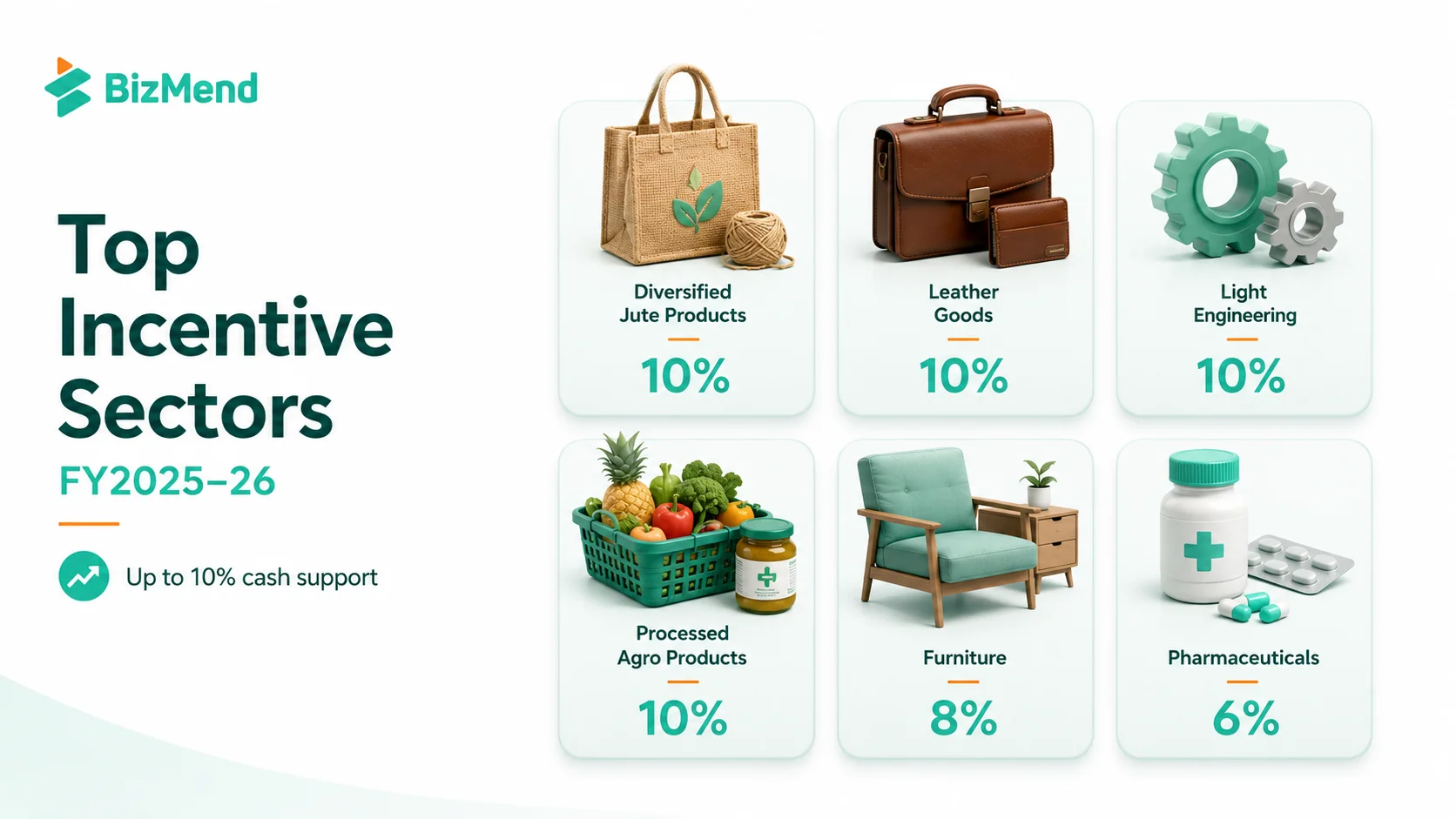
The table below reflects rates under FE Circular No. 28 (July 10, 2025) for the July–December 2025 shipment period, with the same structure continuing through June 30, 2026.
| Sector / Product | Cash Incentive Rate |
|---|---|
| Diversified Jute Products (≥50% jute per Jute Act 2017) | 10.00% |
| Leather goods | 10.00% |
| Light engineering products | 10.00% |
| Processed agricultural products / potatoes | 10.00% |
| 100% halal meat | 10.00% |
| Accumulator batteries (HS codes 8507.10 and 8507.20) | 10.00% |
| Furniture | 8.00% |
| Frozen shrimp (up to 20% ice content) | 8.00% |
| Frozen shrimp (20–30% ice content) | 7.00% |
| Frozen shrimp (30–40% ice content) | 6.00% |
| Frozen shrimp (above 40% ice content) | 4.00% |
| Software and IT-Enabled Services (ITES) | 6.00% |
| Ship exports | 6.00% |
| Crust and finished leather (outside Savar) | 6.00% |
| Pet bottle flakes and polyester staple fiber | 6.00% |
| Pharmaceutical products | 6.00% |
| Motorcycles | 6.00% |
| Photovoltaic modules | 6.00% |
| Ceramics | 6.00% |
| Jute finished products (Hessian, Sacking, CBC) | 5.00% |
| Frozen fish — other (up to 20% ice content) | 3.50% |
| SMEs in RMG (knit, woven, sweater) | 3.00% |
| Jute yarn and twine | 3.00% |
| Bicycles | 3.00% |
| Cement | 3.00% |
| IT/ITES freelancers | 2.50% |
| Tea | 2.00% |
| BEZA / BEPZA / High-Tech Park entities | 0.50% – 2.00% |
| Local textile industries (alternative to bond/drawback) | 1.50% |
| + Additional for Eurozone textile exports (on top of 1.50%) | +0.50% |
| RMG special incentive (certain categories only) | 0.30% |
Note on RMG and textile rates: RMG incentives vary significantly by category. The applicable rate depends on factors including SME status, whether local yarn or fabric was used, whether goods are destined for new markets (outside USA, Canada, EU, UK), Eurozone-related textile conditions, and applicable special incentive provisions. Some RMG categories qualify for as low as 0.30% under special incentive provisions, while SMEs and new-market exporters may qualify for higher combined rates. Always check the active circular for your specific product and shipment conditions.
For a broader look at which export sectors are generating the most opportunity right now, this overview of Bangladesh’s top export-oriented industries is worth reading alongside this guide.
Cash incentives get most of the attention, but they’re far from the only support available.
The bonded warehouse system allows export-oriented manufacturers to import raw materials and packaging without paying customs duties upfront. Administered by the National Board of Revenue (NBR) under the Bonded Warehouse Licensing Rules, 2008, it’s one of the most important cost-saving mechanisms for RMG factories and other export manufacturers.
For many categories, particularly in the textile sector where the alternative cash assistance is structured as a substitute for bonded warehouse benefits, exporters may not combine these on the same goods. The rules vary by product category and are specified in the active FE circular.
If you paid import duty on raw materials used to produce your exported goods, you can claim a refund through the duty drawback system administered by NBR. For categories where the cash incentive is structured as an alternative to duty drawback, using duty drawback on a shipment would generally disqualify that shipment from the cash incentive. Rules vary by product category; check the active FE circular for your specific situation.
After receiving export payment, eligible exporters may retain a portion of their export proceeds in foreign currency through the Export Retention Quota (ERQ) facility, held in an ERQ account with their AD bank. The specific retention limit depends on Bangladesh Bank’s latest FE circular, the exporter’s type, product category, and individual bank rules. Exporters should check the current Bangladesh Bank guidelines at bb.org.bd for the applicable ERQ entitlement for their specific situation.
ERQ balances are generally usable for settling import liabilities and other permitted foreign currency purposes. Your AD bank can advise on what’s currently allowed under the latest circular.
The ECGS is administered by Sadharan Bima Corporation (SBC) and covers risks in export transactions: buyer insolvency, buyer default, and political risks in the buyer’s country. If you’re exploring new markets with buyers you don’t know well, ECGS coverage can reduce your risk exposure significantly.
Some export-oriented industries may qualify for tax concessions, customs-duty concessions, or other fiscal benefits under current tax law and sector-specific rules. This can include income tax relief on export earnings, concessionary customs duty on capital machinery imports, and other measures. Eligibility and applicable rates should be checked against the latest Finance Act, NBR guidance, and the relevant sector authority. The National Export Trophy and Commercially Important Person (CIP) designations also recognize export performance.
Some exporters in BEZA, BEPZA, and High-Tech Park zones receive additional cash assistance from 0.50% to 2.00% on top of sector-specific rates, subject to applicable conditions.
To understand how your company structure affects which of these schemes you can access, this guide on company types and restrictions in Bangladesh explains the key differences.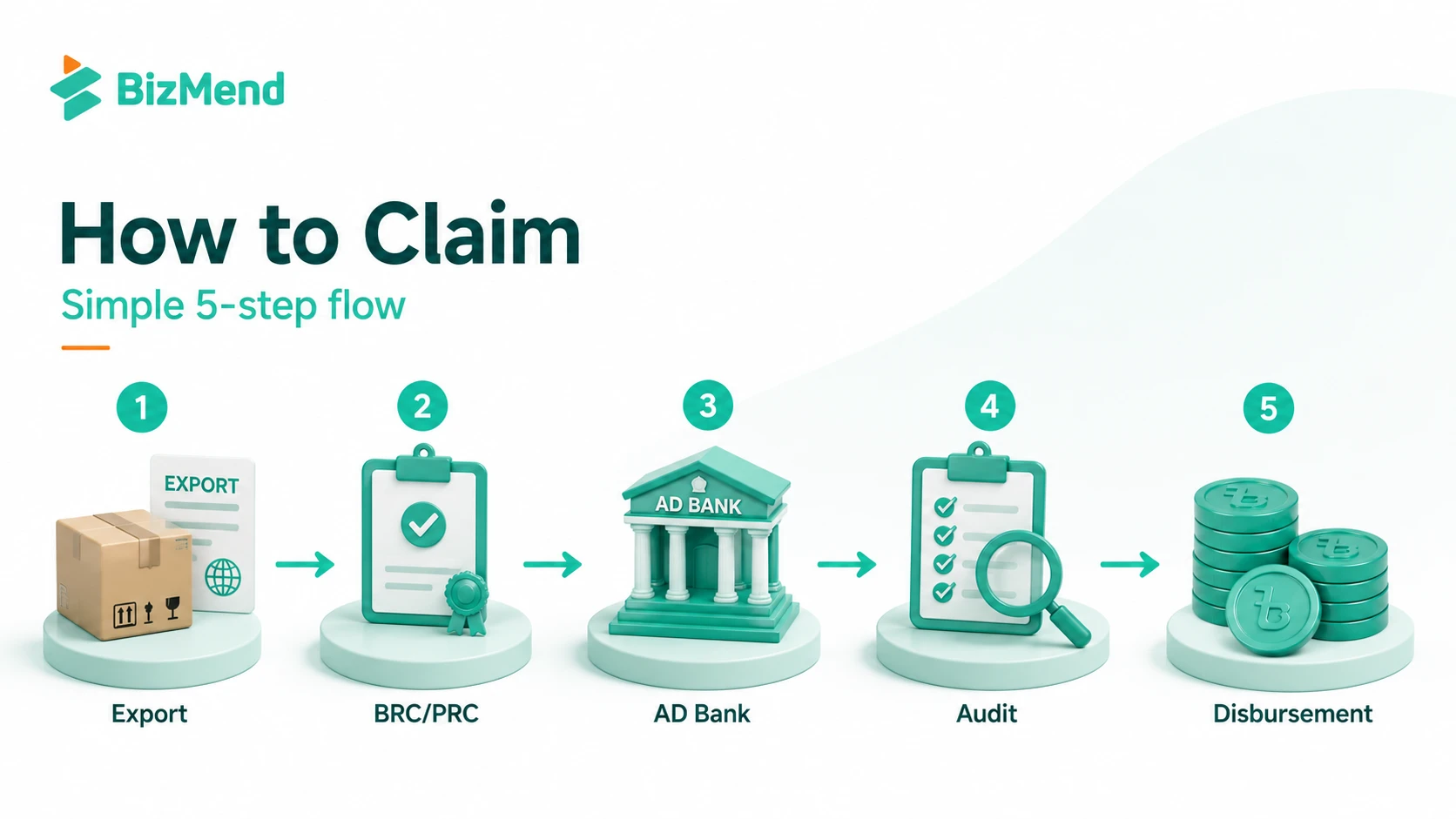
The process runs through your Authorized Dealer (AD) bank. Here’s how it works in practice:
While waiting for the full disbursement cycle, you can apply for an advance credit facility called “Quard” against your approved certificate. Up to 70% of the claim amount may be available as advance assistance, adjusted when Bangladesh Bank releases the actual incentive fund.
For exporters still setting up the foundational aspects of their business before accessing these incentives, the complete guide to starting an export business in Bangladesh covers the ERC application, OLM portal, and all the pre-requisite steps.
Bangladesh is scheduled to graduate from Least Developed Country (LDC) status in November 2026. Under WTO rules (the Agreement on Subsidies and Countervailing Measures), developing countries cannot provide direct export subsidies. Once Bangladesh graduates, the cash incentive scheme as currently structured would be prohibited.
The government has been cutting rates since January 2024. The government spent around BDT 8,000 crore on export incentives in FY2022-23, and that figure has been falling. The total budget allocation for FY2024 was BDT 78.3 billion.
The January 2026 extension of the current rates (through June 30, 2026) was a deliberate decision by the Ministry of Finance, citing economic pressures including potential US tariffs on Bangladeshi goods, Indian restrictions on land-port exports, and ongoing industrial instability.
What happens after June 2026 is genuinely uncertain. The government may shift to WTO-compliant alternatives: production-linked incentives, export credit support, or sector development funds. Exporters should not plan long-term business models around the current cash subsidy structure.
If you export to markets where you receive payments through digital channels, some Bangladeshi exporters have been setting up overseas entities to manage international payment flows. This guide on starting a US business from Bangladesh explains one approach that’s gaining traction.
The export cash incentive in Bangladesh is a government cash assistance payment to eligible exporters, calculated as a percentage of the FOB value of their export proceeds. The scheme covers 43 product categories. FE Circular No. 28 (July 10, 2025) covered shipments from July 1 to December 31, 2025, with the same rate structure continuing through June 30, 2026. Claims go through the exporter’s AD bank, external audit, and Bangladesh Bank disbursement.
The cash incentive is calculated on the FOB (Free on Board) value of your repatriated export proceeds. If your export is worth USD 100,000 FOB and your product qualifies at 10%, your claim is USD 10,000 or its taka equivalent. Applicable source tax or withholding tax may be deducted before the funds are credited to your account by your Authorized Dealer bank.
As of FY2025-26 (FE Circular No. 28, July 10, 2025), the highest rate of 10% applies to diversified jute products (at least 50% jute content per the Jute Act 2017), leather goods, light engineering products, processed agricultural products, potatoes, 100% halal meat, and accumulator batteries (HS codes 8507.10 and 8507.20).
Not for all categories. For many product categories, particularly the textile sector’s alternative cash assistance scheme, cash incentives may not be combined with duty drawback or bonded warehouse benefits on the same goods. The rules vary by product category and are set out in the active Bangladesh Bank FE circular. Always review the relevant provisions for your specific export category before applying.
Submit your claim to your Authorized Dealer (AD) bank after receiving your Bank Realization Certificate (BRC/PRC). Your bank reviews the documents, sends them to a Bangladesh Bank-approved external auditor, receives the audit certificate, and forwards it to Bangladesh Bank. The central bank disburses funds to your AD bank. Applicable source tax or withholding tax deductions apply before the credit reaches your account.
RMG incentive rates vary by category and shipment conditions. SMEs in the RMG sector (knit, woven, sweater) receive 3.00%. Textile manufacturers using the alternative cash assistance scheme receive 1.50%, with an additional 0.50% for Eurozone exports. Some RMG categories receive 0.30% under special incentive provisions. Rates also differ based on local yarn/fabric use and new-market destination. Always check the active FE circular for your specific category.
Bangladesh is scheduled to graduate from LDC status in November 2026. Under WTO’s Agreement on Subsidies and Countervailing Measures, developing countries cannot provide direct export subsidies. The government has been gradually cutting rates since 2024 and extended current rates to June 30, 2026. What replaces the current cash incentive scheme after graduation is still being determined by the Ministry of Finance.
The Export Retention Quota (ERQ) allows eligible exporters to retain a portion of their export proceeds in foreign currency in an ERQ account with their AD bank. The specific retention limit depends on Bangladesh Bank’s latest FE circular, the exporter’s type, product category, and individual bank rules. Exporters should check current Bangladesh Bank guidelines at bb.org.bd for their applicable ERQ entitlement.
Any exporter with a valid Export Registration Certificate (ERC) who exports eligible products listed in the active Bangladesh Bank FE circular and repatriates proceeds through an AD bank may be eligible. Key conditions include compliance with the rules on bonded warehouse and duty drawback for the relevant product category. Review the active circular and consult your AD bank for confirmation.
All export incentive circulars are published on the Bangladesh Bank website at bb.org.bd under the Foreign Exchange Policy Department section. FE Circular No. 28 (July 10, 2025) covered July–December 2025 shipments; the same rate structure continued to June 30, 2026. Always check bb.org.bd for the most current active circular before calculating your expected incentive.
Honestly, the export incentive system in Bangladesh has gotten more complicated over the past two years, not simpler. Rates are lower, more products have been excluded, and the timeline for the whole program has real uncertainty after LDC graduation in November 2026.
But the incentives that remain are meaningful. Ten percent on leather goods or diversified jute products is significant. For a manufacturer doing USD 500,000 in annual exports, that’s USD 50,000 in potential cash assistance every year, before deductions and subject to eligibility.
The most practical thing you can do right now: check the current active circular at bb.org.bd, confirm your product’s HS code and eligible rate, and talk to your AD bank about getting your claim documentation in order before your next shipment. Rates, eligibility conditions, and circular periods change. Don’t assume last year’s rules still apply. Verify before you export.

Learn how to become a Daraz seller in Bangladesh, register an account, list products, understand fees, manage orders, and grow…
by Sheikh Ornob
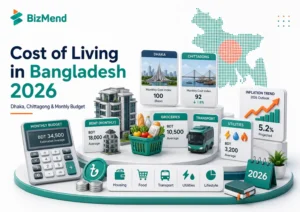
Compare the cost of living in Bangladesh in 2026, including Dhaka and Chittagong rent, food, transport, utilities, inflation, and monthly…
by Sheikh Ornob
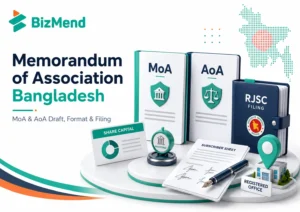
Learn MoA and AoA requirements in Bangladesh, key clauses, drafting basics, RJSC filing steps, amendments, and common company-registration mistakes. Suggested…
by Sheikh Ornob