
 by Sheikh Ornob
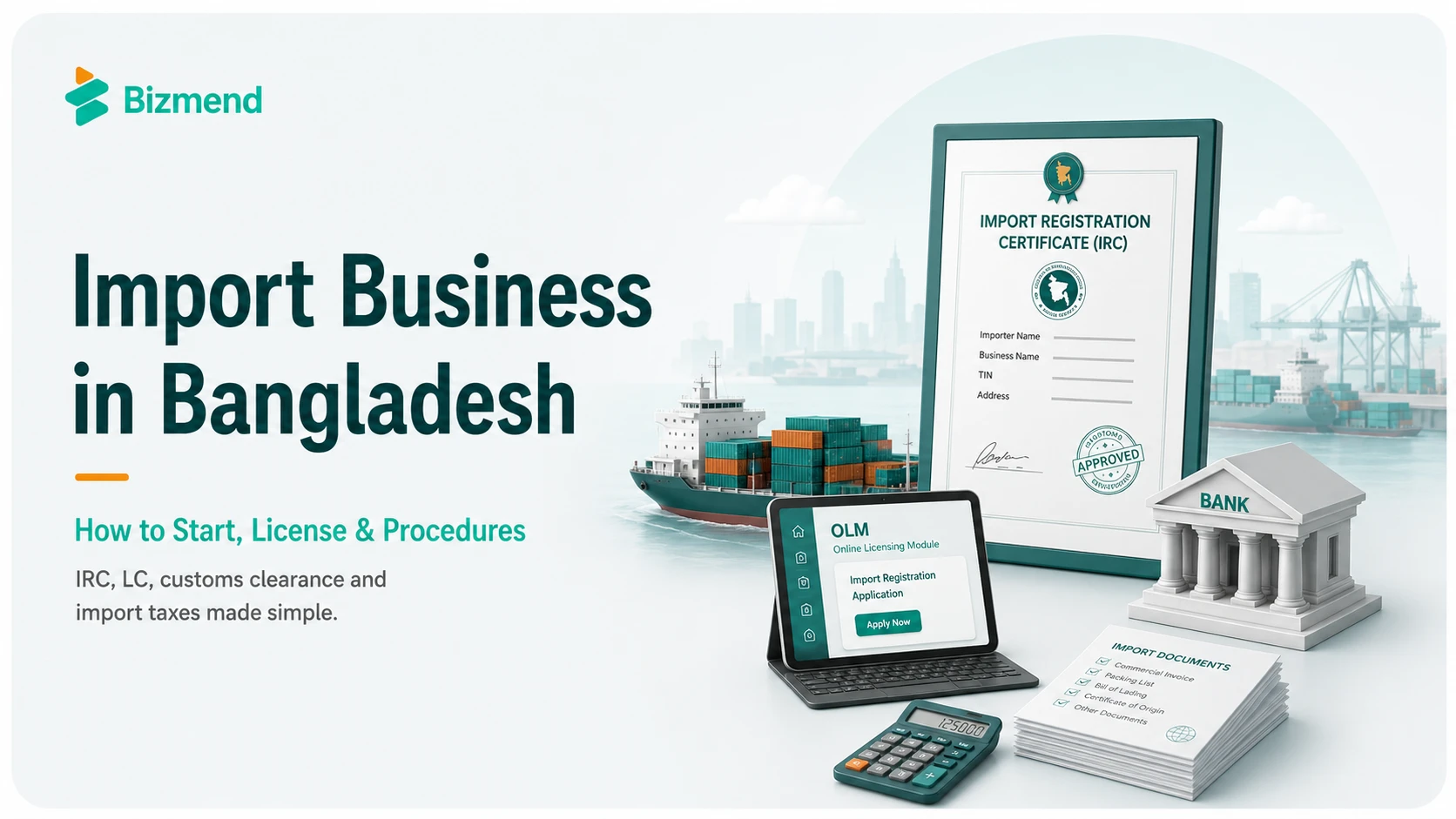
You want to import goods into Bangladesh and sell them. Smart move. Bangladesh’s domestic market is growing fast, and the demand for electronics, machinery, raw materials, and consumer products keeps climbing. But import business here isn’t plug-and-play. You need the right licence, a bank that can open Letters of Credit, and a clear picture of the taxes you’ll pay at customs. This guide walks you through every step, from company setup to collecting your goods at the port, using the rules as they stand in 2026.
Quick answer: To do import business in Bangladesh, you need an Import Registration Certificate (IRC) from the CCI&E under the Ministry of Commerce, a valid Trade Licence, TIN, VAT registration, and a business bank account with an authorized dealer bank. You then open a Letter of Credit (LC) at your bank, your goods are cleared through customs under the ASYCUDA World system, and you pay duties based on the Total Tax Incidence applicable to your product’s HS code.
Who needs an import licence in Bangladesh?
Not everyone importing goods needs a licence. Personal importers bringing in items for their own use are exempt. But if you’re importing for commercial sale or industrial use, you’re legally required to register with the CCI&E (Office of the Chief Controller of Imports and Exports) under the Ministry of Commerce.
The broader legal authority comes from the Imports and Exports (Control) Act, 1950, while IRC registration is governed by the Importers, Exporters and Indentors (Registration) Order, 1981. Any commercial or industrial importer who skips this registration and still tries to bring in goods through official channels will face customs rejection. Banks also won’t open an LC for you without a valid IRC.
So there are three types of importers in Bangladesh: personal (no IRC needed), commercial (IRC required), and industrial (industrial IRC needed, which may require recommendation or registration from the relevant sponsoring authority such as BIDA, BEPZA, BSCIC, or another applicable authority depending on the industry and location). This guide focuses on commercial and industrial importers.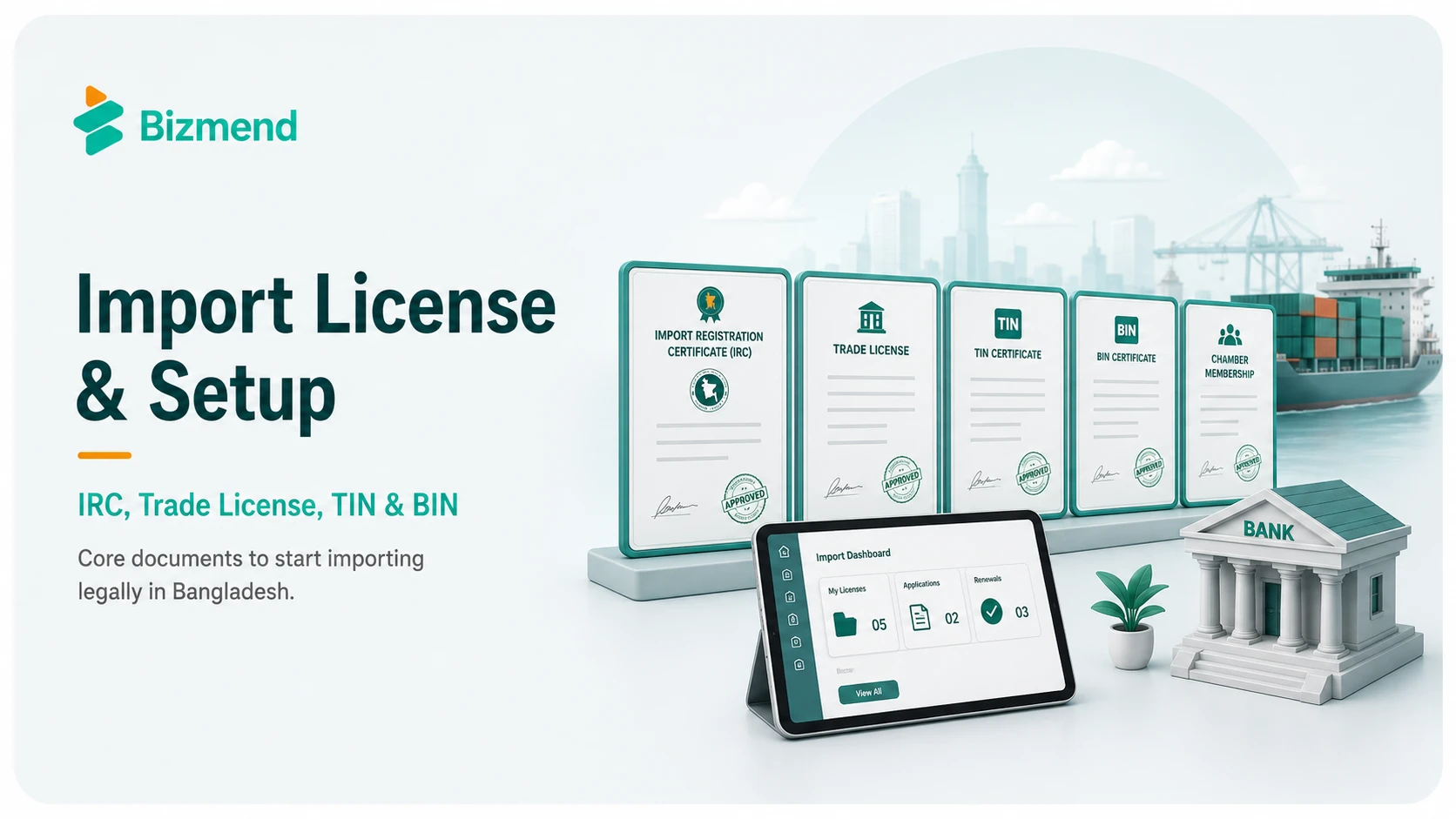
Step 1: get your company setup right first
Before you apply for an IRC, your business structure needs to be in order. The CCI&E won’t process your application without valid underlying documentation.
The minimum you’ll need:
- Trade Licence: Issued by your local City Corporation or Municipality. This shows you’re legally allowed to operate a business at your address.
- TIN (Tax Identification Number): Apply through the National Board of Revenue (NBR) portal.
- VAT Registration / BIN (Business Identification Number): A 13-digit BIN is mandatory for commercial importers, especially since the BSW (Bangladesh Single Window) system became operational on July 1, 2025. Register your BIN at bswnbr.gov.bd.
- Bank account with an authorized dealer bank: All import payments and LC transactions must flow through an authorized dealer (AD) bank. Our guide on opening a business bank account in Bangladesh as a foreigner explains the process if you’re new to Bangladesh’s banking setup.
If you’re still deciding on your company structure, our breakdown of company types and restrictions for foreigners in Bangladesh covers Private Limited Companies, partnerships, sole proprietorships, and what each allows you to do. And if you’re starting from scratch, the full walkthrough on starting a business in Bangladesh as a foreigner is worth reading before you apply for anything else.
Step 2: get your Import Registration Certificate (IRC)
The IRC is your legal permission to bring goods into Bangladesh for commercial or industrial purposes. Here’s the full document list and process for a commercial IRC.
Documents you’ll need
- Valid Trade Licence
- TIN Certificate
- VAT Registration Certificate (BIN)
- Bank Solvency Certificate from a scheduled bank
- Membership Certificate from a recognized trade association or Chamber of Commerce and Industry
- National ID Card or Passport of the owner/director
- Company incorporation certificate (for limited companies)
- Memorandum and Articles of Association (for limited companies)
- Partnership Deed (for partnerships, where applicable)
- Recent passport-size photos of owner/directors
How to apply
- Apply for the IRC through CCI&E’s Online Licensing Module at olm.ccie.gov.bd. Follow the portal instructions for document upload, payment, and application submission. If the portal directs offline payment, use the instructed Treasury Challan/bank payment process.
- CCI&E reviews the file and may conduct a field inspection for first-time applicants.
- If everything checks out, your IRC is issued.
Official processing time is listed as around 3 working days after complete submission, though practical timing may vary if documents need correction, additional verification, or field inspection. IRC validity or renewal may be available for 1 to 5 years, depending on the current OLM option selected during application or renewal. Let your IRC lapse and your bank won’t open new LCs.
For an industrial IRC, the process may require recommendation or registration from the relevant sponsoring authority, such as BIDA, BEPZA, BSCIC, or another applicable body depending on your industry and location.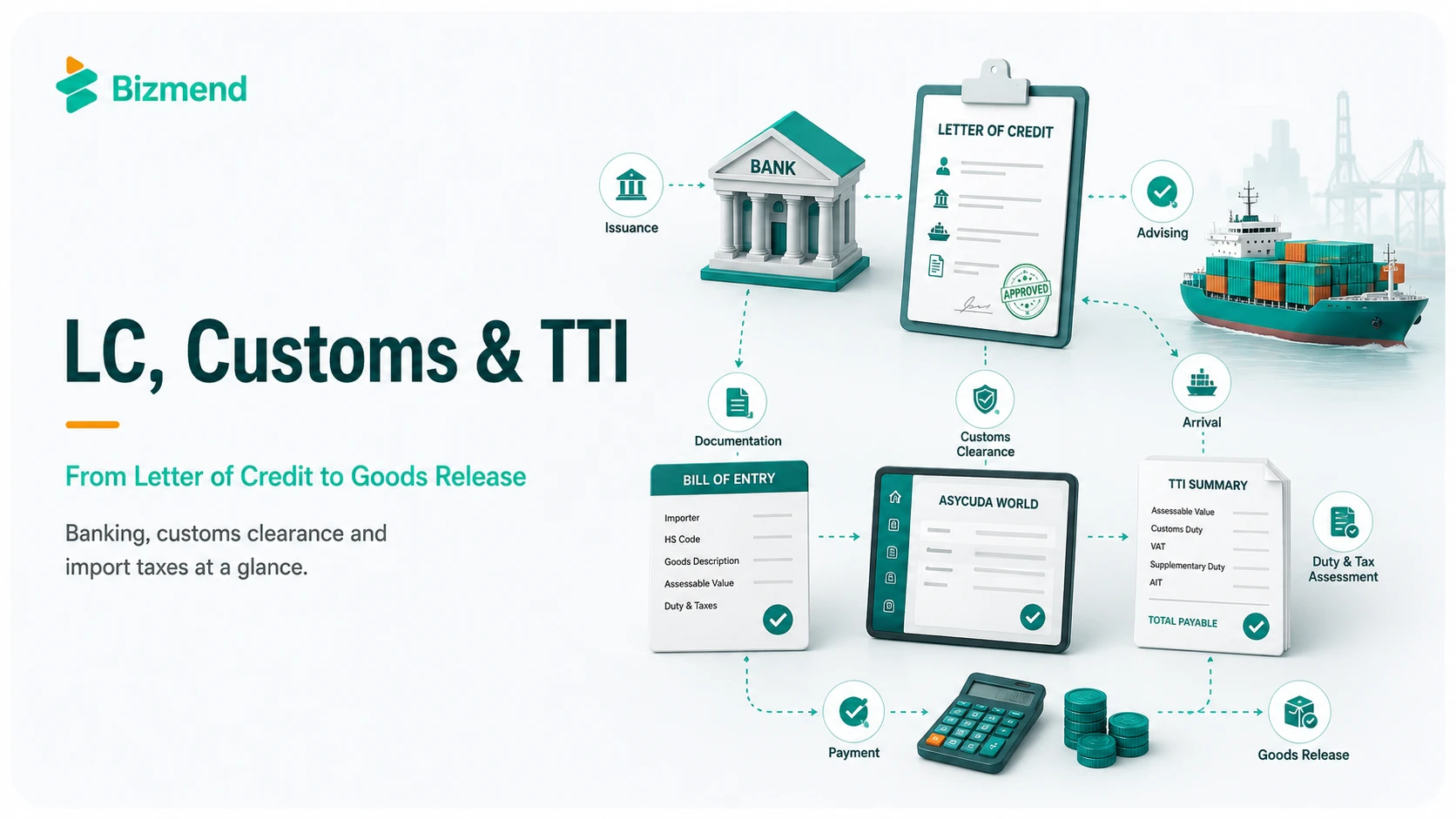
Step 3: choose your product and verify your supplier
This is the part people rush, and it costs them later. Before you sign any supplier agreement, you need to know two things: whether the product is importable under Bangladesh’s current rules, and what HS code it falls under.
Every imported item is classified by an 8-digit HS code (Harmonized System code). The HS code determines your duty rate, whether the product needs any special permit, and whether BSTI certification is required. You can look up codes through the NBR tariff database at nbr.gov.bd or the Bangladesh Trade Portal at bangladeshtradeportal.gov.bd.
Getting the HS code wrong isn’t a paperwork error. Customs can penalize you for incorrect classification, and no bank is allowed to open an LC with the wrong HS code.
Once you’ve confirmed the product is importable and have the correct HS code, verify your supplier. Ask for references, request a credit report for orders above USD 10,000 (banks often require this), and check whether the supplier can provide the documents you’ll need for customs clearance. A DUNS number from Dun & Bradstreet for international supplier credibility helps verify overseas suppliers and establishes your own credibility as an importer when dealing with foreign companies.
Step 4: open a Letter of Credit with an authorized bank
Most commercial imports into Bangladesh happen through Letters of Credit. The LC protects both you and the supplier. It guarantees the supplier gets paid when shipping documents are correctly submitted, and it guarantees you that payment only releases against those documents.
Here’s how it works in practice:
- You receive a Proforma Invoice or Indent from your supplier.
- You approach your authorized dealer (AD) bank with the PI, your IRC, TIN, BIN, and a completed LC application.
- The bank assesses your credit history, business standing, and the nature of goods.
- If approved, the bank opens the LC. You pay a margin (a percentage of the LC value, which varies by bank and product) plus fees.
- The bank enters your import details into Bangladesh Bank’s Online Import Monitoring System (LCAF was phased out in 2022 under Bangladesh Bank FE Circular No. 29, dated October 20, 2022).
- Your supplier ships the goods and presents documents to their local bank.
- Documents arrive at your bank. If they’re compliant, payment is released. If there are discrepancies, things can stall fast.
Not all commercial banks in Bangladesh are equally fast at processing import LCs. Some process transactions in days; others take longer. If you’re a foreign national or new to Bangladesh, foreign banks in Bangladesh often have stronger international trade finance desks. Worth comparing before you commit to a bank.
For working capital to cover import costs, getting a loan from a Bangladeshi bank is an option if your documents are clean, though banks are collateral-driven and often expect a local co-guarantor for newer businesses.
Step 5: understand what taxes you’ll pay
This is where many new importers get a nasty surprise. Bangladesh levies six types of duties and taxes on imports, and they stack. Together they’re called the Total Tax Incidence (TTI), and they can significantly increase your landed cost beyond the purchase price.
The six components, per the Customs Act 2023 and NBR tariff schedules:
- Customs Duty (CD): A base duty on the CIF value (Cost + Insurance + Freight) of the goods. Rates vary by product HS code.
- Regulatory Duty (RD): An additional duty imposed under the Customs Act 2023 on select products.
- Supplementary Duty (SD): Ranges from 5% to 65.5% and applies to luxury goods, non-essential items, and products with domestic alternatives.
- VAT (Value Added Tax): 15% standard rate, applied on the “duty paid value” (CIF + CD + RD + SD combined). Some products have reduced rates at 1.5%, 4.5%, 7.5%, or 10%.
- Advance Income Tax (AIT): An advance collection of income tax at the import stage. Rate varies by product.
- Advance Tax (AT): AT rates may vary by current NBR rules, product category, and HS code. Always verify the applicable AT rate in the latest customs tariff before calculating landed cost.
So yes, these pile up. A product with 25% CD and 20% SD, plus 15% VAT and applicable AT, ends up costing significantly more than its CIF value suggests. Always calculate your full TTI before fixing your selling price.
Import duties are calculated on CIF value per NBR’s Customs Tariff, updated for FY 2025-26. Always verify the specific rate for your HS code at bangladeshcustoms.gov.bd or through the NBR customs tariff document.
Step 6: clear customs and collect your goods
From July 1, 2025, all certificates, licences, and permits (CLPs) for import clearance are mandatory through the Bangladesh Single Window (BSW) system at bswnbr.gov.bd. This includes documents from 19 organisations including CCI&E, DGDA, BSTI, BIDA, DOE, and others. Register your BIN on BSW before your first shipment arrives.
When your goods reach Chattogram Port or another entry point, the clearance process goes like this:
- Your C&F (Clearing and Forwarding) agent submits a Bill of Entry through the ASYCUDA World Customs system.
- Customs assesses duties and taxes based on your goods’ CIF value and HS code.
- Physical inspection may follow. Some goods are scanned, others go through manual checks.
- You pay the assessed duties and taxes, either at the Customs House or through authorized banks.
- Customs issues a release order. Your C&F agent arranges delivery.
Honestly, getting a reliable C&F agent is one of the most underrated decisions in the import process. They know the customs officers, they understand which documents are flagged, and they’ll handle the port paperwork much faster than you can on your own. Budget for their fees, usually a percentage of the CIF value or a flat fee per shipment.
Restricted and prohibited goods, know before you order
Bangladesh’s Customs Act, 2023 (which replaced the older 1969 Act) lists prohibited and restricted goods under Section 17. Before you finalize any product, confirm it’s not on the banned list.
Products that are restricted or require special permits include:
- Second-hand electronics (laptops, mobile phones, refrigerators) are generally prohibited for import
- Motor vehicles more than 5 years old are restricted
- Second-hand clothing is restricted to protect the local textile industry
- Food items require a radioactivity clearance certificate from the Bangladesh Atomic Energy Commission (BAEC)
- BSTI certification applies to listed products under the current Import Policy Order and BSTI rules. Always verify whether your specific HS code or product category requires BSTI clearance before shipment
- Medicines, chemicals, and cosmetics need additional permits from DGDA and the Department of Environment (DOE)
- Goods from Israel cannot be imported
- Branded goods registered under IP laws in Bangladesh require an intellectual property certificate from the IP holder in the exporting country
Common mistakes new importers make
I’ve seen businesses spend months on their IRC only to lose the first shipment to a preventable error. Here’s what trips people up most:
- Wrong HS code on the LC. Customs flags it, the bank gets penalized, your shipment sits. Always double-check your code against the NBR tariff before opening the LC.
- LC document discrepancy. If the Bill of Lading description doesn’t match the LC terms exactly, your bank can call a discrepancy. The supplier then needs to rectify it, adding days or weeks to your payment cycle.
- Letting your IRC lapse. IRC validity depends on the option selected at application (1 to 5 years may be available). A lapsed IRC means your bank can’t open new LCs and your existing import activities are non-compliant. Check your renewal date well in advance.
- Skipping the BSW registration. From July 1, 2025, unregistered BINs can’t get CLPs through BSW. That means clearance delays at every port entry.
- Underestimating TTI. New importers calculate landed cost based on the purchase price plus shipping. They forget that CD + RD + SD + 15% VAT + applicable AT can push the final cost significantly above CIF value for many product categories. Always verify each component using your exact HS code.
- Going without a C&F agent. Trying to self-clear goods at Chattogram Port without experience in the ASYCUDA World system is asking for delays and fines.
For businesses considering which sector to import into, our overview of top industries for foreign investment in Bangladesh covers which product categories have the strongest demand and the clearest growth path.
Key Insights
- IRC from CCI&E is mandatory for all commercial and industrial importers in Bangladesh. Validity or renewal options of 1 to 5 years may be available depending on the OLM option selected. Let your IRC lapse and your ability to open LCs stops immediately.
- The BSW system became mandatory from July 1, 2025. All import clearance-related permits and certificates from 19 government bodies now go through bswnbr.gov.bd. Register your BIN before your first shipment.
- Six taxes stack at customs. Customs Duty, Regulatory Duty, Supplementary Duty, VAT (15%), Advance Income Tax, and Advance Tax together form the Total Tax Incidence. Always calculate TTI before setting your selling price.
- LCAF was phased out in 2022. Bangladesh Bank FE Circular No. 29 (October 20, 2022) eliminated the LCAF requirement. Your authorized dealer bank now reports import info directly to Bangladesh Bank’s online monitoring system.
- Wrong HS code = penalties. The Customs Act 2023 treats HS code misclassification seriously. No bank can open an LC without the correct 8-digit HS code, and customs can impose penalties for misclassification.
- Second-hand electronics, vehicles over 5 years old, and second-hand clothing are restricted under Bangladesh’s import rules. Verify your product’s status before signing any supplier agreement.
- A good C&F agent pays for itself. Clearing goods at Chattogram Port without an experienced Clearing and Forwarding agent is a real risk. Their fees are a small fraction of what a clearance delay can cost you.
Frequently Asked Questions
What is an IRC and who needs it in Bangladesh?
An IRC (Import Registration Certificate) is a mandatory licence issued by the CCI&E (Office of the Chief Controller of Imports and Exports) under Bangladesh’s Ministry of Commerce. Any person or company importing goods commercially or industrially into Bangladesh needs a valid IRC. Personal importers bringing goods for their own use are exempt. Without an IRC, banks cannot open LCs and customs will not clear your commercial shipments.
How long does it take to get an IRC in Bangladesh?
Official processing time is listed as around 3 working days after complete submission, though practical timing may vary if documents need correction, additional verification, or field inspection. CCI&E may also conduct a physical inspection for first-time applicants. Validity or renewal options of 1 to 5 years may be available depending on the current OLM option selected during application or renewal.
What documents are required to apply for an IRC in Bangladesh?
You need a valid Trade Licence, TIN Certificate, VAT Registration Certificate (BIN), Bank Solvency Certificate, Membership Certificate from a trade association or Chamber of Commerce, NID or passport of owner/director, company incorporation certificate and Memorandum of Association (for limited companies), and recent passport photos. Apply through CCI&E’s Online Licensing Module at olm.ccie.gov.bd, which provides current instructions for document upload and payment.
What is the Total Tax Incidence (TTI) on imports in Bangladesh?
TTI is the combined total of all six duties and taxes levied at import: Customs Duty (CD), Regulatory Duty (RD), Supplementary Duty (SD, ranging 5% to 65.5%), VAT (15% standard rate on duty-paid value), Advance Income Tax (AIT), and Advance Tax (AT), the rate of which varies by product category and HS code under current NBR rules. Each component applies on top of the previous ones, which means the total tax burden can substantially exceed a product’s CIF value. Always verify TTI using your product’s HS code at bangladeshcustoms.gov.bd.
What is the BSW system and how does it affect importers?
The BSW (Bangladesh Single Window) system, an NBR initiative, became mandatory from July 1, 2025. It provides an online platform for all certificates, licences, and permits (CLPs) required for import and export customs clearance. Importers must register their BIN on the system at bswnbr.gov.bd. As of July 1, 2025, CLPs from 19 government organizations including CCI&E, BSTI, DGDA, and BIDA are mandatory through BSW for customs clearance.
Do I need an LCAF to open an import LC in Bangladesh?
No. The LCAF (Letter of Credit Authorization Form) was phased out under Import Policy Order 2021-2024 and Bangladesh Bank FE Circular No. 29, dated October 20, 2022. Your authorized dealer (AD) bank now submits primary import information directly to Bangladesh Bank’s Online Import Monitoring System when your LC is opened. You no longer need to register an LCAF separately.
What goods are prohibited or restricted from import into Bangladesh?
Under the Customs Act, 2023 (Section 17), certain goods are fully prohibited. Restricted categories include second-hand electronics (laptops, phones, refrigerators), motor vehicles more than 5 years old, and second-hand clothing. Goods from Israel cannot be imported. Food items need clearance from the Bangladesh Atomic Energy Commission. BSTI certification applies to listed products under the current Import Policy Order and BSTI rules; verify whether your HS code requires it before shipment. Medicines, chemicals, and cosmetics need permits from DGDA and the Department of Environment.
Can a foreigner start an import business in Bangladesh?
Yes. A foreign national can own 100% of a private limited company in Bangladesh and obtain an IRC to import goods commercially. You’ll need RJSC registration, a valid Trade Licence, TIN, BIN, BIDA notification for foreign capital, and an account with an authorized dealer bank. Some sectors may have additional approvals. Verify the current BIDA investment guidelines for your specific product category before applying.
What is a C&F agent and do I really need one?
A C&F (Clearing and Forwarding) agent is a licensed customs broker who handles your shipment clearance at the port. They submit your Bill of Entry through the ASYCUDA World customs system, coordinate inspections, calculate and pay duties, and arrange delivery. While not always legally mandatory, attempting to self-clear goods at Chattogram without experience in the customs system is a significant risk. Most commercial importers use a C&F agent for every shipment.
How is import VAT different from regular VAT in Bangladesh?
Import VAT is charged at the customs stage at 15% of the “duty paid value,” meaning it’s applied on top of the CIF value plus Customs Duty plus Regulatory Duty plus Supplementary Duty, not just on the purchase price. CD, SD, and RD paid at import are not recoverable as input VAT credit and become a permanent cost for the importer. This makes the effective cost of imported goods significantly higher than just the standard 15% VAT rate suggests.
The Bottom Line
Look, import business in Bangladesh has more moving parts than most people expect. You can’t just find a supplier overseas, wire money, and expect goods at your door. The IRC, the authorized bank, the correct HS code, the TTI calculation, the BSW registration, and a reliable C&F agent: each of these is a real step with real consequences if you skip it.
But it’s also not impossibly complicated. Most importers say the first shipment is the hardest, and after that, the process becomes routine. The rules are clear; you just need to follow them in the right order.
If I were starting today, I’d register my BIN on the BSW system immediately, open my bank account with an AD bank that has a strong trade finance desk, and get the IRC processed before I ever signed a supplier agreement. Don’t chase the product first. Secure the licence first.
That’s the move.