How to Become a Daraz Seller in Bangladesh: Registration, Fees & Growth
Learn how to become a Daraz seller in Bangladesh, register an account, list products, understand fees, manage orders, and grow…
 by Sheikh Ornob

Jute export in Bangladesh explained for 2026: current earnings, top products, key markets, and a step-by-step guide to start your jute export business.
Jute used to be everything. Back in the 1970s, it accounted for nearly 90% of Bangladesh’s export earnings and put the country on the global trade map. Today that share has slipped below 2%. But that shift doesn’t mean jute is finished. It means the industry is due for a reset, and people who understand the current reality can build something real here. This guide covers the state of jute export in Bangladesh right now, which products actually move, who’s buying, and how you start a business in this space.
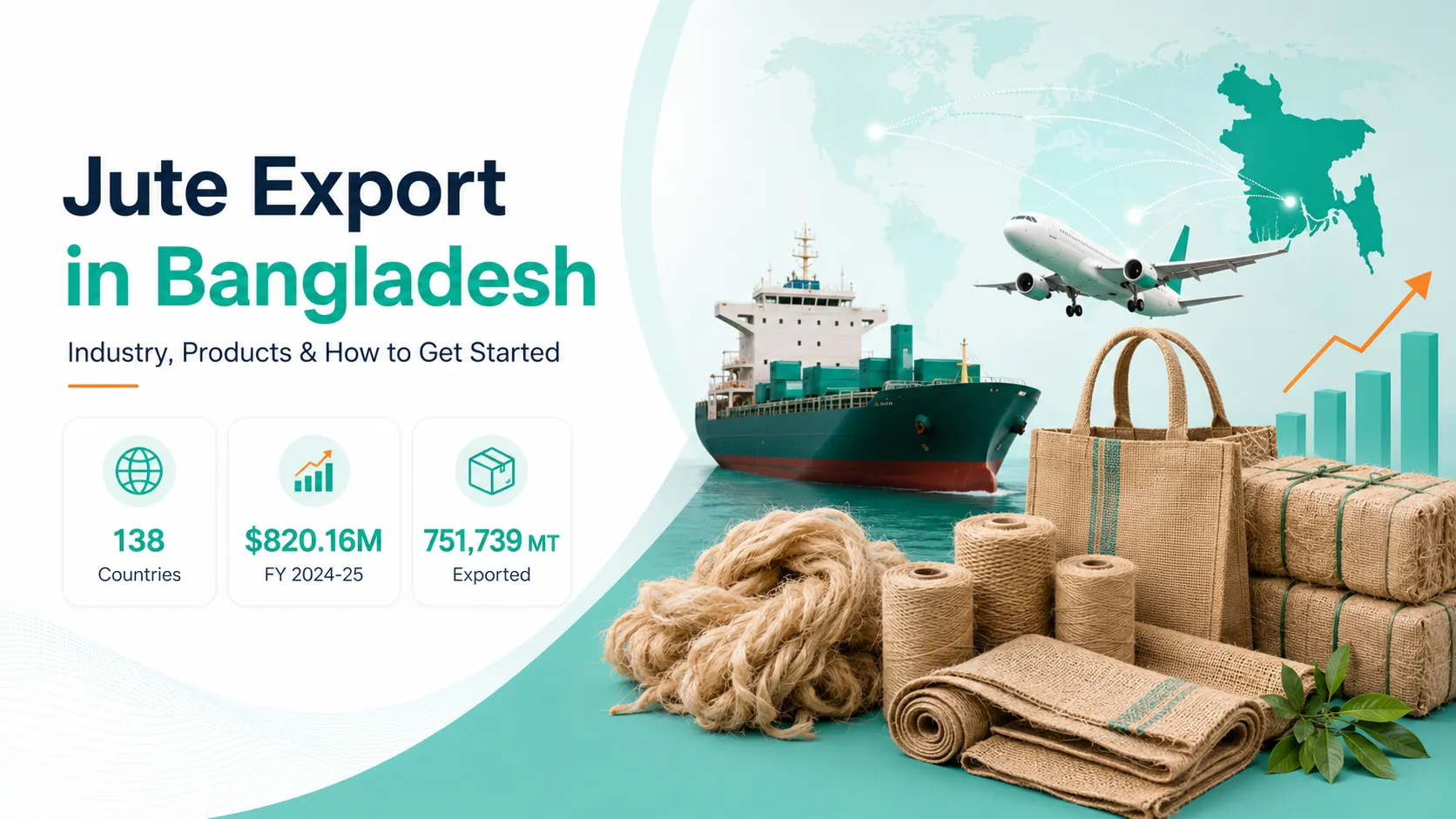
| Quick answer: Jute export in Bangladesh earned $820.16 million in FY 2024-25, with Bangladesh shipping jute goods to 138 countries and raw jute to 30. Key products include jute yarn, hessian cloth, raw jute, and jute bags. Turkey, China, the EU, India, and the USA are the top destinations. To start, register a company, get an Export Registration Certificate, join a jute trade body, and find buyers via trade fairs and B2B platforms. |
Here’s the honest picture. Jute exports peaked at $1.16 billion in FY 2020-21, then fell for four straight years. By FY 2024-25, the sector earned $820.16 million, down from $855.23 million in FY 2023-24 and $911.51 million in FY 2022-23, according to Export Promotion Bureau (EPB) data.
But early FY 2025-26 numbers look better. Between July and November 2025, jute goods exports hit $346 million, a 1.36% year-on-year uptick after years of straight decline. Tapash Pramanik, chairman of the Bangladesh Jute Spinners Association (BJSA), put it plainly: “We see increased orders from Turkey and some other countries. This has created hopes of revival.”
Bangladesh still ships jute goods to 138 countries and raw jute to 30, according to Textiles and Jute Minister Khandaker Abdul Muktadir, who confirmed these figures in Parliament in April 2026. The volume of jute products exported in FY 2024-25 was 751,739 metric tons. That’s not a dying industry. That’s an industry that went off track and needs better technology, smarter product diversity, and cleaner policy execution.
Jute also features alongside garments and leather in the top industries for foreign investment in Bangladesh precisely because of Bangladesh’s raw material advantage and the global pivot toward eco-friendly packaging.
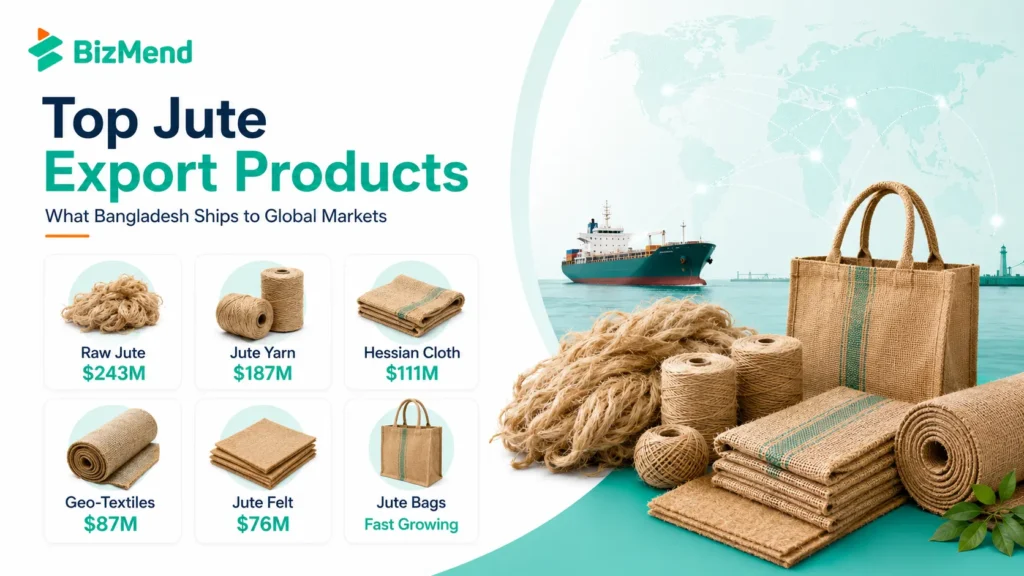
Jute isn’t just sacks and bags. The product range is much wider, and different categories respond to very different global markets.
The main export categories with approximate 2024 trade values:
Beyond these, Bangladesh produces close to 300 Jute Diversified Products (JDPs): home textiles, furniture accessories, gardening items, floor covers, office stationery, paper packaging, fashion accessories, and even footwear. The JDP segment is where the real margin growth lives and it’s still underdeveloped relative to its potential.
Bangladesh’s jute market picture is geographically spread. For raw jute, the main buyers are China, India, Iran, Spain, Belgium, USA, UK, Italy, Turkey, and Pakistan. For processed goods, major destinations include Turkey, China, Belgium, USA, UK, Netherlands, Italy, India, Egypt, and Japan.
Turkey deserves specific attention. It’s the largest buyer of Bangladesh’s jute yarn, mainly for its carpet and rug industry. When Turkish demand slumped over the past few years, it dragged Bangladesh’s entire yarn sector down. That recovery in Turkey is the primary driver behind FY 2025-26’s early positive numbers.
Europe is steadily growing as a destination for value-added jute. Potato bags, hessian retail bags, nursery cloth, and decorative yarn in mini spools are gaining ground in EU and UK markets. The EU’s Single-Use Plastics Directive is quietly pushing buyers toward natural fiber alternatives. Bangladesh, as the world’s largest jute exporter by value, sits directly in line for that demand shift.
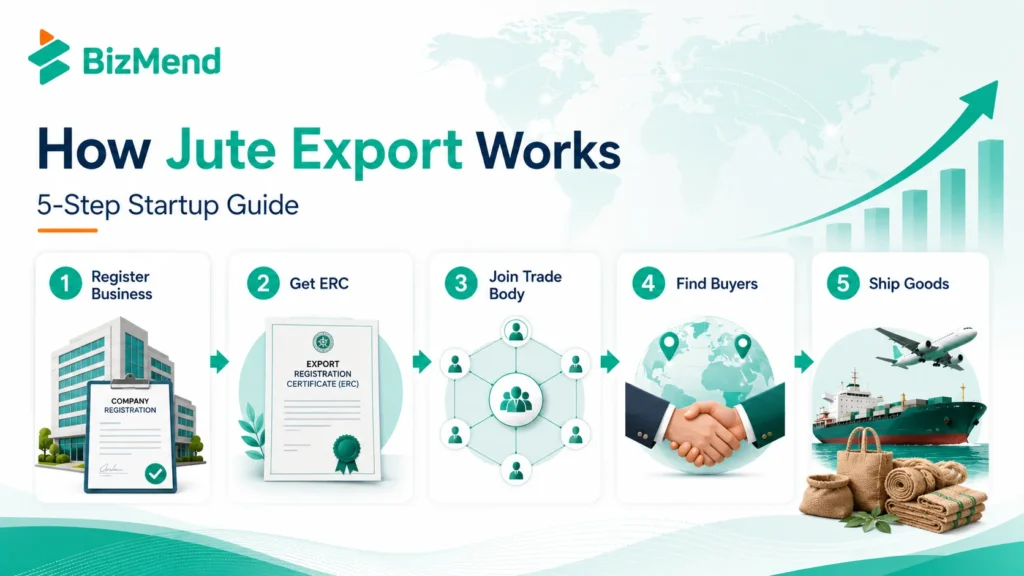
You can’t legally export without a registered company. A Private Limited Company is the most common structure. If you’re navigating this as a new founder, our guides on how to get started are linked below.
Our guide on starting a business in Bangladesh as a foreigner and the full breakdown on company types and restrictions for foreigners in Bangladesh walk through name clearance, RJSC filing, and compliance.
Once incorporated, the licenses you’ll need:
1. Export Registration Certificate (ERC): Apply via CCI&E’s Online Licensing Module at olm.ccie.gov.bd, under the Ministry of Commerce. You’ll need your trade license, TIN, bank solvency certificate, NID, and a membership certificate from your relevant jute trade association.
2. Tax Identification Number (TIN): Required before any bank account or ERC application.
3. VAT registration (BIN): Needed if your turnover crosses the threshold or you’re doing processing.
Current account with an authorized dealer bank: Your bank handles export proceeds, issues Letters of Credit, and processes your EXP form. Getting a business bank account in Bangladesh sorted early saves delays later.
Your trade body membership is part of your ERC application, so you need this before you apply, not after. Three main bodies:
Membership also gets you listed in buyer-facing directories and access to government advocacy meetings, which matter when policy changes hit pricing.
Bangladesh grows Tossa and White jute, mainly in Faridpur, Sylhet, Rangpur, and Noakhali. Harvesting runs July to September. If you’re not manufacturing, you can source finished products from private mills concentrated in Narayanganj, Khulna, and Dhaka.
Watch raw jute pricing. In FY25, production fell 18% year-on-year to 75.65 lakh bales per Department of Agricultural Extension data. Middlemen hoarding during harvest seasons pushed prices sharply higher. A fixed supply agreement with a reliable mill is worth more than chasing spot prices.
B2B platforms like Alibaba, Global Sources, and EC21 help you get discovered. Real volume in jute usually comes from trade fairs, BJGEA-organized buyer delegations, and direct outreach to carpet manufacturers in Turkey, packaging importers in Belgium, and retailers in the UK and Germany.
One move most new exporters skip: get a DUNS number from Dun & Bradstreet for international supplier credibility. Major European and US importers run supplier verification through D&B. Without a profile there, your company doesn’t show up in their due diligence.
Your standard export document pack per shipment:
Most jute shipments leave through Chattogram Port. Read buyer LC terms carefully. Discrepancies on jute shipments can delay payment by 30 to 45 days and attract fees.
For working capital, especially if you’re processing raw jute before export, getting a loan from a Bangladeshi bank is realistic if your documents are solid. Specialized banks in Bangladesh like Bangladesh Krishi Bank offer sector-specific agro-industrial credit. For LC processing and trade finance, our guide to commercial banks in Bangladesh helps you compare the right partner.
Honestly, jute isn’t an easy entry right now. Here’s what actually hits new exporters:
If you’re entering as a buyer and re-exporter of finished goods, some of these risks reduce. But as a processor, go into this with eyes open and financing confirmed before raw material commitments are made.
The global jute market was valued at $2.8 billion in 2024 and is projected to reach $4.6 billion by 2034, growing at roughly 5.7% annually. The driver is plastic regulation. Over 127 countries have some form of plastic bag restriction. The EU packaging sustainability rules are tightening. The interim government of Bangladesh began enforcing its single-use plastic ban from October 2024, the first real enforcement push in years.
If the Mandatory Jute Packaging Act gains teeth domestically, that unlocks a large new layer of local demand. BJMA has noted the domestic jute market could multiply significantly with proper enforcement.
Bangladesh has more jute export infrastructure than any other country. It already ships to 138 countries. The sector is battered but not broken, and entrants in Jute Diversified Products, especially geo-textiles, retail bags, and European home décor segments, are finding margins that basic yarn exporters can’t access.
Starting as a buying house or re-exporter requires roughly $15,000 to $40,000 in working capital for company setup, licenses, trade body membership, and first shipment costs. Setting up your own processing unit or mill partnership starts at $200,000 or more depending on scale. Licensing and ERC fees are relatively low; the main capital need is sourcing inventory and financing trade.
Jute Diversified Products (JDPs) including geo-textiles, fashion bags, retail tote bags, and decorative home textiles carry margins 3 to 5 times higher than bulk yarn or raw jute. Jute bags for European retailers driven by plastic bag bans are the fastest-growing segment right now. Bulk yarn and hessian are high volume but thin margin.
Turkey is the largest buyer of Bangladesh’s jute yarn and twine, mainly for its carpet manufacturing industry. For raw jute, China and India top the list. For processed jute goods overall, major buyers include Turkey, China, Belgium, USA, UK, Netherlands, India, Egypt, and Japan. Bangladesh ships to 138 countries in total for jute goods.
The core license, the Export Registration Certificate (ERC), covers both. However, the trade body membership required differs. Raw jute exporters typically join BJMA or a general Chamber of Commerce. Yarn exporters join BJSA. Jute goods exporters join BJGEA. Some raw jute shipments may also require a Phytosanitary Certificate from the Department of Agricultural Extension depending on the destination country’s import rules.
Verified channels include Alibaba, Global Sources, and EC21 for online discovery. Trade fairs like DIFE expos and BJGEA-led buyer meetings attract real procurement teams. Direct cold outreach to carpet manufacturers in Turkey, packaging companies in Belgium, and retail importers in the UK and Germany converts at a higher rate than passive platform listings. A DUNS number from Dun & Bradstreet boosts your credibility in formal procurement checks.
The Mandatory Jute Packaging Act 2010 requires 19 commodities, including paddy, rice, wheat, corn, sugar, and fertilizer, to be packaged in jute sacks instead of plastic or synthetic bags. If enforced strictly, it creates massive domestic demand for jute sacking, which stabilizes raw jute pricing and mill operations. Enforcement has been inconsistent since 2014, but the interim government’s October 2024 plastic crackdown is the most serious push in years.
Yes. Foreign nationals can own 100% of a Bangladeshi private limited company that exports jute goods. You’ll need RJSC registration, trade license, TIN, VAT registration, and BIDA notification if you’re bringing in foreign capital. BJGEA associate membership is available to foreign-owned companies meeting the documentation criteria. Most foreign founders work with a local team for raw material sourcing, mill relationships, and banking introductions.
Every jute shipment requires a Commercial Invoice, Packing List, Bill of Lading (or Air Way Bill for air shipments), Certificate of Origin from BJMA, BJGEA, or the Chamber of Commerce, and an EXP Form as Bangladesh Bank’s foreign exchange declaration. Some destination countries require a Phytosanitary Certificate or specific quality inspection certificate. Always align all documents exactly with the buyer’s Letter of Credit terms before loading.
BJMA (Bangladesh Jute Mills Association) represents manufacturers of sacking and hessian cloth, the traditional packaging and industrial fabric segments. BJSA (Bangladesh Jute Spinners Association) represents yarn and twine producers, with 77 member mills focused mainly on carpet yarn for Turkey and rope twine for the Middle East. If you produce or source yarn for export, BJSA is your body. If you’re in sacking or hessian, BJMA is where you belong.
Yes, depending on what you export. Basic yarn and hessian face thin margins and pricing pressure. But Jute Diversified Products, geo-textiles, eco-friendly retail bags, and specialty home textiles carry healthy margins in EU and North American markets. The sector is recovering after four years of decline, and the global shift away from plastic packaging is a structural tailwind. Entry in 2026 with a focus on value-added products is better timed than 2021 when commodity volumes were crowded and prices peaked.
Jute is a sector where the fundamentals are actually improving even as the headline numbers look rough. Four years of decline, yes. But a global market growing toward $4.6 billion, plastic bans creating real end-market demand, and Bangladesh holding more export infrastructure than any country on earth. That’s not a story of permanent decline. That’s a sector that lost its way on basic commodities and has a clear path back through value-added products.
If I were starting a jute business today, I’d skip the competition on bulk yarn and sacking. I’d go straight into JDPs for European buyers: geo-textiles, retail bags, and home décor items where the margins are 3 to 5 times what you get on basic products. Get one anchor buyer. Deliver on time. Build from there.
The golden fiber isn’t finished. It just needs smarter exporters in it.

Learn how to become a Daraz seller in Bangladesh, register an account, list products, understand fees, manage orders, and grow…
by Sheikh Ornob
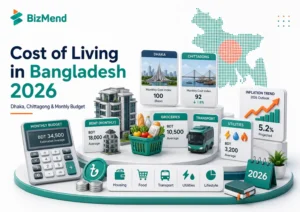
Compare the cost of living in Bangladesh in 2026, including Dhaka and Chittagong rent, food, transport, utilities, inflation, and monthly…
by Sheikh Ornob
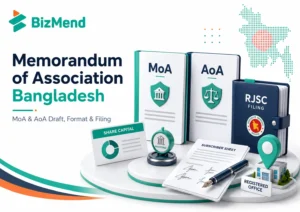
Learn MoA and AoA requirements in Bangladesh, key clauses, drafting basics, RJSC filing steps, amendments, and common company-registration mistakes. Suggested…
by Sheikh Ornob