
 by Sheikh Ornob
Cash can fix growth fast. A small business loan in Bangladesh can help you buy stock, cover payroll, or add machinery. Picking the wrong bank, though, can slow you down for weeks.
That is why this choice is less about finding one perfect lender and more about matching your business age, documents, collateral position, and loan purpose to the right bank desk. Some banks are stronger for collateral-free working capital. Others stand out for women entrepreneurs, startups, exporters, or new entrepreneurs. This guide shows you where to look first, what banks usually ask for, and how to apply without getting buried in avoidable back and forth.
Quick Answer: The best small business loan in Bangladesh depends on your profile. BRAC Bank and EBL are strong for unsecured SME borrowing, DBBL is clearer on documents and collateral, Islami Bank suits Shariah-based financing, and women-led firms may access special terms such as Tk 25 lakh collateral-light support under Bangladesh Bank backed policy routes.
Key Takeaways
- There is no single best lender for every borrower, because working capital, fixed asset, startup, and women entrepreneur products follow different rules.
- Bangladesh Bank’s CMSME policy framework shapes how banks classify enterprises, but the bank still decides pricing, collateral, and final approval.
- BRAC Bank stands out for unsecured SME lending and women-focused TARA products, while EBL also lists collateral-free options for startups and small firms.
- Dutch-Bangla Bank is useful when you want a lender that publicly spells out business age, CIB, guarantor, insurance, and property document requirements.
- Islami Bank is worth a look if you prefer Shariah-based investment structures instead of a conventional interest-based loan.
- For many borrowers, the real bottleneck is paperwork quality, not lack of demand or a weak business idea.
- A clean trade license, bank statements, tax records, and a believable cash flow story usually matter before rate negotiation does.
- Women-owned businesses should ask early about dedicated desks, refinance windows, and personal-guarantee options instead of assuming every SME desk offers them automatically.
What Counts as a Small Business Loan in Bangladesh
In Bangladesh, a small business loan usually falls under CMSME or SME banking. That can mean a term loan for equipment, a revolving line for working capital, trade facilities for import or local purchase, a startup product, or a women entrepreneur facility with softer security terms.
The label matters because banks use it to decide ceiling, tenor, guarantees, and paperwork. Bangladesh Bank’s updated CMSME master circular in March 2025 set the policy frame, but banks still package products differently. One bank may treat your need as an unsecured cash flow loan, while another may push you toward a mortgage-backed term facility for the same amount.
That is why borrowers should separate the credit need into three plain questions before visiting a branch:
- Do you need working capital that turns over every few months or a fixed-asset loan that pays back over years?
- Can the business support the installment from current cash flow, or are you depending on future growth that has not shown up yet?
- Do you have collateral, or do you need a lender that is comfortable with guarantors and business strength instead?
Best Banks to Consider
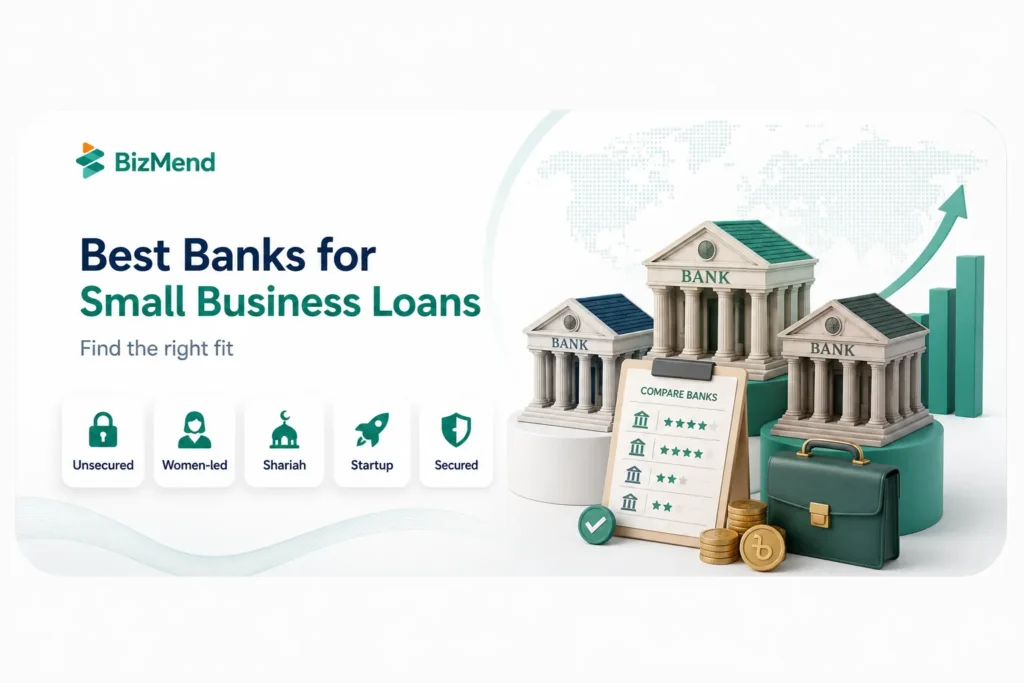
The smart way to read a best banks list is not as a ranking from one to six. It is a fit chart. A lender can be excellent for a women-owned boutique, average for an importer, and a poor fit for a fresh startup with no banking trail.
Before you decide, ask each bank four blunt questions: what security the product really needs, whether the quoted rate works in practice for your installment plan, how fast CIB and sanction steps usually move, and what fees appear outside the headline rate. Those answers tell you more than branch decor or brand name ever will.
| Bank | Best fit | Published cues | Why it stands out |
|---|---|---|---|
| BRAC Bank | Unsecured SME loans, women entrepreneur finance, trade-linked SME borrowing | Anonno from Tk 4 lakh to below Tk 50 lakh, Druti up to Tk 15 lakh, TARA Uddokta from Tk 5 lakh upward on cited pages | Strong unsecured SME history, women-focused desks, broad product menu |
| Eastern Bank PLC | Collateral-free SME, startup, and women entrepreneur borrowing | Utkorsho: Tk 20 lakh to Tk 1.5 crore; Startup: Tk 2 lakh to Tk 1 crore; Mukti: Tk 1 lakh to Tk 1 crore | Useful if you want published ranges for several borrower types |
| Dutch-Bangla Bank PLC | Clearer collateral-backed SME term or cash credit financing | FAQ page lists 7.5% for new customers and detailed loan ceilings by enterprise type | Useful when you want transparent document, guarantor, and security rules |
| Islami Bank Bangladesh PLC | Shariah-based SME investment | Product page lists ceilings up to Tk 15 lakh for cottage manufacturing and much higher for larger segments | Best fit if you want Islamic financing modes rather than a standard interest product |
| Bank Asia PLC | New entrepreneur term loan | Somvabona lists Tk 50,000 to Tk 10 lakh without collateral and above Tk 10 lakh to Tk 25 lakh with collateral | Useful for early-stage founders who still fit new entrepreneur rules |
| City Bank PLC | Women entrepreneur finance and small or micro business borrowing | City Alo women entrepreneur page lists BDT 3 lakh to 25 lakh unsecured and BDT 10 lakh to 2 crore secured | Worth checking for women-led firms that want a dedicated proposition |
The best bank is rarely the most famous one. It is the one whose paperwork logic matches your business reality.
BRAC Bank
BRAC Bank remains one of the most practical names for small-ticket business borrowing because its SME pages openly split products by unsecured, secured, women entrepreneur, trade, and commercial property needs.
Its Anonno and Druti products are geared toward borrowers who need business expansion or working capital without full mortgage backing, while TARA Uddokta targets women-led businesses and advertises 5% interest up to Tk 50 lakh on the cited product page.
Eastern Bank PLC
EBL is a strong option when you want product clarity. Its SME page lists separate products for startups, women entrepreneurs, and established businesses, and it clearly states published ranges, age bands, and whether collateral is required.
That makes EBL especially useful for founders who want to compare paths before entering a branch. Its startup product is one of the cleaner published routes for early-stage, innovation-led businesses.
Dutch-Bangla Bank PLC
DBBL is less flashy but often easier to evaluate because its FAQ spells out minimum business age, guarantor needs, insurance requirements, and the long list of property papers required when collateral is involved.
If your file is likely to be secured, that transparency helps. You can see early whether the application will stay simple or become a land-document exercise.
Islami Bank Bangladesh PLC
For borrowers who prefer Islamic banking, Islami Bank is the obvious bank to compare. Its SME investment page frames financing through Shariah-based modes and lists ceiling ranges by manufacturing, service, and trading segment.
That matters if your business, partners, or family office is not comfortable with a conventional interest-bearing structure.
Bank Asia and City Bank
Bank Asia’s Somvabona is a practical route for newer entrepreneurs, especially when the ask is small enough to stay in its unsecured bracket. City Bank’s women entrepreneur product is worth checking when the business has at least some operating history and the borrower wants a dedicated women-focused program.
Neither should be treated as automatic approval. They are good examples of why product fit beats brand reputation alone.
Who Can Qualify and What Documents You Usually Need
Eligibility rules change by bank, but the pattern is consistent. Lenders usually look at business age, legal form, transaction history, repayment capacity, personal profile of the owner, and security support. In practice, a sole proprietorship with steady sales and decent bank statements may move faster than a newer private limited company with thin activity.
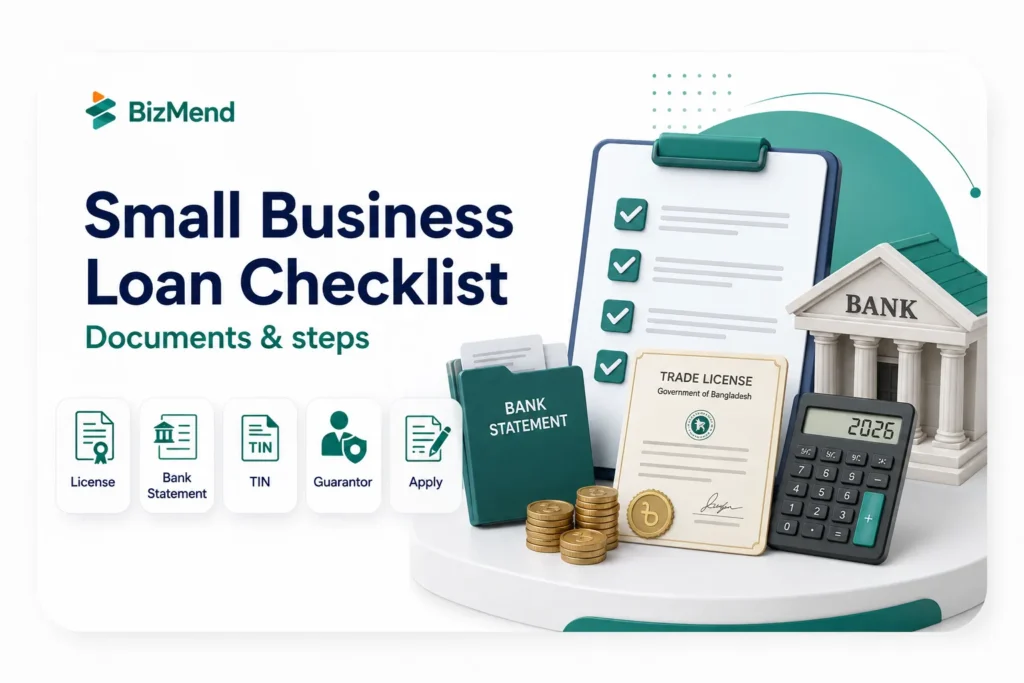
For a conventional small business loan in Bangladesh, these are the items lenders most often ask for before sanction or before final disbursement:
- Up-to-date trade license
- National ID or passport of owner, partners, directors, and guarantors
- TIN or e-TIN certificate, sometimes VAT registration if the business should have it
- Six to twelve months of bank statements, often more for larger limits
- Partnership deed or board resolution for partnership firms and companies
- RJSC documents for private limited companies, including certificate of incorporation and sometimes charge registration
- CIB inquiry and any forms needed for Bangladesh Bank credit checking
- Property papers, legal opinion, valuation, and mutation records if the facility is secured
| Business form | Typical core papers | What banks often focus on |
|---|---|---|
| Sole proprietorship | Trade license, NID, bank statements, TIN, photos | Often easiest for smaller unsecured limits |
| Partnership | Partnership deed, partner resolution, IDs, statements, TIN | All partners and guarantors may be reviewed |
| Private limited company | RJSC papers, board resolution, financials, tax papers, bank statements | Better for larger structured borrowing, but paperwork is heavier |
For manufacturing or trading businesses, lenders may also ask for stock records, supplier invoices, VAT papers, or import and export data. The deeper the facility gets into trade finance or asset purchase, the more the bank will test whether your numbers match the story in the proposal.
Do not underestimate the CIB step. Bangladesh Bank’s CIB system exists to help lenders assess repayment history and reduce approval risk. If you have unsettled liabilities, irregularly classified borrowing, or guarantee exposure you forgot to mention, it can slow the file fast.
How to Apply Without Wasting Time
A clean process usually looks simple from the outside, but the strong applications do extra work before the form is filled. Use this sequence if you want a better shot:
- Define the exact use of funds. State whether the money is for a stock purchase, machinery, renovation, a commercial vehicle, an invoice cycle, or import support. Banks distrust vague requests.
- Shortlist only two or three banks that actually suit your case. Compare unsecured versus secured routes, required business age, and whether the product fits trading, service, manufacturing, or startup activity.
- Organize the full document set before the first serious meeting. Missing trade license renewals, tax papers, or land records create most early delays.
- Prepare a short cash flow story. Show average monthly sales, gross margin, current debt, and how the installment will be paid. This matters more than a decorative business profile.
- Meet the bank and ask product-specific questions. Ask about loan size, tenor, guarantor rules, hidden charges, insurance, settlement fee, and whether a CIB check starts before or after the full file is submitted.
- Submit the application and respond fast to clarifications. Many files stall because the banker requests one extra paper and the borrower waits a week.
- Read the sanction letter carefully before accepting. Look beyond the rate. Check security clauses, insurance obligations, prepayment fee, and default charges.
- Disburse only when the structure makes sense. If the bank moved you from a clean unsecured facility to a heavy mortgage route without clear benefit, pause and compare again.
If service breaks down or you face unfair conduct, Bangladesh Bank’s public services page also points borrowers to its customer complaint channel for scheduled banks and financial institutions.
Why Applications Get Delayed or Rejected
Most rejected or stalled files are not rejected for dramatic reasons. They fail because the business asks for too much, the paper trail is messy, or the use of funds does not match the product.
Common trouble spots include weak turnover in bank statements, old tax gaps, undeclared existing liabilities, disputed property records, low-value collateral, and unrealistic repayment plans. Startups also get blocked when founders pitch growth potential but cannot show who will actually repay the first twelve installments if sales take time.
- Applying for a working capital line when the real need is a long-tenor equipment loan
- Using personal and business cash in a way that makes the bank statements hard to read
- Submitting land papers with mutation or legal opinion gaps
- Ignoring guarantor quality until the last minute
- Shopping too many banks at once and creating confusion around documents and expectations
Banks can live with modest size. They struggle far more with a borrower whose story and documents do not line up.
How to Choose the Right Bank for Your Business
Choose the bank with the least friction for your actual case, not the bank your friend used for a different business. A trader in Narayanganj, a women-led boutique in Chattogram, and a tech startup in Dhaka should not be using the same scorecard.
A simple selection filter works well:
- Need a smaller unsecured facility with broad SME specialization: start with BRAC Bank or EBL.
- Need a women’s entrepreneur proposition with published support features: compare BRAC TARA, City Alo, and other women’s desks.
- Need Shariah-based financing: compare Islami Bank first, then check the exact mode and documentation.
- Need a property-backed facility and want public clarity on required papers: DBBL is easier to pre-screen.
- Need a new entrepreneur product without a long operating record: Bank Asia’s Somvabona is worth checking early.
One last point matters more than many borrowers expect: convenience is part of cost. A slightly lower rate can become the more expensive loan if disbursement is slow, renewal is painful, or security paperwork keeps management distracted for months.
Final Thoughts
A good loan should make the business easier to run, not harder to survive. If you match the product to your cash flow, gather the papers early, and compare only the banks that fit your case, your approval odds improve and your borrowing cost becomes easier to control.
Frequently Asked Questions
Which bank is best for a small business loan in Bangladesh?
There is no universal winner. BRAC Bank and EBL are often strong starting points for unsecured SME borrowing; DBBL is useful for borrowers who want published collateral and document rules, Islami Bank suits Shariah-based financing; and women-led businesses should also compare dedicated products such as TARA and City Alo.
Can I get a small business loan without collateral in Bangladesh?
Yes, some products are unsecured or partly secured, especially at lower ticket sizes. BRAC Bank, EBL, and some women’s entrepreneur products publish collateral-light routes, but approval still depends on business age, cash flow, guarantors, and document quality.
What documents do banks usually need for SME loans in Bangladesh?
The usual list includes an up-to-date trade license, NID or passport, TIN or e-TIN, recent bank statements, photos, and business formation papers. Private limited companies often need RJSC documents and board resolutions, while secured loans also need property papers, valuation, and legal review.
How long does approval usually take?
There is no fixed national timeline. Small clean files can move fairly quickly, while secured facilities, company borrowing, or incomplete tax and land records can stretch the process. Ask each bank when the CIB inquiry starts and what must be complete before sanction.
Do women entrepreneurs get special loan terms in Bangladesh?
Often, yes. Bangladesh Bank has long supported women entrepreneur financing through dedicated desks and collateral-light policy windows, and banks such as BRAC Bank, EBL, DBBL, and City Bank publish women-focused propositions. The exact rate, ceiling, and security terms still depend on the bank and product.
Can a startup with no long banking history still qualify?
Sometimes, but the route is narrower. Startup products such as EBL Startup or selected new entrepreneur schemes can help, yet the bank will still want a credible founder profile, a clear use of funds, and evidence that early repayments will not depend on wishful sales forecasts.