How to Become a Daraz Seller in Bangladesh: Registration, Fees & Growth
Learn how to become a Daraz seller in Bangladesh, register an account, list products, understand fees, manage orders, and grow…
 by Sheikh Ornob

The Import Registration Certificate (IRC) in Bangladesh is required by law to import goods. Get the steps, documents, fees, and renewal process in one practical guide.
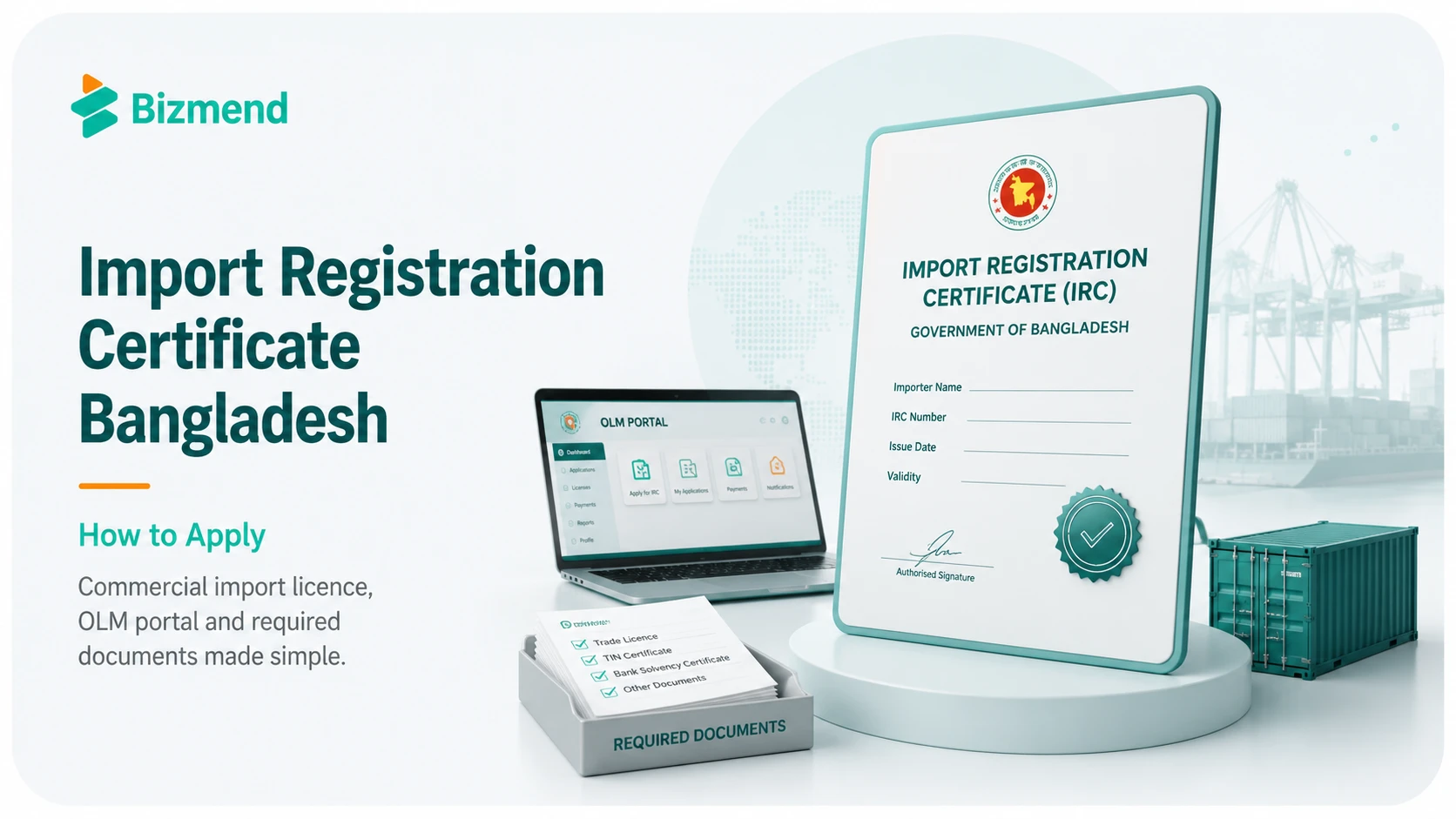
If you want to import goods commercially in Bangladesh, one document stands between you and your first shipment. The Import Registration Certificate, or IRC. Without it, no bank will open a Letter of Credit for you. Customs won’t clear your goods. And you’re technically outside the law. This guide covers everything: what the Import Registration Certificate in Bangladesh is, who actually needs it, the documents required, how to apply online, the fees, and how to renew it without paying a penalty.
Quick answer: The Import Registration Certificate (IRC) in Bangladesh is a mandatory licence from CCI&E for commercial and industrial importers. Businesses need it to open import Letters of Credit and clear goods through customs. Applications are submitted through CCI&E’s OLM portal at olm.ccie.gov.bd with trade, tax, bank and business documents.
The IRC is the official government licence that lets a business legally bring goods into Bangladesh for commercial or industrial purposes. It’s issued by the Office of the Chief Controller of Imports and Exports (CCI&E), a statutory authority under the Ministry of Commerce. The legal authority comes from the Imports and Exports (Control) Act, 1950, and IRC registration is governed by the Importers, Exporters and Indentors (Registration) Order, 1981.
Put simply: no IRC, no legal commercial importing. Banks won’t open a Letter of Credit for you. Customs at Chattogram Port won’t release your shipment. It’s not optional paperwork. It’s the foundation of every import transaction.
The IRC also serves another practical purpose. Foreign suppliers often ask for proof of registration before entering trade agreements. Showing a valid IRC tells an overseas supplier you’re a registered, legitimate importer. That matters when you’re negotiating pricing or payment terms.
Not everyone needs one. Personal importers bringing goods for their own use are exempt. But if you’re importing for any business purpose, whether commercial resale or industrial production, the IRC is mandatory.
Here’s a quick breakdown of who needs it:
Sole proprietors, partnerships, and private limited companies are all eligible. The type of IRC you need depends on what your business does.
The CCI&E issues two main types. Knowing which one applies to you before you start your application saves a lot of time.
A Commercial IRC is for businesses that import goods to sell them. Think electronics traders, clothing distributors, FMCG importers. Your imported goods go from port to warehouse to customer.
An Industrial IRC is for factories and manufacturers. You’re importing raw materials, machinery, or components that go into your production process. This type requires a recommendation from BIDA (Bangladesh Investment Development Authority) or another relevant sponsoring authority like BEPZA or BSCIC, depending on your industry and location.
The documents required are slightly different for each. And the application process on the OLM portal separates them clearly, so you’ll pick the right one at the start. To understand which business structure makes sense before applying for your IRC, our guide on company types and restrictions for foreigners in Bangladesh covers Private Limited Companies, sole proprietorships, and partnerships and what each allows.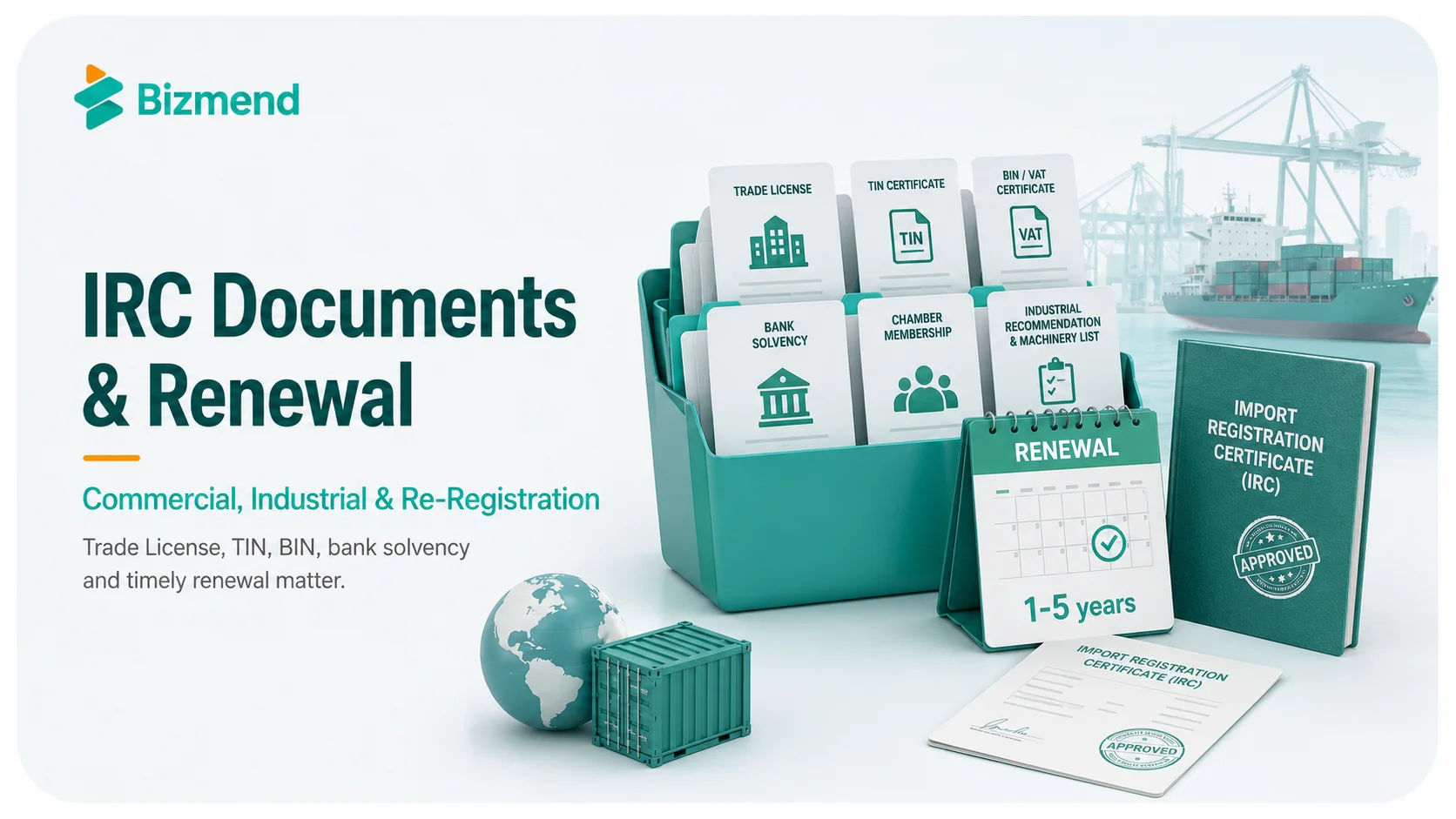
This is where most delays happen. Missing or incorrectly attested documents are the number-one reason IRC applications get stuck. Get everything ready before you open the portal.
Everything above, plus:
All documents need to be scanned clearly for upload to the OLM portal. Blurry scans are a common rejection reason. Get everything in PDF or high-resolution JPEG format before you start. If you haven’t opened a business bank account yet, you’ll need that sorted first. Our walkthrough on opening a business bank account in Bangladesh covers the authorized dealer bank requirements that matter for import transactions.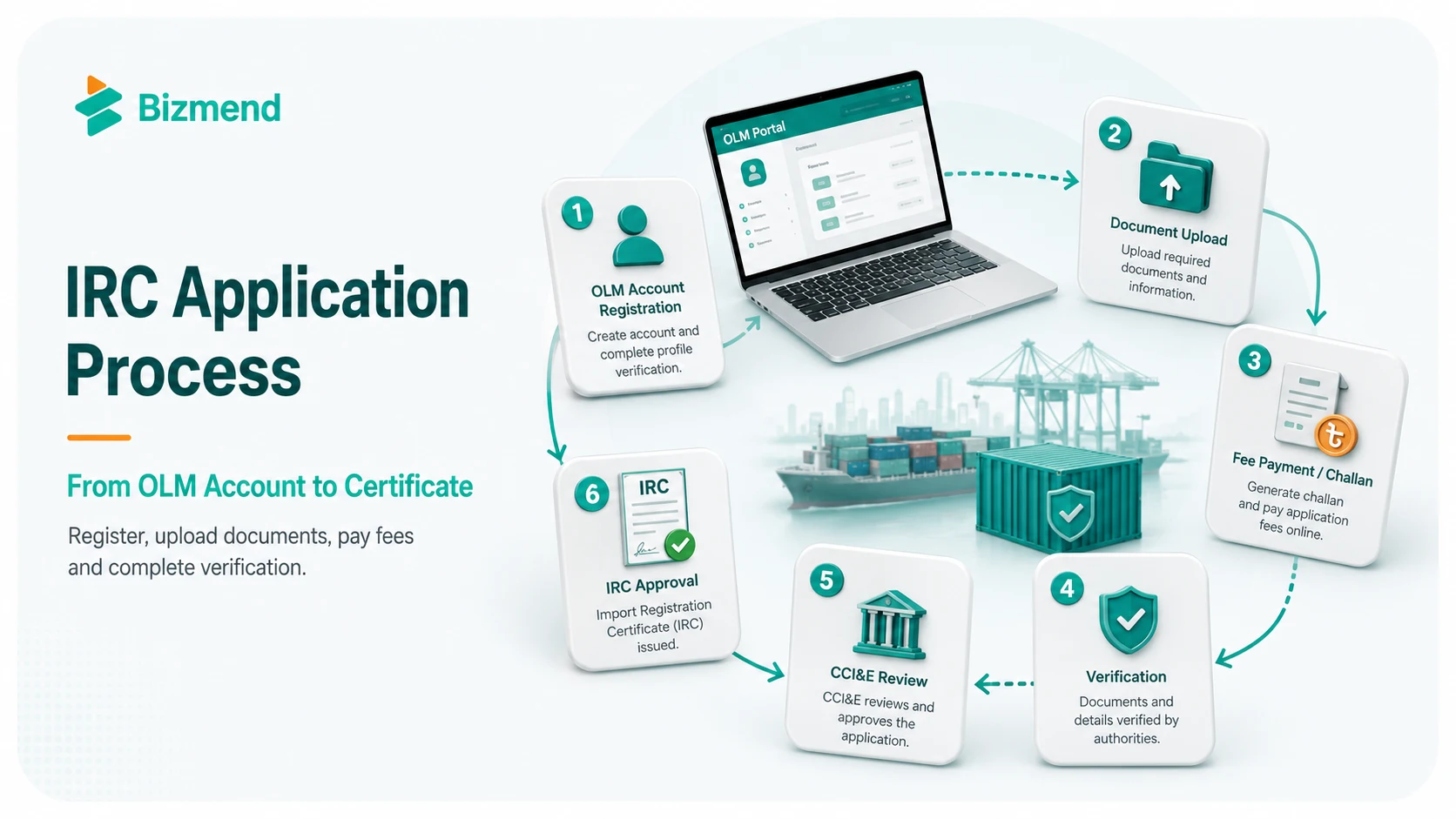
IRC applications should be submitted through CCI&E’s Online Licensing Module at olm.ccie.gov.bd. Follow any additional verification instructions shown by CCI&E/OLM.
Our broader guide on how to start a business in Bangladesh as a foreigner covers the RJSC registration, TIN, and BIN steps you’ll need done before you apply for your IRC.
Government fees for IRC are paid through the payment option shown in the OLM portal. Online payment may be available; use Treasury Challan/offline payment at Bangladesh Bank or Sonali Bank only if the portal directs it. VAT at 15% is added on top of the base government fee.
Always check the current fee schedule on the CCI&E website at ccie.gov.bd or the OLM portal before visiting the bank, since fee structures can be updated. Don’t rely on figures from older sources; the official portal shows the currently applicable rates.
Once you pay and collect the challan receipt, enter the challan number into your OLM application. The bank branch and payment date must match what you enter online.
Your IRC is linked to a fiscal year, and according to the official CCI&E OLM portal notice, renewal can be done for any full term between 1 and 5 years. This means you’re not locked into annual renewal every year. You can renew for multiple years at once if it suits your business planning.
One specific rule matters here: apply for renewal at least 60 days before expiry to avoid a penalty. The CCI&E portal’s own notice makes this clear. Miss that window and you’ll pay a fine on top of the renewal fee.
The renewal process mirrors the fresh application: log in to olm.ccie.gov.bd, select the re-registration option from the IRC menu, upload updated documents (especially your trade license, which must be current), and follow the payment option shown in the portal. Use Treasury Challan/offline payment only if the portal directs it.
A lapsed IRC is a serious operational problem. Your bank won’t open any new import LCs until it’s renewed. Our overview of commercial banks in Bangladesh includes a breakdown of which banks handle import LCs efficiently, which is useful once your IRC is in hand.
If you’re considering multiple trade activities, our breakdown of top industries for foreign investment in Bangladesh covers which sectors have the highest import demand and the clearest regulatory pathway.
Honestly, most delays are preventable. Here’s what actually trips people up:
For working capital to fund your import operations after getting your IRC, see our guide on getting a loan from a Bangladeshi bank. Also, getting a DUNS number from Dun & Bradstreet for international supplier credibility is worth considering early, since many overseas suppliers run verification checks on new importers before agreeing terms.
The IRC is a mandatory licence issued by the CCI&E (Office of the Chief Controller of Imports and Exports) under the Ministry of Commerce. It legally authorizes a business to import goods into Bangladesh for commercial or industrial purposes. Without a valid IRC, banks will not open import Letters of Credit and customs authorities will not clear commercial shipments.
The Office of the Chief Controller of Imports and Exports (CCI&E), a statutory authority under the Ministry of Commerce, issues the IRC. The CCI&E operates through its online portal at olm.ccie.gov.bd and has regional offices across Bangladesh including Dhaka and Chattogram. For first-time or industrial applicants, CCI&E may conduct a field inspection before issuing the certificate.
IRC applications should be submitted through CCI&E’s Online Licensing Module (OLM) at olm.ccie.gov.bd. Follow any additional verification instructions shown by CCI&E/OLM. You’ll need to create an account, fill out the form, upload scanned documents, and follow the payment instructions provided by the portal.
You need a valid Trade License, E-TIN Certificate, VAT Registration (BIN), Bank Solvency Certificate, Membership Certificate from a Chamber of Commerce or trade association, National ID or passport of the owner/director, company incorporation documents (for limited companies), and an attested passport-size photo. For an Industrial IRC, add a BIDA recommendation letter, factory layout, and a machinery list with HS codes.
Official processing time is listed as around 3 working days after complete submission, though practical timing may vary if documents need correction, verification, or inspection. Industrial IRC applications that require a field inspection may take longer. Having every document correctly prepared before submission makes the biggest difference to turnaround time.
According to the CCI&E’s OLM portal, IRC renewal can be completed for any full term between 1 and 5 years. You’re not limited to renewing annually. To avoid a penalty fee, apply for renewal at least 60 days before your current IRC expires. Renew through OLM and follow the payment option shown in the portal; use Treasury Challan/offline payment only if instructed.
A Commercial IRC is for traders, distributors, and eCommerce sellers who import finished goods to sell. An Industrial IRC is for manufacturers and factories importing raw materials, machinery, or components for their own production. Industrial IRC applicants need a recommendation letter from BIDA or another relevant sponsoring authority such as BEPZA or BSCIC, depending on the business’s location and sector.
Yes. A company registered in Bangladesh under the Companies Act that is owned by foreign nationals can apply for an IRC. Requirements include a valid Trade License, TIN, 13-digit BIN (VAT registration), and a business bank account with an authorized dealer bank. The application goes through the same OLM portal at olm.ccie.gov.bd as local companies.
A lapsed IRC means your authorized dealer bank cannot open new import Letters of Credit for you. Any ongoing customs clearance processes may also face complications. Additionally, renewing after the expiry date triggers a penalty fee on top of the standard renewal charge. CCI&E advises applying at least 60 days before expiry to avoid this situation entirely.
No. The IRC requirement applies to commercial and industrial importers. Personal importers bringing goods into Bangladesh for their own personal use are exempt from obtaining an IRC. However, if you’re importing even small quantities for any business purpose, including resale or distribution, the IRC becomes a mandatory legal requirement.
The IRC isn’t just a government paper exercise. It’s the key to opening import LCs, clearing goods at customs, and building a real importing business in Bangladesh.
If I were starting today, I’d create an account at olm.ccie.gov.bd before doing anything else. No valid IRC means no bank will touch your import transaction. So sort the licence first, then go find your supplier. Which part of the process are you tackling right now?

Learn how to become a Daraz seller in Bangladesh, register an account, list products, understand fees, manage orders, and grow…
by Sheikh Ornob

Compare the cost of living in Bangladesh in 2026, including Dhaka and Chittagong rent, food, transport, utilities, inflation, and monthly…
by Sheikh Ornob
Learn MoA and AoA requirements in Bangladesh, key clauses, drafting basics, RJSC filing steps, amendments, and common company-registration mistakes. Suggested…
by Sheikh Ornob