
Depository Institution Requirements: What You Need
Depository institution requirements come down to the same handful of checks no matter which type of institution you pick. A…

The bank branch vs online bank question usually comes down to one thing: how often you touch cash. Both hold federally insured deposits, both answer to the same regulators, and...
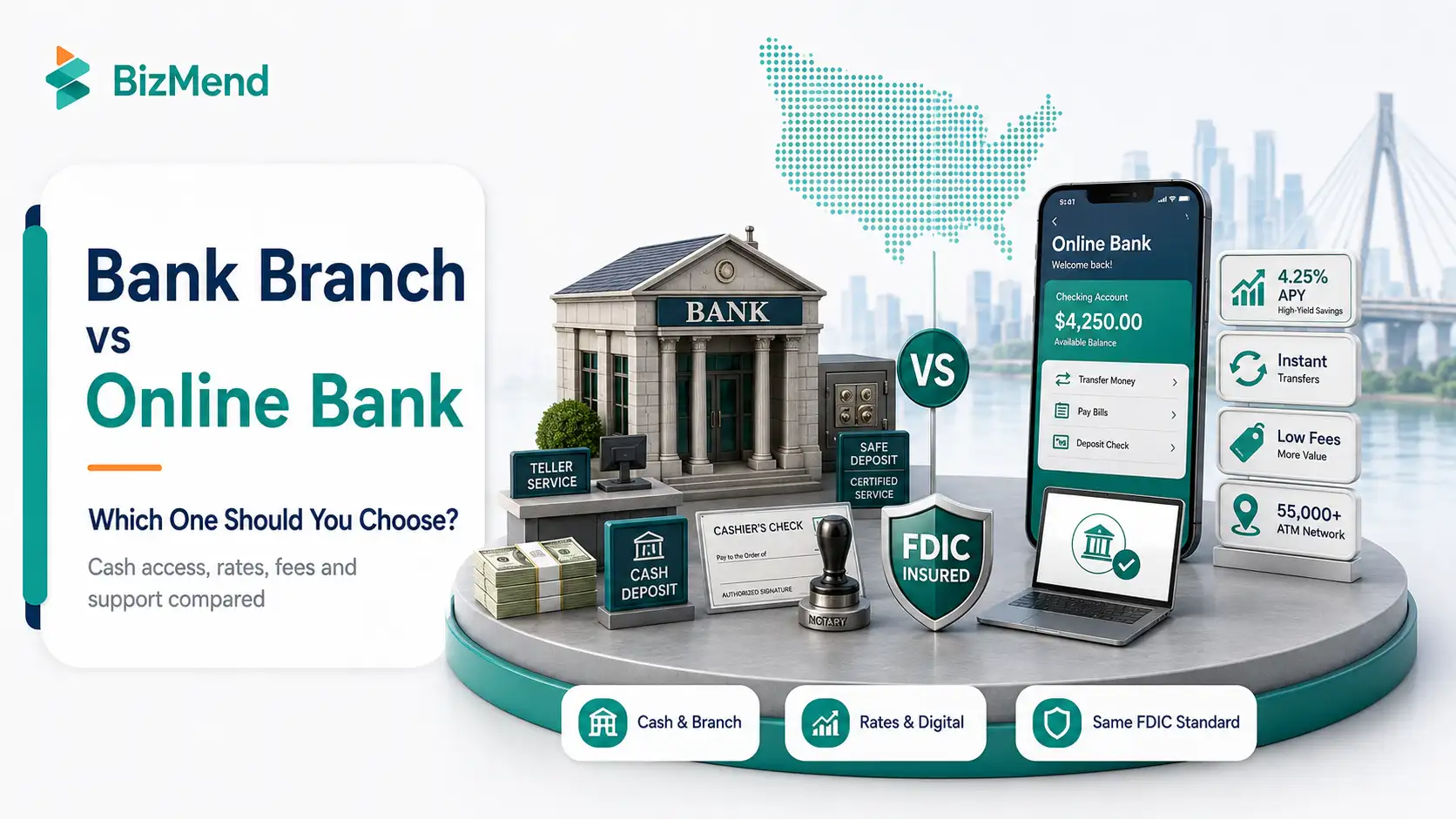
The bank branch vs online bank question usually comes down to one thing: how often you touch cash. Both hold federally insured deposits, both answer to the same regulators, and both can run your paycheck and your bills. The gap shows up in rates, in how fast a deposit clears, and in what happens when a transfer freezes.
Newcomers hit this decision at account opening, when documents and verification matter most. Established savers hit it later, when a flat rate starts costing real money. The better answer shifts with the situation, not with the brand.
Quick Answer: Pick a bank branch when you handle cash, need certified checks or notarization, or want in-person help with a complex problem. Pick an online bank when you want a higher deposit rate, low fees, and fully digital access. Both carry the same federal deposit insurance, so safety rarely decides it.
Seven factors change the answer most often. Fee amounts and yields are left out on purpose because they move constantly and differ by institution, so treat each row as a direction to check rather than a fixed number.
| Factor | Bank Branch | Online Bank |
| Monthly maintenance fees | More common on checking, though usually waivable through direct deposit, a minimum balance, or student and senior status | Frequently none; the charges that matter are overdraft, outbound wire, and expedited transfer |
| Minimum balance or opening deposit | More likely to apply, especially on interest-bearing and relationship accounts | Often low or zero, although promotional accounts can attach balance conditions |
| Interest and APY | Typically closer to the national deposit averages the FDIC publishes each month | Typically competes on rate; confirm the current advertised APY, balance tiers, and any intro period |
| Access and liquidity | Teller counter, drive-up, proprietary ATMs, phone, website, and app | App, website, phone support, and third-party or partner ATM networks |
| Cash and paper handling | Cash in and out, certified and cashier’s checks, notarization, medallion signature, safe deposit boxes | No direct cash deposit at most institutions; workarounds depend on retail partners or ATM networks |
| Deposit insurance | FDIC coverage up to $250,000 per depositor, per insured bank, for each ownership category | Identical FDIC coverage, provided the institution is itself an insured bank rather than an app |
| Best suited to | Cash-heavy households and small businesses, document-driven needs, and first US banking relationships | Rate-focused savers, fee-sensitive users, remote workers, and people comfortable solving issues by phone or chat |
Comparison prepared 6 August 2026. Insurance limit per the Federal Deposit Insurance Corporation. Fees, minimums, and yields are institution-specific and change without notice.
Choose a bank branch if cash, paper documents, or in-person problem solving show up in a normal month for you. Choose an online bank if your money already moves electronically and you want the pricing to reflect that. For a large share of US households the honest answer is both: a branch account for cash and local needs, plus an online savings account for the balance that simply sits.
That split is not fence-sitting. Each model is built around a different cost base, and forcing one to do the other’s job is how people end up paying out-of-network ATM fees or letting a good savings rate sit on an account they never fund.
Marketing frames this as convenience against tradition. The three differences below are more concrete, and two are written into federal rules rather than set by the institution.
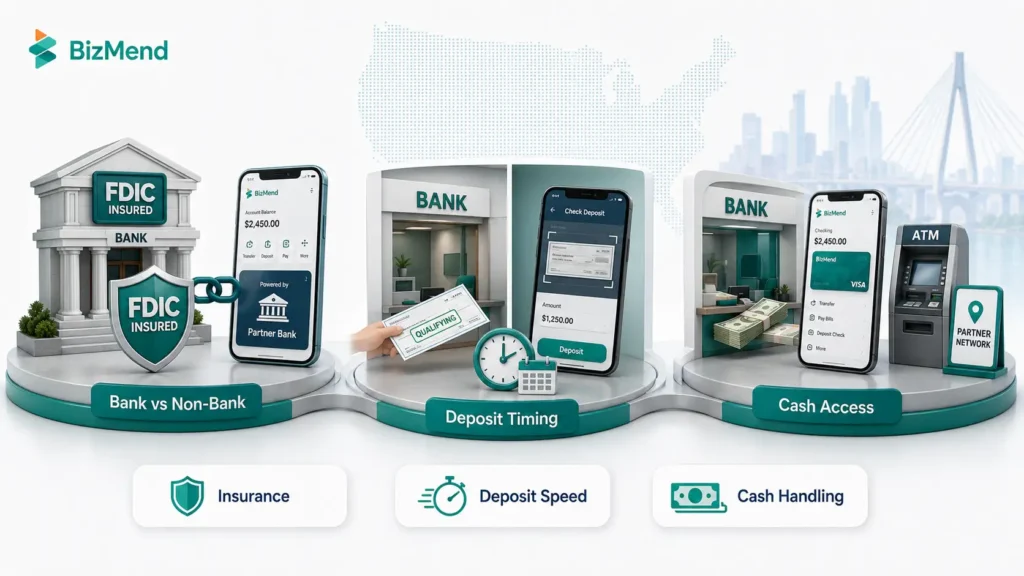
The Federal Deposit Insurance Corporation insures each depositor to at least $250,000 at each insured bank, for each ownership category, and that coverage attaches to the charter rather than to any building. An internet-only bank with no offices carries exactly the same protection as the branch on your corner.
The distinction that actually matters is bank versus non-bank. The FDIC states plainly that non-bank companies are never FDIC-insured, and that even when such a company partners with an insured bank, money you send it is not insured unless and until the company deposits it at an insured bank. The Consumer Financial Protection Bureau issued a consumer advisory in June 2023 making the same point about balances left sitting in payment apps. Physical offices, certified checks, notarization, and safe deposit boxes are the service mix that defines a bank branch, while the term online bank covers everything from a chartered digital institution to a technology company renting access to someone else’s charter. Search the name on the FDIC BankFind directory before you fund anything. Credit unions sit outside FDIC coverage and are insured to the same $250,000 level by the National Credit Union Administration instead.
| Important: A logo or the word “banking” in a product name proves nothing. If the fine print names a partner bank rather than the provider itself, your funds depend on pass-through conditions being met correctly, and that is a materially different position from holding a deposit account in your own name. |
Regulation CC, the Federal Reserve rule implementing the Expedited Funds Availability Act, requires cash and electronic payments to be available for withdrawal by the next business day after the banking day of deposit. Several categories of check, including cashier’s, certified, teller’s, and state or local government checks, only qualify for that next-day treatment when they are handed to a bank employee in person. Deposited any other way, the deadline moves to the second business day.
Mobile check capture falls on the slower side of that line. For most people the extra day is irrelevant, and it varies by institution because banks may release funds sooner than the rule requires. For someone depositing a settlement check or a closing check against a tight deadline, walking into a branch is the difference between paying rent on time and not. The Federal Reserve also raised the amount that must be made available the next day from any non next-day check to $275 effective 1 July 2025.
Physical currency is the one thing a phone cannot handle. The FDIC describes internet-based banks as institutions that provide no physical branches, where banking happens on a computer, mobile device, or ATM. Some accept cash through partner ATM or retail networks, many accept none at all, and those that do usually cap daily amounts. Anyone paid in tips, running a market stall, or collecting rent in currency should confirm the cash path in writing before switching.
Branch access is also thinning. FDIC Summary of Deposits data recorded more than 76,000 domestic offices at more than 4,400 insured institutions as of 30 June 2025, down from more than 86,000 offices at more than 5,300 institutions six years earlier. Distance is worth checking, and it makes sense to choose a bank branch by drive time and lobby hours rather than by brand recognition.
Rate is the loudest argument in favor of going digital, and it is a real one. Institutions without a branch network avoid the property, staffing, and maintenance costs attached to physical offices, and many pass part of that saving into deposit pricing. The FDIC publishes national deposit rate averages monthly, which gives you a neutral benchmark instead of relying on a comparison site funded by referral fees.
Rate alone still makes a poor filter. A yield advantage on a modest savings balance can be wiped out by two out-of-network ATM withdrawals, one outbound wire, or a single overdraft. People who choose an online bank well read the full fee schedule, check ATM reimbursement caps, and look at daily and monthly transfer limits before moving their emergency fund. Run the arithmetic against your own balance and your own transaction pattern, not against a headline number.
Branch pricing deserves the same scrutiny in reverse. Maintenance charges are usually waivable, and the conditions are often easier to meet than people assume once a direct deposit is running.
How Americans reach their accounts has shifted sharply. In the 2023 FDIC National Survey of Unbanked and Underbanked Households, the most recent published edition, 48.3 percent of banked households named mobile banking as their primary access method, against 19.8 percent for online banking and 15.1 percent for bank tellers. Over the preceding decade, mobile use as the primary channel rose almost ninefold while teller use fell by more than half.
The same survey adds a detail that undercuts a purely digital view: almost all banked households used an ATM or a teller at least once during the year. Primary channel and only channel are different things.
Support quality is where the two models diverge under pressure. A frozen account, a disputed charge, a large wire, or an identity mismatch resolves faster when someone can review your documents and escalate internally. Outcomes on the digital side depend a good deal on how an online bank works behind the app, since some run licensed operations with their own staff while others outsource support. Check published hours and whether a real phone line exists before you need it.
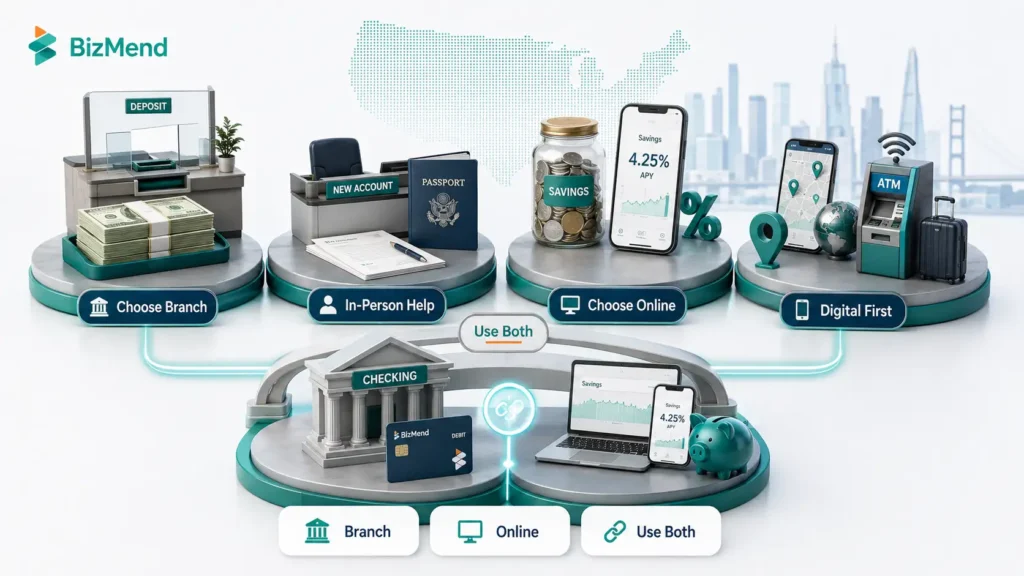
A branch is close to mandatory here. Restaurants, salons, contractors, landlords, and market vendors all move currency that has to reach an account somehow. Owners setting up a US business bank account often find the in-person route smoother when the entity has non-resident members, since document review and signature verification happen face to face.
Newcomers usually meet less friction at a counter. Automated identity checks struggle with thin credit files, new addresses, and visa documentation, and there is no one to explain the situation to. Branch staff can review a passport, visa, and lease together. Standard bank branch requirements typically include government photo identification, proof of a US address, and a Social Security number or Individual Taxpayer Identification Number. The equivalent online bank requirements often hinge on whether automated checks can match those records without human review.
This is the clearest case for going digital. Money untouched for months belongs wherever it earns most, and a branch relationship adds nothing to a balance you never visit. Keep the checking account where it is and add a linked online savings account.
Frequent movers lose the main advantage of a branch network, since the office you chose is rarely the one you are near. An online bank with wide ATM access and strong mobile tools travels better. Anyone comparing whole institutions rather than a single channel will get more from the wider traditional bank comparison, which looks at branch networks alongside product range and lending.
The bank branch vs online bank choice is a question about your own transaction habits rather than about which model is better built. Cash volume, check volume, and how you prefer to sort out problems will point you one way fairly quickly. A household that never handles paper money gives up little by going branchless, while a small retailer with daily till deposits cannot operate that way at all.
Before opening anything, confirm the institution on the FDIC BankFind directory, read the current fee schedule and funds availability policy, and establish whether the provider is a chartered bank or a technology company. Rates, fees, and branch networks all change, so verify each figure directly with the institution before you commit.
Neither wins across the board. Branches lead on cash handling, certified checks, notarization, and face-to-face problem solving. Online banks generally lead on deposit rates and monthly fees. Federal deposit insurance covers both identically, so the decision rests on how you actually move money each month rather than on safety.
Yes, and it is a common arrangement. Everyday spending and cash deposits stay at a branch bank, while savings sit at an online bank paying a higher rate. Link the two by ACH transfer and expect roughly one to three business days for money to move between them.
Equally safe when both are FDIC-insured banks. Coverage runs to $250,000 per depositor, per insured bank, for each ownership category, and it follows the charter rather than the premises. The genuine risk sits with non-bank apps, which the FDIC says are never FDIC-insured themselves.
Online banks usually advertise higher yields on savings accounts and certificates, though the gap narrows and widens with market conditions and differs by institution. Compare any advertised rate against the FDIC national deposit averages, then check balance tiers, introductory periods, and whether the headline rate applies to your whole balance.
Usually not directly. Most online banks operate no branches and no proprietary cash-accepting ATMs. Workarounds include partner ATM networks, money orders, or depositing at a second bank and transferring by ACH. Daily limits and fees often apply, so confirm the exact method in writing before you depend on it.
They can, though approval is harder without a Social Security number, US address history, or an existing credit file. Automated identity checks leave little room to explain an unusual situation. Many newcomers open at a branch first and add an online savings account once their records have built up.

Depository institution requirements come down to the same handful of checks no matter which type of institution you pick. A…
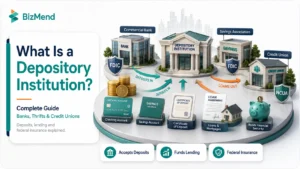
What is a depository institution, and why does the term matter more than “bank”? A depository institution is any financial…
 by Sheikh Ornob
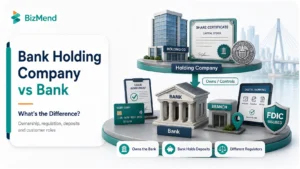
Searching for a bank holding company vs bank makes it sound like a choice between two competing products, but it…
by Sheikh Ornob