
Cost of Living in Bangladesh 2026: Dhaka, Chittagong & Monthly Budgets
Compare the cost of living in Bangladesh in 2026, including Dhaka and Chittagong rent, food, transport, utilities, inflation, and monthly…
 by Sheikh Ornob

Learn how to become a Daraz seller in Bangladesh, register an account, list products, understand fees, manage orders, and grow in 2026.
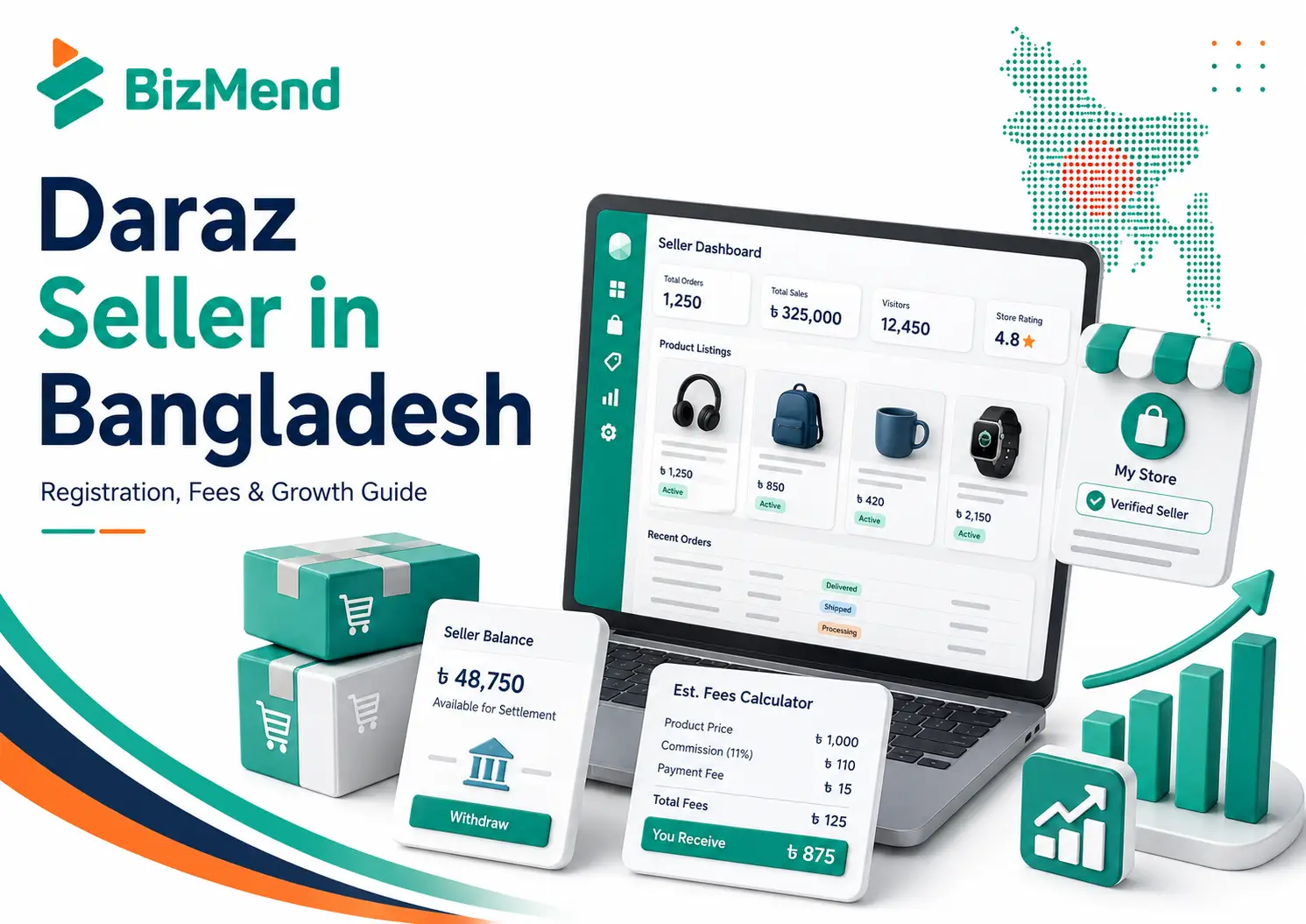
Becoming a Daraz seller in Bangladesh can give a small business access to a structured marketplace, built-in order management, logistics support, and customers beyond its existing Facebook or physical-store audience. The platform allows individuals as well as registered businesses to create seller accounts, but approval, category access, product compliance, and payment readiness still depend on the information submitted during onboarding.
The process is straightforward only when the basics are prepared first: accurate identity and contact details, a usable pickup address, bank or payment information, compliant products, clear images, realistic pricing, and enough stock to fulfill orders. Daraz does not guarantee fast sales; results depend on demand, pricing, competition, reviews, fulfillment speed, product compliance, campaign participation, and current marketplace rules. Treat registration as the start of an operating system, not a shortcut to instant revenue.
Quick Answer: A Daraz seller in Bangladesh registers through Seller Center, creates a store, submits requested identity and payment details, lists compliant products, fulfills orders, and receives settlement after applicable deductions. Daraz’s public seller information says opening a seller account and listing products can be free, but commission and other deductions may apply after a product is sold, depending on category, campaign, logistics, returns, taxes, and current Seller Center terms.
Daraz operates as a marketplace within the broader e-commerce ecosystem in Bangladesh rather than functioning as a single retailer. Independent sellers create stores, upload products, accept orders, and use the platform’s systems for catalog management, customer communication, logistics coordination, returns, and payment settlement.
Daraz’s official Bangladesh seller page describes the basic flow in three stages: register and list products, receive orders and sell across the country, then get paid and grow. Daraz’s public seller page says a registered company is not always required and sellers may use personal or business information, but sellers still need to follow product, tax, licence, brand, and consumer-compliance rules that apply to their actual business.
That does not remove normal legal responsibilities, so new sellers should understand how to start a business in Bangladesh and complete any registration, licence, tax, and recordkeeping requirements that apply. Sellers remain responsible for lawful products, accurate descriptions, taxes or licences that apply to their business, consumer obligations, product safety, intellectual-property rights, and the records needed to explain sales and expenses.
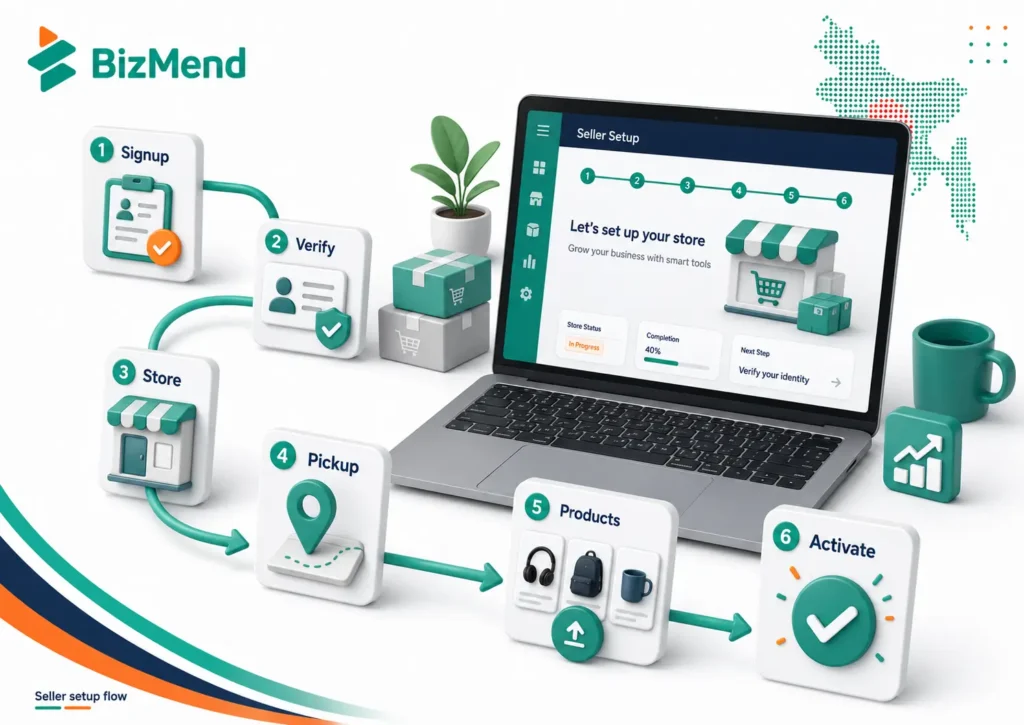
Before opening Seller Center, decide whether the account will represent you personally or operate through a sole proprietorship in Bangladesh. Use a mobile number and email address that the operator can access continuously. Keep the pickup and return address consistent, because logistics problems often begin with incomplete location details.
Prepare the identity, bank, business, and tax information that Seller Center requests for your selected account type. The exact fields can change, so the current onboarding form should be treated as the final checklist rather than an old blog post or screenshot.
Open the official Daraz Seller Center registration page, select the appropriate seller type, verify your contact information, create a password, and complete the requested seller-profile fields. Create a store name that is readable, relevant, and not misleading. Avoid names that imitate another brand or imply official authorization you do not have.
Submit the requested KYC and settlement information accurately, and review how to open a bank account in Bangladesh if you do not already have an account suitable for marketplace payouts. The account name, identity details, and bank information should match wherever the form requires a match. A small spelling difference can create a verification or payment delay later.
Add the operational address from which orders will actually be packed. Assign someone to monitor new orders, prepare parcels, print or attach the required labels, and hand over shipments within the platform timeline.
Create a small number of high-quality listings first. Confirm that each listing is in the right category, uses the correct brand status, includes available stock, and matches the physical item. Expand the catalog only after the first fulfilment workflow is stable.
Daraz’s public page confirms that personal or business information can be used for registration, but it does not publish a permanent Bangladesh document list for every seller type. The live Seller Center form should be treated as the final checklist because Daraz may request different identity, bank, business, tax, brand, authorization, or product documents depending on seller type, category, and risk review.
Do not upload edited, borrowed, or inconsistent documents. If a brand owner, distributor, importer, or regulator could reasonably ask how the product entered your inventory, retain the supporting invoice and authorization records.
A strong title identifies the product without stuffing unrelated search terms. A practical structure is brand, product type, model or key variant, size, colour, and important quantity. Do not add claims such as original, official, medical, imported, or guaranteed unless you can support them.
Use clear, well-lit images showing the actual product, packaging, included accessories, and relevant angles. Avoid watermarks from another store, misleading scale, prohibited contact details, or images that show a different color or model from the selected variation.
Category, brand, size, color, material, capacity, warranty, and model fields help customers filter products and reduce wrong orders. Variations should have separate stock counts, images where useful, and prices that match the selected option.
Explain what the customer receives, dimensions, compatibility, care instructions, warranty terms, installation needs, and exclusions. Clear descriptions reduce questions, cancellations, and return disputes.
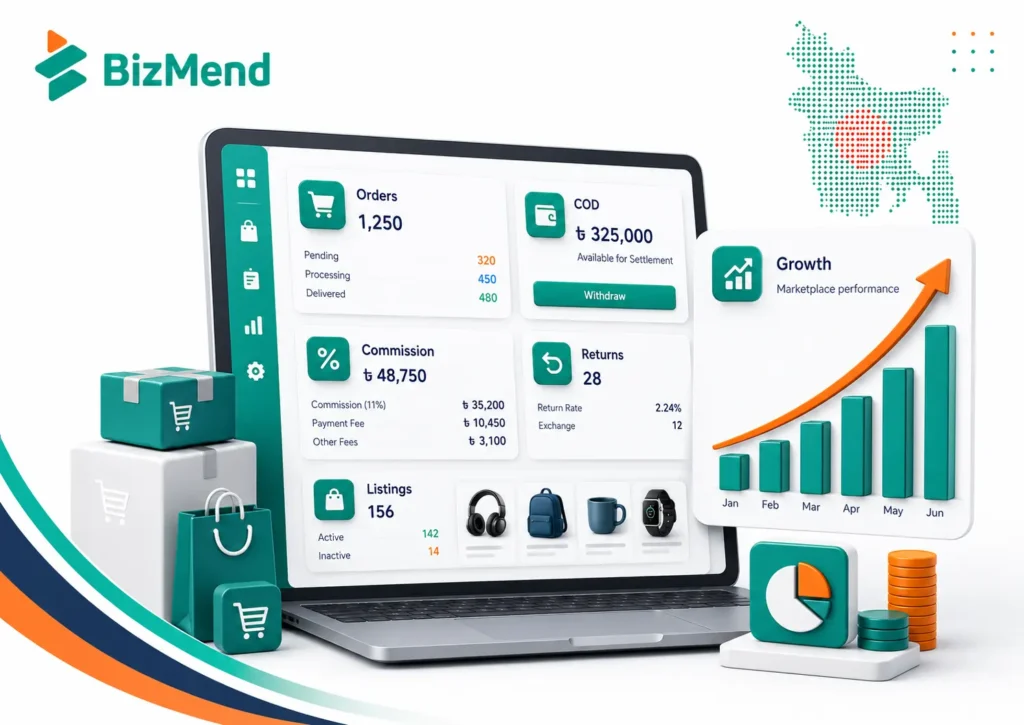
Daraz’s public Bangladesh sell-on-Daraz page states that there is no listing fee. That does not mean every completed order is free. Sellers may face category-based commission and other deductions connected with logistics, payment processing, campaigns, advertising, returns, penalties, taxes, or optional services under the current seller terms.
Do not publish one universal Daraz commission percentage; sellers should check the current category fee, campaign deduction, logistics charge, return adjustment, tax, and finance report inside Seller Center before pricing each product. The current Seller Center finance or fee schedule is the safest source for the exact deduction applied to a seller’s product category.
Calculate the contribution margin after all deductions, not just the difference between purchase price and listed price. A product can show strong sales but still lose money if discounts, returns, packaging, and campaign costs are ignored.
Seller Center is the operational dashboard for listings, stock, prices, orders, shipment preparation, finance reports, performance metrics, and customer-related actions. Check it daily. Late order processing, stockouts, and avoidable cancellations can damage store performance.
After an order arrives, the seller follows the current fulfilment method shown in Seller Center. This may involve preparing the parcel for pickup, dropping it at an approved point, or using another marketplace logistics workflow. Packaging must protect the item and match the label and order details.
Daraz collects customer payments through available marketplace methods and settles eligible seller balances after applicable fees, adjustments, returns, and the platform’s payment cycle. A sale is not the same as immediately available cash. Reconcile order reports, deductions, returns, and bank credits regularly.
Cash on delivery can reach customers who prefer not to prepay, while a payment gateway in Bangladesh can support prepaid card, MFS, internet banking, or payment-link transactions outside the Daraz checkout system. Do not treat a COD order as earned revenue until delivery is completed, the return window and adjustment risk are considered, and the net amount appears in the seller finance or settlement report.
The official Daraz return policy explains the applicable return conditions, category restrictions, product requirements, and time limits, which sellers should review before writing their own warranty or return promises. Daraz’s return policy says returned products should generally be unused, unworn, and unwashed and include original tags, user manuals, warranty cards, freebies, the invoice, and accessories, while category-specific rules and non-returnable items can still apply.
For sellers, the practical lesson is simple: document the item before dispatch, use protective packaging, record serial numbers where relevant, and keep invoices and warranty terms. When a return arrives, inspect it promptly and follow the platform dispute process rather than contacting the buyer outside approved channels.
Fast, factual customer responses protect ratings better than arguments. Explain compatibility, dimensions, delivery contents, warranty scope, and usage before purchase whenever possible.
Choose products you can restock consistently and fulfil without complicated quality checks. Ten dependable listings are more useful than hundreds of copied listings with uncertain stock.
Fix weak images, unclear titles, missing attributes, poor pricing logic, and unanswered questions before spending on promotions. Advertising sends more traffic; it does not repair a confusing offer.
Campaigns, vouchers, bundles, free-delivery support, and sponsored visibility can increase orders, but every discount must be tested against margin. Set a maximum promotional cost per order before joining a campaign.
Keep inventory accurate, process orders on time, avoid counterfeit or restricted items, and reduce cancellations. Monitor customer reviews for repeated defects. One recurring complaint often identifies a packaging, sourcing, or listing problem.
Becoming a Daraz seller in Bangladesh is technically simple, but building a sustainable store requires accurate records, compliant products, reliable stock, disciplined fulfillment, and careful margin control. Start with a limited catalog, learn the Seller Center workflow, and confirm current fees before setting prices.
Daraz can expand domestic reach and simplify parts of marketplace logistics, but sellers planning to serve overseas customers may separately need a compliant way to open a PayPal account from Bangladesh for international payments. Review the official seller dashboard whenever a fee, campaign, delivery method, or policy changes, and use performance data to decide which products deserve more inventory and promotion.
Yes. Daraz’s public Bangladesh seller page says a registered company is not always required and that sellers may create an account using personal or business information. Current verification requirements still apply.
Daraz’s public page states there is no listing fee. Sellers should still expect category commission and possible logistics, campaign, advertising, return, tax, or service deductions under current terms.
The live Seller Center form is the final checklist. It may request identity, contact, address, bank, business, tax, brand, or product-specific evidence depending on seller type and category.
Commission is category-specific and may change. Check the current fee schedule or finance section in Seller Center before pricing a product; do not rely on one old percentage found online.
Eligible balances are settled to the seller’s configured payment account after applicable commissions, adjustments, returns, and the current payment cycle. Reconcile Seller Center reports with bank credits.
Yes, provided the products comply with Daraz rules and you can maintain accurate stock, fulfill orders, and support returns; for direct Facebook orders outside Daraz, a bKash merchant account may provide a separate business-payment channel. The Daraz listing must be created separately in Seller Center.
No. Visibility, pricing, reviews, fulfillment, product demand, competition, and campaign performance affect sales. Registration creates access to the marketplace, not guaranteed income.

Compare the cost of living in Bangladesh in 2026, including Dhaka and Chittagong rent, food, transport, utilities, inflation, and monthly…
by Sheikh Ornob

Learn MoA and AoA requirements in Bangladesh, key clauses, drafting basics, RJSC filing steps, amendments, and common company-registration mistakes. Suggested…
by Sheikh Ornob

Compare corporate health insurance in Bangladesh for employees, including group coverage, claims, hospital networks, pricing factors, exclusions, providers, and HR…
by Sheikh Ornob